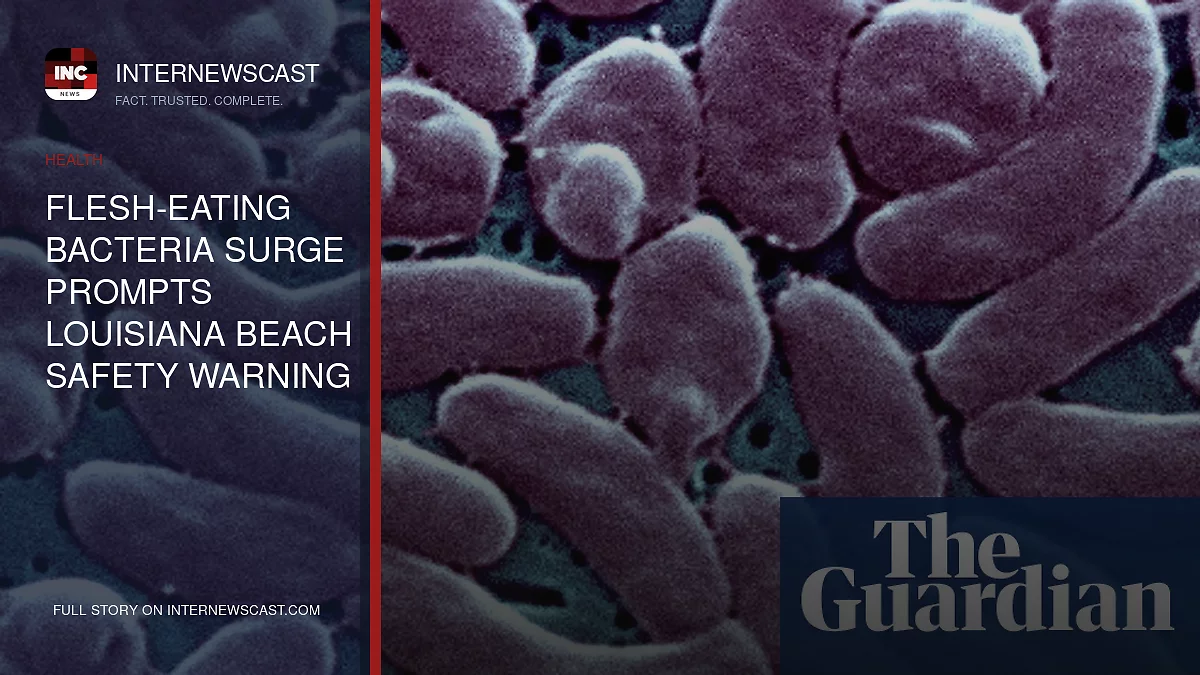

Louisiana health authorities are warning people heading to the coast this summer to be vigilant as the state sees an increase in infections linked to a flesh-eating bacterium that lives in warm coastal waters.
The Louisiana Department of Health said last week that nine Vibrio vulnificus infections have been confirmed in the state so far this year. Every patient was hospitalized, and five have died. Over the same time frame during the past 10 years, the state has averaged seven cases and one death.
“Seek medical care immediately if a wound exposed to brackish or salt water becomes red, swollen, painful, warm or discolored,” officials said in the release.
Vibrio bacteria are naturally found in seawater and in brackish environments where fresh and saltwater mix, such as estuaries and lagoons. Infections are most commonly reported between May and October, with many occurring in Gulf coast states. Physicians say the Gulf’s warm, salty conditions create a favorable setting for the organism to multiply.
According to the Centers for Disease Control and Prevention (CDC), Vibrio vulnificus is the most deadly form of the bacteria. Up to one in five infections can be fatal, a death rate far higher than that associated with other Vibrio species.
Such infections remain extremely uncommon when compared with many other infectious diseases. But when Vibrio vulnificus gets into the body, it can trigger bruising, swelling and tissue destruction within hours, and may lead to septic shock and death without swift treatment using strong antibiotics.
Louisiana recorded five deaths from the bacterium last year among at least 26 infected people, all of whom required hospitalization. One victim, 77-year-old Basil Kennedy, fell ill after scraping his leg on a boat trailer and then entering the water; he died three days later.
Florida has confirmed 14 Vibrio vulnificus cases and two deaths so far this year. For all of last year, the state reported 33 cases and five deaths.
Some people become infected by eating raw or undercooked shellfish – particularly oysters. But a large percentage fall ill when the person is in ocean or brackish water and the bacteria enter the body through small breaks in the skin.
Doctors say severe cases are seen more often in elderly patients, people with weakened immune systems, and those with liver disease, diabetes and certain chronic illnesses.
Scientists say the climate crisis is helping the germs proliferate and spread northward. As the oceans warm, the concentration of Vibrio in seawater also rises, increasing the risk of infection.
A 2023 study found that the northernmost case has been shifting by about 30 miles each year, and that cases overall have been rising, and over time the northward proliferation might bring infections within range of population centers around New York.
Vibrio vulnificus can enter the body through unhealed cuts and scrapes, recent piercings and tattoos, and recent surgical incisions. People should immediately wash cuts and scrapes thoroughly with soap and clean running water after coming in contact with coastal waters or raw seafood, the CDC said.
The Associated Press contributed reporting


