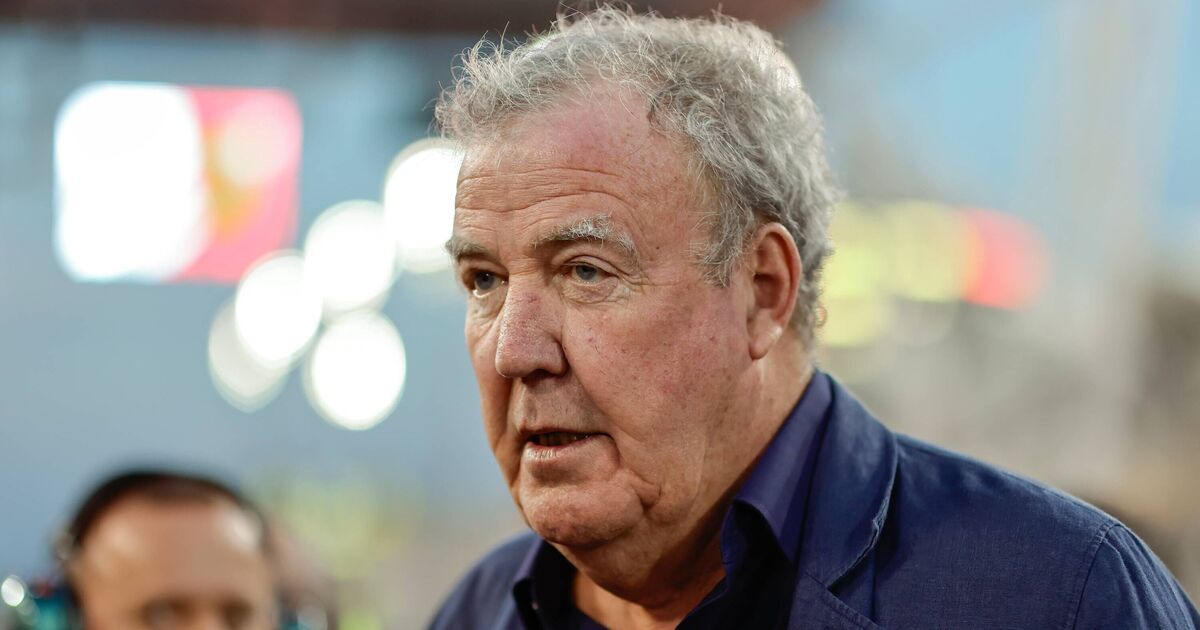


“I have some good news and some sombre news for the finale 2 episodes of Clarkson’s Farm” (Image: Getty )
Jeremy Clarkson has revealed he has been diagnosed with an aggressive form of prostate cancer. Prostate cancer is the most commonly diagnosed cancer among men globally. The 66-year-old presenter made the disclosure during the concluding episodes of the fifth series of his Amazon Prime Video programme, Clarkson’s Farm, which launched overnight and is filmed in Yorkshire.
Jeremy Clarkson has revealed he has been diagnosed with an aggressive form of prostate cancer, a condition that is the most commonly diagnosed cancer in men worldwide.
The 66-year-old broadcaster shared the news in the closing episodes of the fifth season of Clarkson’s Farm, which was released overnight on Amazon Prime Video and filmed in Yorkshire.
In scenes filmed as the harvest is being organised, Clarkson breaks the news to visibly stunned co-stars Kaleb Cooper and Charlie Ireland, telling them plainly: “I’ve got cancer.” He says the diagnosis came after a medical examination followed by a biopsy.
Although Clarkson described the cancer as “aggressive”, he said it had been detected at a “really early stage”. He also explained that he underwent surgery to remove the affected tissue, saying that “10 per cent” of his prostate had been removed, according to Yorkshire Live.
The series finale ends with Clarkson speaking to viewers from a hospital bed, where he says that “some of the treatment has gone awry” and that he expects to be out of action for a while.
What is prostate cancer?
Ahead of the new episodes being released, Clarkson posted a video on Instagram warning fans that the finale would be a “really, really difficult watch”. He ended with an emotional message about the future of the series, saying: “If this is all successful, I’ll see you for season six. And if it isn’t, I won’t.”
The NHS says this type of cancer is most frequently seen in men over 50, those with a family history of prostate cancer, people with specific genetic markers, or men of Black African or African Caribbean descent. Anyone who has a prostate can develop it.
The seriousness of prostate cancer depends on how quickly it grows and whether it has metastasised to other parts of the body. When identified early, prostate cancer can frequently be managed effectively. That said, not every case necessitates treatment. In its early stages, prostate cancer usually presents no obvious signs or symptoms.
As the disease advances, symptoms may include discomfort in the back, hips, or pelvis, alongside problems achieving erections. Urinary difficulties may also occur, though these could signal other prostate-related conditions.
What are the symptoms of prostate cancer?
During the early stages, prostate cancer typically presents no symptoms whatsoever. It usually develops in the outer portion of the prostate gland, meaning it does not exert pressure on the urethra – the tube which carries urine from the bladder through the penis – so signs will not emerge until the disease has progressed or metastasised.
The NHS says that if this happens, it can cause changes to the way you pee, such as:
- finding it difficult to start peeing or straining to pee
- having a weak flow of urine
- “stop start” peeing
- needing to pee urgently or often, or both
- feeling like you still need to pee when you’ve just finished
- peeing during the night
Other symptoms can include:
- erectile dysfunction (being unable to get or keep an erection)
- blood in your urine or blood in your semen
- lower back pain and losing weight without trying to (these may be symptoms of advanced prostate cancer)
When should you see a GP?
The NHS says: “If you’re having trouble peeing or have other symptoms of prostate cancer, you’re over 40 years old and genetic tests have shown that you have a faulty version of a gene called BRCA2 (this raises your risk of prostate cancer). And you’re worried about your risk of prostate cancer.”
It adds: “You can ask your GP about having a blood test (PSA test) that shows if there are any problems with your prostate, even if you do not have symptoms. They’ll consider your cancer risk to help them decide if the test is the right choice for you.”
Important considerations
Experiencing these symptoms does not necessarily indicate prostate cancer. They may also arise from an enlarged prostate – a widespread benign condition that occurs as the gland naturally increases in size with advancing age.
Some of these symptoms may become familiar over time. Nevertheless, it remains vital to consult a GP if your symptoms alter, deteriorate, or seem abnormal.
Who is more likely to get prostate cancer?
The likelihood of developing prostate cancer rises with age, predominantly affecting men over the age of 50. Anyone with a prostate is susceptible to the condition. Certain factors may increase your risk of developing prostate cancer:
- you’re over 50 years old
- you’re from a Black African or African Caribbean ethnic background
- you have a history of prostate cancer in your family
- a close relative has had pancreatic cancer, breast cancer or ovarian cancer, particularly at a young age – because prostate cancer is sometimes caused by the same inherited genes (a faulty version of a gene called BRCA2)
The NHS says: “Speak to a GP if you’re worried about your prostate cancer risk, even if you do not have any symptoms. Symptoms of prostate cancer do not always appear until the cancer has grown or spread.”