
The NHS has encouraged individuals to consider vaccination against meningitis, a serious infection that affects the protective membranes surrounding the brain and spinal cord. This condition is most prevalent among infants, young children, adolescents, and young adults.
Without timely intervention, the infection can be “very serious” and potentially fatal, leading to complications like sepsis. Over the weekend, the NHS communicated on X, formerly known as Twitter, stating: “Meningitis can be life-threatening and cause permanent damage to the brain or nerves. Several vaccines provide protection against it.”
As meningitis can stem from various infections, multiple vaccinations can provide some defence against it.
These vaccinations should be included in the standard NHS immunisation schedule for most children. However, if you’re uncertain, it’s advisable to consult your GP to ensure your child’s vaccinations are current.
If you suspect meningitis or sepsis in yourself or someone under your care, it is crucial to call 999 for an ambulance or proceed directly to the nearest A&E. Health authorities advise: “Trust your instincts and do not wait for all the symptoms to manifest or for a rash to develop. A person with meningitis or sepsis can deteriorate rapidly.”
Meningitis typically results from bacterial or viral infections, with the bacterial form being less common but far more dangerous than the viral variant.
The illness is often spread by individuals who harbor these viruses or bacteria in their nose or throat without exhibiting any symptoms of illness themselves.
It’s also feasible to contract meningitis directly from someone suffering from the condition, although this happens less often.
Particular vaccinations offer some protection against certain triggers of meningitis, according to the NHS.
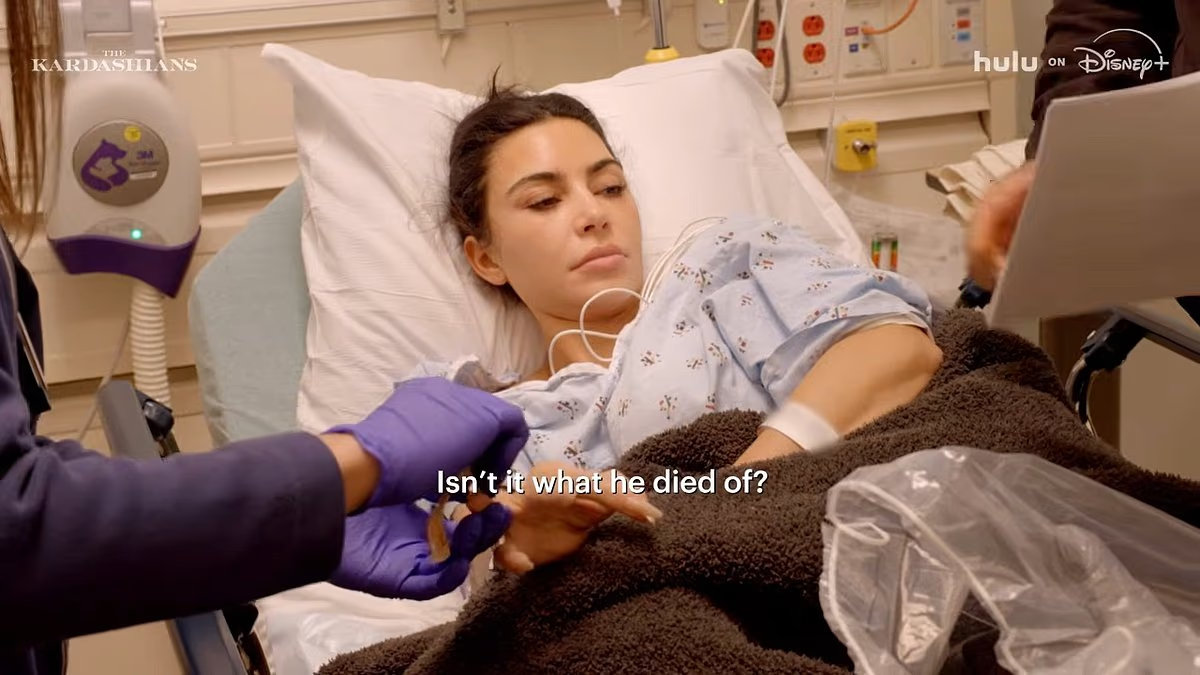
Individuals suspected of having meningitis will usually face hospital examinations to verify the diagnosis and establish whether it’s triggered by a viral or bacterial infection.
The NHS said: “Bacterial meningitis usually needs to be treated in hospital for at least a week.”
Most patients with bacterial meningitis who are treated quickly will make a full recovery, though some may face serious lifelong complications.