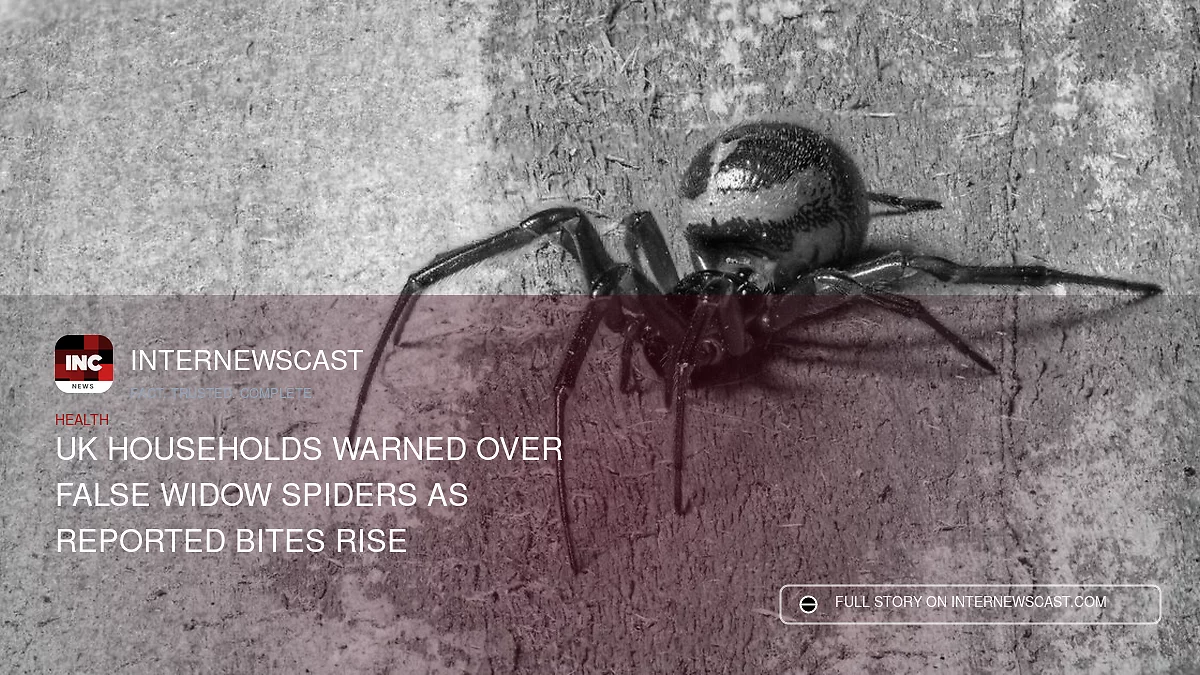

As UK summers become hotter and stretch further into the year, experts are warning that rising temperatures could be helping false widow spiders thrive. In 2026, Britain became the first year on record to reach 35°C in May, June and July, fuelling concern that warmer conditions are boosting spider activity.
Public anxiety appears to be rising sharply. UK searches for “false widow spider bites” have surged by 5,000% over the past month, while reported sightings have increased. NHS figures also suggest spider bites remain a persistent issue, with new Freedom of Information data showing 91 hospital admissions linked to spider bites in 2024, climbing to 100 in 2025. Of those, 73 patients were treated through A&E.
Garden expert Luke Newnes, of Hillarys, said: “Unlike mammals, spiders are ectothermic – cold-blooded – so their growth, development and activity are heavily influenced by external temperatures.”
He added: “Heat speeds up their metabolism, allowing younger spiders to develop faster and adults to remain active for longer.
“When conditions are favourable, local populations can build much more quickly than in cooler summers.”
The noble false widow spider, known scientifically as Steatoda nobilis, is considered the most medically significant spider species found in the UK.
Although bites are still rare and usually no more severe than a wasp sting, concern has grown as the species has continued to spread across the country.
Mr Newnes also wants to dispel a widely held misconception: false widow spiders are not deliberately heading for open windows.
He said: “They usually find their way inside through tiny structural gaps around window frames, door frames and damaged seals.
Making sure these areas are properly maintained is one of the simplest and most effective ways to reduce indoor spider activity.”
With temperatures expected to stay high, experts say simple maintenance now could spare householders an unwanted encounter later.


