
Share this @internewscast.com
I’ve noticed some red spots appearing on the tops of my arms. Could you explain what might be causing this?
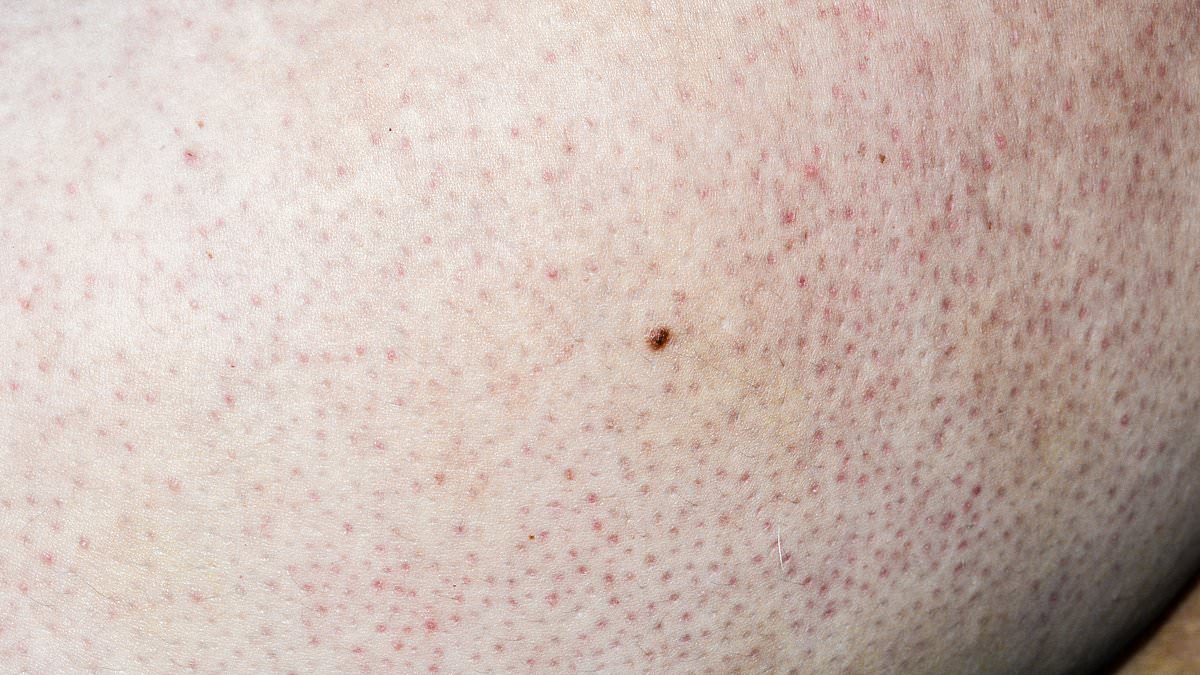
Dr. Philippa Kaye responds: The appearance of spots on the upper arms is frequently attributed to a skin condition known as keratosis pilaris.
This condition is characterized by tiny, rough bumps that are often compared to the texture of sandpaper. While the bumps may be the same color as your skin, they can also present as red or darker spots.
Keratosis pilaris typically manifests on the upper arms, but it can also be found on the thighs and buttocks. The issue arises when keratin, a protective skin protein, clogs the hair follicles, leading to the development of these bumps.
The condition is often hereditary and can be associated with dry skin and eczema, an itchy rash.
Many individuals experience this condition more frequently in the winter months when the skin tends to become drier due to the cold weather.
Keratosis pilaris is more common in children and teenagers, but can occur at any age.
And while it is not dangerous or painful, the condition can be unsightly and embarrassing for some.

Keratosis pilaris occurs on the tops of the arms, but it can also affect the thighs and buttocks
Unfortunately, there are no cures. But there are steps patients can take to reduce the severity of their keratosis pilaris.
This includes avoiding using soaps and body washes that contain fragrances. This is because these can dry out the skin and make the spots worse.
Likewise, patients should avoid overly-hot baths or showers for the same reason. Patting the skin with a towel while drying, rather than rubbing, is also advised.
There is also some evidence that gently exfoliating the skin can help lessen keratosis pilaris spots. This can be done using a soft washcloth or an exfoliating mitt. But this should only be done once or twice a week to avoid aggravating the skin.
There are medical-grade moisturisers, known as emollients, that can help reduce the symptoms. Keratosis pilaris patients are often advised to use creams that contain lactic acid or salicyclic acid, both of which soften the skin and clear out the blocked pores that trigger the problem.
In severe cases, a GP might prescribe steroid creams or retinoids – a type of cream made with vitamin A often used to treat acne – to combat the buildup of keratin.

GP, author and broadcaster Dr Philippa Kaye
I have a terrible phlegmy cough but no other symptoms. Should I be worried?
Dr Philippa Kaye answers: A cough that brings up phlegm is often a sign of a viral infection. Bringing up phlegm is usually the body’s attempt to clear the airways.
This might occur as a result of irritation, for example from smoke or dust, or due to an infection like a cold or flu.
Often, when a virus is to blame, the phlegm may appear yellow or green. In most cases, an infection will resolve itself. Anyone struggling to breath as a result of a cough should seek urgent medical help.
A phlegmy cough may be due to asthma – where the breathing tubes that carry air in and out of the lungs become inflamed and narrow.
This would normally be treated using inhalers, prescribed by a GP.
In some cases, a cough may be triggered by acid reflux, also known as heartburn. This is where stomach acid rises into the throat, inflaming the airways. Diet changes – such as cutting out alcohol and fizzy drinks – as well as quitting smoking, can help combat acid reflux.
Anti-acid tablets, like omeprazole, can reduce acid reflux symptoms temporarily, but are not long-term solutions.
Anyone who has a cough for longer than three weeks should see their GP. This is because it can be a sign of cancer. Patients should also seek medical attention if they cough up blood, are constantly short of breath, have unexplained weight loss or night sweats.