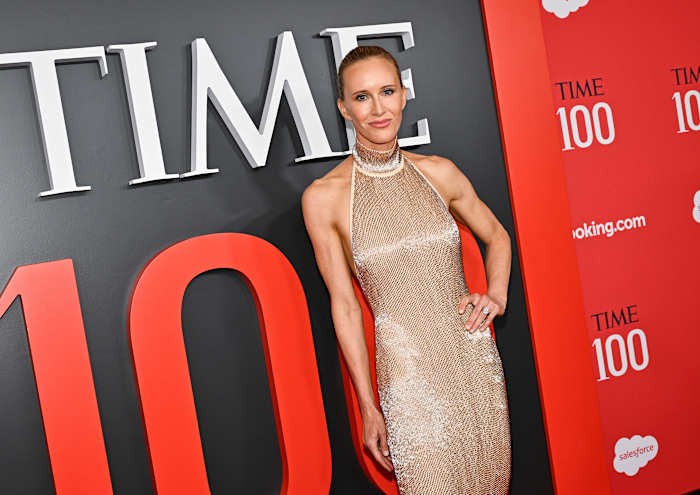


LOS ANGELES — Author Amy Griffin filed a defamation lawsuit Monday against a former classmate, arguing that the woman falsely claimed in a New York Times article and a later lawsuit that Griffin used her accounts of sexual abuse as the basis for Griffin’s bestselling 2025 memoir, “The Tell.”
The complaint, filed in federal court in Nevada, says the former middle school classmate told The New York Times in 2025 “and through it, the world” that Griffin was “a fraud and a thief.”
According to Griffin’s filing, the classmate’s version of events amounts to an accusation that “Mrs. Griffin stole the rape of another woman and built a bestseller on it.”
A spokesperson for The New York Times said Griffin’s lawsuit distorts the newspaper’s reporting, while the former classmate said she expects her claims to be validated in court.
In “The Tell,” which became a bestseller and was selected for Oprah’s Book Club, Griffin — a venture capitalist and memoir writer — describes being sexually abused as a child by a teacher at her middle school in Amarillo, Texas. She also writes that she later recovered memories of the abuse through therapy involving the psychedelic drug MDMA.
The Times published its story six months after the book’s release, featuring the former classmate’s account that parts of Griffin’s story closely mirrored her own experiences. In March, the woman then sued Griffin in California state court, a case Griffin is contesting while also seeking its dismissal.
The Associated Press doesn’t typically name people who say they have been sexually abused unless they come forward publicly or otherwise consent. The woman who sued Griffin filed her lawsuit as Jane Doe, and her name did not appear in the Times story.
Griffin says documentation backs her in every aspect
Griffin’s lawsuit says the most essential fact is that she put her account of her abuse in writing in 2020, and in 2021 she provided another detailed and documented account in an interview with the Amarillo Police Department. Both accounts match up with the book, and both came before Griffin is alleged to have extracted the woman’s abuse story by having someone posing as a talent agent call her in 2022, according to the lawsuit. The statute of limitations prevented the criminal investigation from moving forward.
Griffin’s lawsuit says the woman falsely claimed to be another middle school classmate who appears in “The Tell” under the pseudonym “Claudia,” whose meeting with the author is recounted in the book. The lawsuit Griffin had not talked to the woman in more than 35 years, had never been part of the same church youth group as alleged, and was demonstrably not in the Palm Springs area in 2019 — or the years before or after — when the woman claims the two of them met for coffee.
Griffin’s lawsuit says the coffee shop conversation with “Claudia” took place thousands of miles away in the presence of a collaborator, and that the woman in the Times story had been unable to produce any evidence the meeting with her had taken place.
Accuser says this is an attempt to silence her
In an email to The Associated Press sent through her lawyers, the woman said the shame and humiliation from her sexual assault were unimaginable and she was “violated all over again after reading about my own experiences in Amy’s book.”
“Despite trying to remain anonymous, Amy has now chosen to use her immense wealth and influence to try and silence me,” the email said. “She has had her lawyers identify me publicly as well as sue me. I am shocked and disappointed that she would choose to take this route, especially since she herself knows the truth.”
Griffin’s lawsuit seeks a declaration that the allegations that she stole the woman’s abuse stories are false, along with financial damages to be determined at trial.
New York Times stands by its reporting and story
Griffin’s lawsuit, while not naming the Times as a defendant, is harshly critical of the paper, saying it “deemed the story too good to scrutinize” despite Griffin’s lawyers making it clear the woman’s account was “demonstrably false.”
Times spokesperson Danielle Rhoades Ha said in an email to the AP that the lawsuit and related filings “repeatedly misrepresent The New York Times story and its reporting,” and that the article “is markedly different in key aspects put forth” in both women’s lawsuits.
Rhoades points out that many of the allegations Griffin is pushing back against did not appear in the Times’ story, including that the woman they spoke to was “Claudia,” or that a person posing as a talent agent on Griffin’s behalf called to get her stories of abuse.
And Rhoades said the Times story did not say Griffin “misappropriated” the woman’s story, and she said claims that the reporters did not vet their story are false, and that they “engaged extensively with Ms. Griffin’s legal representatives prior to publication including meticulous fact checking.”
“Our story was about a publishing phenomenon, the reliability of memories recovered while under the influence of MDMA and the impact of a bestselling memoir on the author’s hometown,” Rhoades said. “Our reporters’ only agenda was to pursue the facts, including corroboration of accounts from all sources.”


