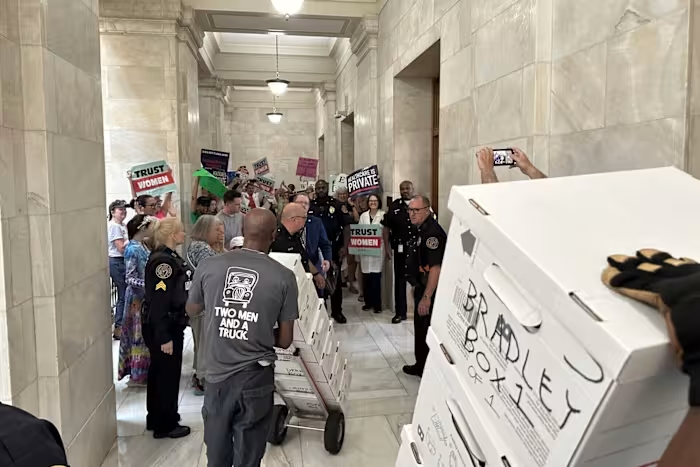

A federal judge in Arkansas has invalidated several state laws that imposed new hurdles on citizen-led ballot initiative campaigns, siding in part with challengers who argued the rules infringed on voters’ constitutional free speech rights.
The ruling marked a significant win for the League of Women Voters of Arkansas and other plaintiffs, who filed suit last year as a number of states moved to tighten the process for residents seeking to pass laws or amend state constitutions through ballot measures.
One of the challenged provisions required people signing petitions to present photo identification. Arkansas’ Republican-led state government enacted that and other restrictions after election officials rejected petitions from abortion rights advocates on a legal technicality during a 2024 campaign to place an abortion legalization measure before voters in the conservative state.
Protect AR Rights, one of the groups involved in the lawsuit, described the decision as an “important victory for the people of Arkansas and their constitutional right to direct democracy.”
U.S. District Judge Timothy Brooks issued the decision Tuesday. While he agreed with the plaintiffs on several claims, he also dismissed some of their challenges and ordered three remaining disputes to proceed to trial.
Arkansas Secretary of State Cole Jester, a Republican who defended the laws in court, said his office intends to appeal the ruling and “will fight tirelessly for common sense safeguards like voter ID.”
Among the 2025 provisions Brooks struck down were requirements that canvassers confirm a signer’s identity with a photo ID and either read the ballot question aloud or require the signer to read the full question before adding a signature. Ballot questions can often run several hundred words.
Brooks wrote that forcing a petition signer to have and show photo identification “before engaging in core political speech” clearly violates free speech protections. He also noted that the Arkansas secretary of state’s office already examines each signature to verify that the signer is a registered voter.
The ID requirement regulates what a registered voter “must do before signing a petition and what a canvasser must do before allowing them to,” Brooks wrote. “This impedes supporters of a measure from expressing their views by signing a petition.”
State officials had contended that requiring a reading of the ballot question before anyone can sign a petition was necessary to prevent a canvasser from misrepresenting the ballot question.
But Brooks wrote that the state had refused to prosecute reported cases of such canvasser misconduct, and that it should enforce its existing laws before it chose a more restrictive alternative of “imposing burdensome speech codes on good and bad actors alike.”
Twenty-three states and Washington, D.C., allow citizen-initiated ballot measures, according to the nonprofit Ballot Initiative Strategy Center.
In March, the center reported that it had found a “sharp escalation” by lawmakers in both the number and severity of anti-democratic attacks on the ballot measure process over the past several election cycles.
Sponsors of such efforts, it wrote, framed them as steps to improve election integrity, administrative efficiency or voter protection.
One of the most common methods is making it harder for initiatives to qualify for the ballot by placing restrictions on where, when and how signatures are collected, it wrote.
It singled out efforts in Arizona, Arkansas, Idaho, Missouri, North Dakota, Ohio and Oklahoma.
Another common method of restricting ballot initiatives, it said, is requiring a larger majority of voters, rather than a simple majority, to approve a referendum, thus making it harder to pass. It cited efforts in Arizona, Florida, Missouri, North Dakota and Ohio.
___


