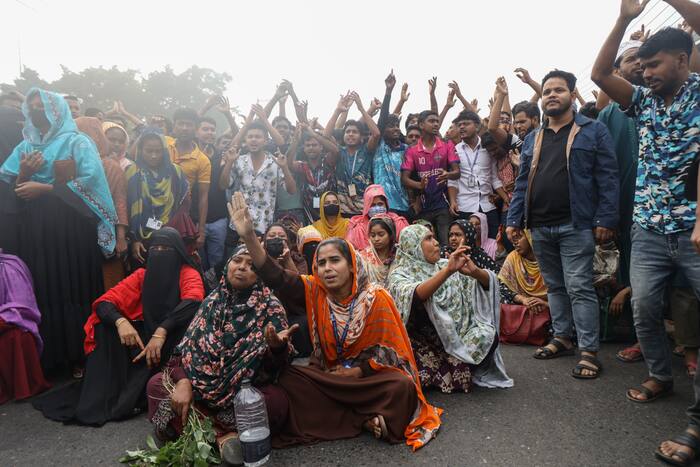

DHAKA – Bangladesh on Wednesday increased the minimum monthly wage for entry-level garment workers by 36%, raising it from 12,500 takas to 17,000 takas ($136). The decision followed weeks of violent protests that forced factories to close and disrupted production, as workers called for the minimum wage to be doubled.
Workers took to the streets, clashed with police and attacked factories during the unrest. They said rising inflation and the higher cost of living had made it increasingly difficult to support themselves on existing wages.
Bangladesh’s garment industry is the country’s primary source of foreign-exchange earnings, with most exports shipped to the United States and Europe. The sector accounts for about 80% of Bangladesh’s total exports and directly employs roughly 4 million people, most of them women from rural communities.
A government-appointed wage board approved the new pay structure early Wednesday after nearly 12 hours of negotiations involving representatives of workers and employers.
The six-member board, made up of two representatives each for workers and employers along with two other members, approved the 17,000-taka minimum wage by a 4-2 vote. The two dissenting members backed the workers’ revised demand for a monthly minimum of 18,000 takas.
The wage board also adjusted the monthly pay scales for workers in other categories.
It was not immediately known whether garment workers would accept the revised wage structure.


