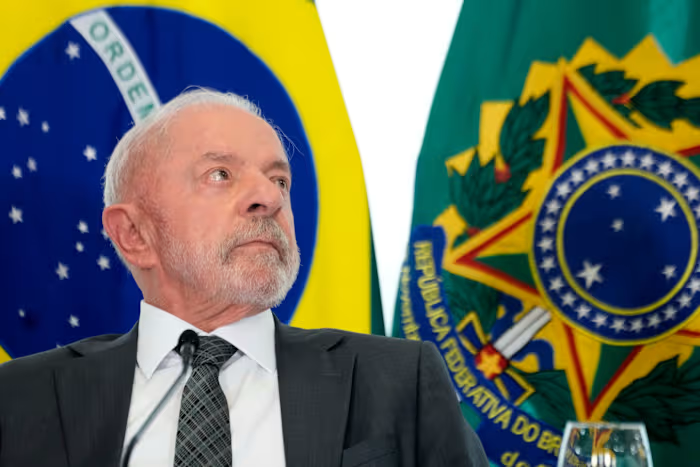

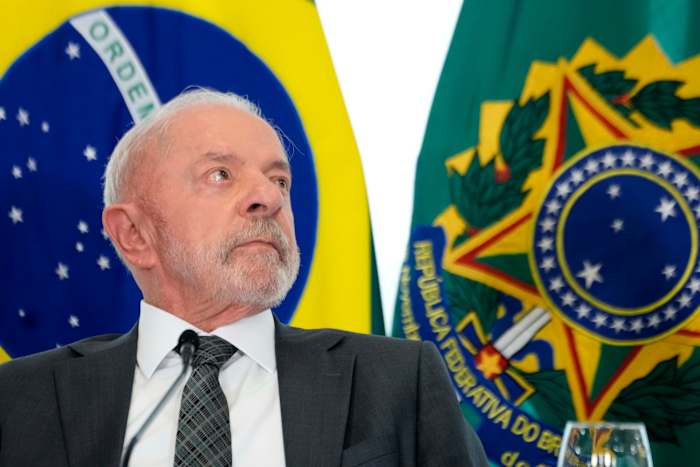
RIO DE JANEIRO – Brazilian President Luiz Inácio Lula da Silva moved Wednesday to curb fuel costs, signing a decree and a provisional measure just weeks before the presidential election and as the U.S.-Iran war pushes global energy prices higher.
Fuel prices have become a politically charged issue for voters, who in October will choose whether to give Lula a fourth, nonconsecutive term or elect Sen. Flávio Bolsonaro, the son of former President Jair Bolsonaro.
Brent crude, the global benchmark, climbed above $100 a barrel on Wednesday for the first time since July, as attacks on oil facilities and vessels in the Middle East raised fresh concerns about further disruptions to an already fragile supply chain.
“We’re not going to allow this irresponsible war to hit your pocket,” Lula said while signing the measures, which extend fuel price controls first introduced at the start of the U.S.-Iran conflict.
The package announced Wednesday cuts taxes on the import and sale of ethanol, gasoline and gasoline blends, excluding aviation gasoline, for 30 days from Sept. 10 through Oct. 9. The provisional measure also authorizes a subsidy of one Brazilian real, or $0.19, per liter for road diesel producers and importers.
Oil prices jumped soon after Israel and the U.S. began their war with Iran in late February, driven largely by the shutdown of most shipping through the Strait of Hormuz, the narrow passage that carried about one-fifth of the world’s oil supply before the conflict.
Brazil is a significant producer and exporter of crude, and government revenue from the sector has risen sharply this year alongside international prices. Even so, the country continues to depend on imports to satisfy domestic demand for refined fuels.
Keeping diesel prices steady is especially important for avoiding truck driver strikes and limiting pressure on food inflation. A 2018 truckers’ strike sent food prices higher, emptied supermarket shelves and gas stations, and caused billions of dollars in losses, highlighting the influence of organized truckers across Brazil.
Former President Jair Bolsonaro, then a lawmaker and months away from winning the presidential election, was an outspoken supporter of the truckers, who later became an important constituency for him.
Wednesday’s measures “have a significant electoral component,” according to Armando Castelar Pinheiro, an economics professor at the Federal University of Rio de Janeiro. If it weren’t for the political calendar, “there would be some subsidy, but it would likely be lower,” he said.
Diesel in Brazil is 28% cheaper than international prices and gasoline is 21% cheaper, according to an Itaú BBA market analysis cited by local media Wednesday.
___


