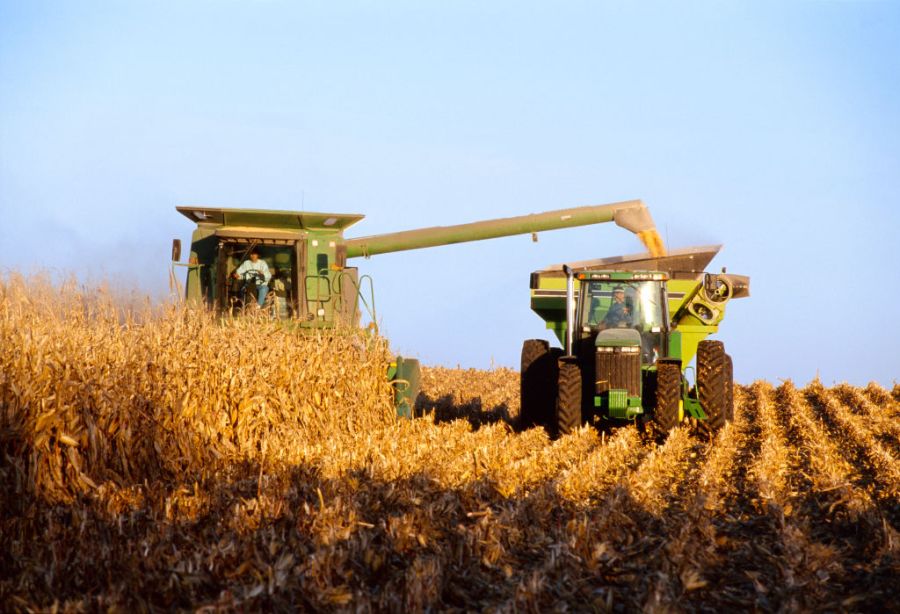


() The U.S is on track for a record-breaking corn harvest, but that doesn’t mean farmers are cashing in.
The USDA predicts that corn production will reach a record 16.7 billion bushels in 2025, marking a 13% increase from the previous year and surpassing the 2023 peak of 15.3 billion.
This might seem positive, but for farmers, the increase in supply is likely to further depress prices, which are already at five-year lows.
“At current prices, we’d be looking at losses of between $80 to $100 per acre,” stated Stu Swanson, a third-generation family farmer and president of the Iowa Corn Growers Association.
The record-breaking harvest this year is due to a combination of factors: farmers increased their corn acreage, and favorable growing conditions resulted in the highest projected yield ever.
“It’s a double whammy: we planted more and are harvesting more than usual,” explained Chad Hart, an agricultural economist at Iowa State University.
While demand remains high, it is not clear that overall usage can increase enough to match the growing supply, Hart noted.
Last week, the National Corn Growers Association (NCGA) urged lawmakers to take steps aimed at boosting demand, warning this year’s record crop could hurt farmers’ livelihoods.
The U.S. is the world’s largest corn producer at nearly 380 million metric tons in 2024, about 31% of global production. Iowa alone grows about as much corn as the entire European Union.
Why is there a corn conundrum?
American farmers face a fundamental challenge: choosing what to plant, and in what quantity, without knowing what the payoff will be.
Corn which is used for animal feed, fuel, and exported globally looked like a solid bet this year compared with alternatives like soybeans. Add in better-than-expected weather conditions, and the result is a whole lot of corn.
The question now is what to do with it all.
Even a nationwide corn-on-the-cob campaign wouldn’t be enough to move the needle. Nearly 40% of corn was used for animal feed in 2023, roughly 37% went toward fuel production and about 15% was exported around the world. Cereals and food made up just 1.5% of the pie.
The NCGA has called on Congress to pass legislation allowing year-round consumer access to higher ethanol blends a move that matters because most U.S. biofuel comes in the form of ethanol, which is made from corn starch and then blended into gasoline.
The trade association is also asking President Donald Trump to broker deals that will open new foreign markets for corn. Mexico is the biggest importer of U.S. corn, with trade totaling roughly $5.5 billion last year.
Will lower corn prices benefit consumers?
Unfortunately, lower corn prices aren’t expected to provide much relief at the grocery store.
“We might see a little bit of relief, but it’s going to be relatively muted,” said Joe Janzen, an agricultural economist at the University of Illinois.
That’s because there are so many other factors that determine grocery prices, many of which are facing upward pressure right now.
Take beef, for example. The average price of a pound of ground beef hit a record $6.25 in July up more than 13% from a year earlier.
In theory, lower corn feed costs should make raising cattle less expensive, but a host of other factors, like tight supply and the emergence of a flesh-eating pest in Mexico, have pushed prices higher.
Still, consumers wouldn’t want corn prices to surge, as it would further drive up input costs.
What about Trump’s tariffs?
In the short term, uncertainty around President Trump’s tariffs may have boosted demand for U.S. corn, with countries front-loading their purchases to avoid higher prices down the line.
“As far as the number of bushels leaving the international markets, we will set a record this year,” Hart said.
The big question is whether that record export pace is sustainable with tariffs in effect. That issue is especially critical this year because exports are the quickest adjusting part of the demand structure, Hart noted.
Janzen thinks trade uncertainty is part of the reason corn prices are down, with expectations that exporting the crop could be more difficult down the road. If trade barriers persist, other suppliers could move in to fill the gap.
“We have competition and that competition is ready to step in and supply corn to places like China, Europe and other major destinations,” Janzen said.


