Share this @internewscast.com

LAS VEGAS (KLAS) An employee at Grand Canyon National Park was exposed to hantavirus, and a separate case of exposure to rabies in the park has also been confirmed.
A Coconino County health official confirmed both reports to affiliate KLAS.
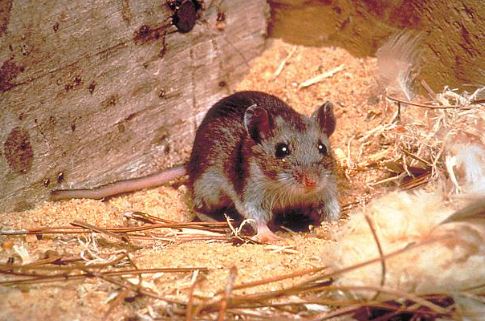
While hantavirus can be fatal, it’s also rare. The virus is spread primarily by deer mice, according to Eve Wolters, deputy director for Coconino County Health and Human Services. Deer mice are part of the environment at Grand Canyon National Park.
Authorities did not say how the Grand Canyon employee may have been exposed.
Hantavirus, which does not spread between people, has no specific cure or treatment. Early medical attention can, however, increase the chance of survival.
An infection can rapidly progress and become life-threatening.
Earlier this year, an autopsy confirmed that Betsy Arakawa, the wife of actor Gene Hackman, died from hantavirus pulmonary syndrome in Santa Fe, New Mexico.
Data from the Centers for Disease Control and Prevention (CDC) shows that from 1993 to 2022, New Mexico had the highest concentration of hantavirus cases in the U.S., followed by Colorado, Arizona, California, and Washington.
About 38% of cases are fatal, according to the CDC.
Earlier this year, three people in the remote California town of Mammoth Lakes died of hantavirus. Dr. Tom Boo, the county’s public health officer, said it was not initially believed that any of them “engaged in activities typically associated with exposure, such as cleaning out poorly ventilated indoor areas or outbuildings with a lot of mouse waste.”
Boo said in April that deer mice numbers are believed to be high this year in the Mammoth Lakes area, noting that “an increase in indoor mice elevates the risk of Hantavirus exposure.”
Nevada officials advise taking care when cleaning out areas such as sheds, barns, trailers, garages, and cabins where deer mice have nested or left droppings.
Rabies cases
Eve Wolters, deputy director for Coconino County Health and Human Services, said rabies cases are much more common than hantavirus, and bats are a primary carrier.
“There are things you can do to protect yourself. Be aware of what you’re coming into contact with and take appropriate precautions,” she said.
“People want to sleep out under the stars,” Wolters said. And while that’s easy to understand at a place like the Grand Canyon, a tent is safer. While you’re sleeping, you just don’t know what might be exploring your face, she said.
The recent report at the Grand Canyon involved a bat collected along the Colorado River near Kanab Creek Canyon. The bat tested positive for rabies, according to the National Park Service.
Wolters said the person exposed to the bat had recovered after treatment known as Post-Exposure Prophylaxis (PEP).