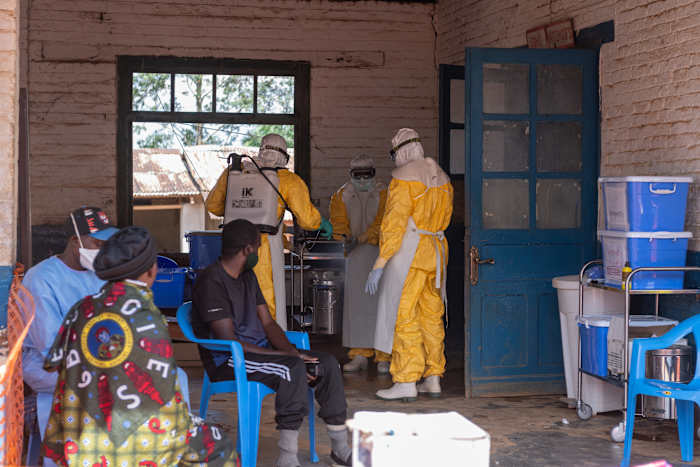


BUNIA – In a troubling development, the Ebola outbreak in eastern Congo has claimed over 100 lives in less than a month since it was officially announced, local officials report.
Efforts to control the outbreak, which began on May 15, are being hampered by multiple challenges. Health workers face hostility from some local residents, skepticism about the disease persists, and ongoing armed conflicts in the affected areas further complicate the situation.
According to a recent situation report released on Monday, 550 confirmed cases have been identified, resulting in 101 fatalities and 19 recoveries. The epicenter of the outbreak is in the eastern province of Ituri, responsible for over 90% of the cases. The disease has also been detected in North Kivu and South Kivu provinces and has crossed into Uganda.
It is suspected that the actual number of Ebola cases might be higher, as the outbreak was not identified immediately. Additionally, the response is hindered by the lack of an approved vaccine or treatment for the virus.
This recent outbreak is attributed to the Bundibugyo virus, a rare strain of Ebola, which, unlike the more common “Zaire virus,” has no approved vaccine or treatment. Most of Congo’s previous 16 Ebola outbreaks were caused by the Zaire strain.
The surge in reported cases is partly due to enhanced diagnostic capabilities, which have allowed health officials to clear a backlog of samples awaiting testing, according to authorities.
Frontline health workers, with little pay or rest, have been attacked multiple times by angry residents and have not been able to reach some communities due conflict involving armed rebel groups.
Eastern Congo has for years seen attacks by dozens of separate rebel and militant groups, some of them with links to foreign countries or to the extremist Islamic State group.
Conflict is “constraining access for the response, disrupting surveillance and response activities, and increasing the risk of undetected transmission,” the World Health Organization said Monday. “Such incidents underline the challenges of the context and the importance of working closely with local leaders and communities,” WHO added.