

A recent incident in Winter Haven, Florida, has drawn attention to a critical issue facing many families in the state. A woman from Volusia County stands accused of attempting to murder her disabled great-granddaughter before trying to end her own life. This tragic case highlights the struggles encountered by Florida families who care for children with significant medical needs but find the support system lacking.
In December, local deputies reported that Deborah Collier, who had legal custody of her 13-year-old great-granddaughter, admitted to authorities that she was overwhelmed by the responsibility of care. She expressed hesitation about placing the child in an assisted living facility. Collier is now set to face trial in June, according to court documents.
Collier’s attorney revealed that while the family is actively seeking appropriate care for the teenager, they have encountered difficulties in finding a solution that is both affordable and suited to the child’s needs, which require constant attention.
Children who require continuous skilled nursing care fall into the category of medically fragile. These children need extensive support, often around the clock, to manage their health and safety effectively.
Families struggle to get help
Matthew Dietz, a lawyer specializing in disability rights and a professor at Nova Southeastern University, estimates that Florida is home to between 7,500 and 10,000 medically fragile children. He notes that only a small fraction of these children receive the full extent of care they require, with many receiving just 50 to 80 percent of the services they are entitled to.
“Very few of them get 100 percent of the care that they need,” said Dietz, “The hours could range between 50 percent to 80 percent of what they are granted.”
One of those children is Dylan Webb, 13, Winter Haven.
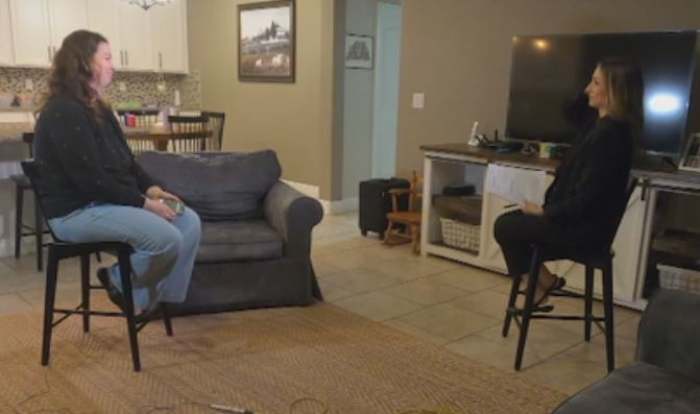
When News 6 met with Dylan’s mother, Kayla, she had been on the phone for hours, fighting to get Dylan the care he needs.
“We met Dylan when he was about two and a half years old,” said Kayla Webb.
After adopting Dylan, Webb said he was diagnosed with a heart condition, fetal alcohol syndrome and several other conditions. He also uses a G-Tube to help him eat.
According to Webb, Dylan’s private duty nursing, or PDN, is covered through Florida Medicaid, but his hours are getting cut.
“We’re probably short 20 hours a week,” Webb told News 6.
She said the state is cutting Dylan’s hours because officials have determined the care is not medically necessary.
“They’re like he’s not on a vent (ventilator), he’s not on a trach (tracheotomy). He’s not on a vent and he’s not on a trach because we are this proactive in meeting his medical needs,” said Webb.
A decade-old lawsuit
Webb filed a legal declaration, adding her voice to a more than decade old lawsuit.
In 2013, the Department of Justice (DOJ) sued the State of Florida for violating the Americans with Disabilities Act (ADA), claiming the state was placing medically fragile children in nursing homes unnecessarily. The DOJ accused Florida of failing to provide adequate in-home nursing and community services to help families and avoid placing children in these facilities.
In 2023, a federal judge found the state violated Title II of the ADA, which prohibits disability discrimination by state and local governments and requires them to make programs, services and activities accessible to people with disabilities.
The court ordered Florida to make PDN reliable enough that children who need it can live at home. The state must ensure each PDN child receives at least 90 percent of the authorized nursing hours, collect and report nurse-availability data and take concrete steps toward compliance.
News 6 asked Dietz why families like the Webbs are seeing their private duty nursing hours cut.
“According to the state, they claim that there’s a nursing shortage and because there is a nursing shortage, there are not sufficient people who will accept to be a private duty nurse to care for these children,” said Dietz.
Pay, shortage at root of problem
“There was a nine to 10 month period not a single shift was covered,” said Webb, “We were told nobody was applying for the position.”
According to the Home Care Association of Florida, Florida ranks last in the nation- No. 50- for registered nurse reimbursement pay for private duty nursing.
“The reimbursement rate is so low that the nurses aren’t willing to work for that pay,” said Denise Bellville a registered nurse and executive director of the Home Care Association of Florida.
As for current PDN pay rates, Belville said the picture is stark.
“Through the MCOs (Managed Care Organizations), they range anywhere from reimbursement of $38 to $52 an hour,” Bellville said. “That’s what the MCO is paying the agency, so the agency has to pay for benefits, et cetera, and the nurse gets what’s left, but when you look at the rate of pay in a hospital, that nurse might be $45 to $60 an hour.”
Florida contracts with managed care organizations to administer its Medicaid program rather than managing benefits directly.
“We did tons of meet and greets with nurses this year. Most of them were very honest and said ‘sorry for the amount of money they’re going to pay, I can’t take this,’” Webb told News 6.
In 2022, Florida launched two programs to get more students in nursing school to address the nursing shortage. The Linking Industry to Nursing Education, known as LINE funds, funds partnerships between colleges, universities and health care providers.
The Prepping Institutions, Programs, Employers, and Learners through Incentives for Nursing Education program, known as PIPELINE, awards money to nursing education programs based on graduation rates.
“Florida has invested close to $500 million to support nursing education and address this vital need,” Gov. Ron DeSantis stated during a January news conference.
“If you look at what we’ve done in both of these programs, (LINE and PIPELINE) we’re now producing 1,000 plus additional nurses than we were before those every year,” said Gov. DeSantis.
However, according to the Florida Center for Nursing’s 2026 report, many state nursing programs “continue to face substantial barriers that limit their ability to expand enrollment and meeting Florida’s workforce needs.”
The report stated programs cited a lack of qualified applicants which reflects a “growing concern that interest in nursing careers may not be translating into adequately prepared applicants.”
“Once they become nurses, are they going to be private duty nurses at home? Or are they going to go to some other state that pays them a lot more money to do the same thing,’ said Dietz, “The answer is, and the answer has always been pay nurses a living wage.”
Agency response
News 6 contacted the Florida Agency for Health Care Administration, also known as AHCA, which oversees Florida’s Medicaid program. The agency did not respond to our multiple requests for comment.
News 6 also emailed Sunshine Health, which is contracted by AHCA to manage Medicaid benefits.
According to a spokesperson, “Decisions about private duty nursing services are guided by state and federal Medicaid requirements designed to ensure services are medically necessary and aligned with evidence-based standards of care.”
“Sunshine Health is deeply committed to the health and well-being of every child we serve, and to supporting the families who care for them. Decisions about Private Duty Nursing Services are guided by state and federal Medicaid requirements designed to ensure services are medically necessary and aligned with evidence-based standards of care. Every child’s situation is carefully reviewed by board-certified pediatricians using established clinical guidelines and a comprehensive assessment of the child’s individual circumstances. Our care management team works closely with families and providers to review needs, answer questions about coverage, and coordinate clinically appropriate services that are responsive to each child’s condition.”
Sunshine Health Spokesperson