
A federal initiative that supplies food assistance to 40 million low-income individuals is facing potential jeopardy in November if the current government shutdown remains unresolved.
In certain areas, there is already a halt in the approval of new applications for this program.
Uncertainty looms over the Supplemental Nutrition Assistance Program (SNAP), commonly referred to as food stamps, which evolved from earlier food aid efforts.
Here’s an analysis of the current situation.
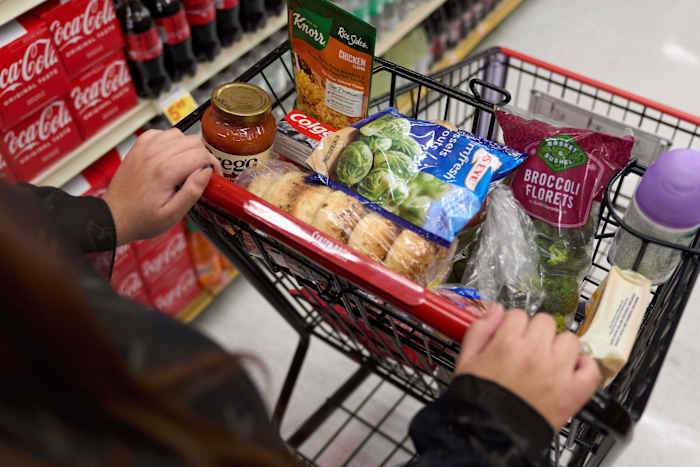
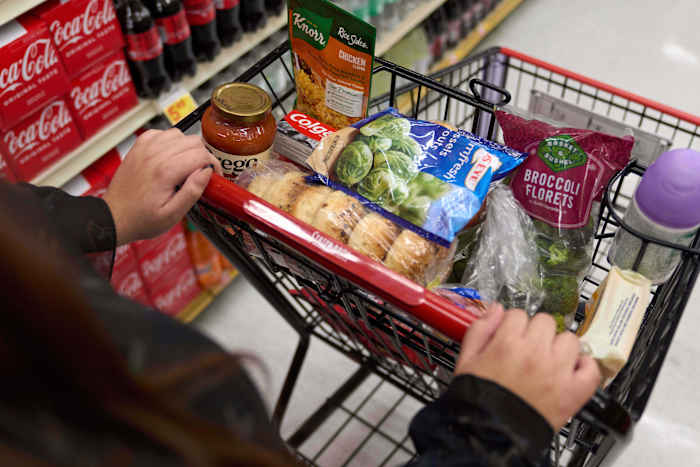
SNAP plays a crucial role in the U.S. social safety net, benefiting approximately one in eight Americans each month. Recipients utilize prepaid cards to purchase groceries, ensuring access to essential nutrition.
SNAP is a major piece of the nation’s social safety net, touching nearly 1 in 8 people in the country each month. They receive benefits on prepaid cards that they can use for groceries.
The other big pieces of the safety net — Social Security and Medicaid — are expected to continue paying benefits during the shutdown.
But because of the way it’s funded, SNAP is vulnerable.
In the accounting year that ended on Sept. 30, 2024, SNAP cost just over $100 billion, including the half of state administrative costs covered by federal taxpayers. It provided an average of $187 a month to 41.7 million people.
States were warned about November benefits
When the government shut down on Oct. 1 amid a congressional budget impasse, a few things were clear about SNAP.
One was that benefits would continue through October.
The other was that it was unclear after that.
The U.S. Department of Agriculture, which oversees the program, sent letters on Oct. 10 to the state agencies that administer it telling them not to send certain files to the contractors that would clear the way for the EBT cards to be loaded at the start of November.
Different states send that information at different points in the month.
Carolyn Vega, the associate director of policy analysis at Share Our Strength, an anti-poverty advocacy group, said that pausing sending the information now doesn’t mean that cards can’t be loaded next month, with or without resumption of government operations.
But it’s not good news, either. “The question marks are trending in a bad direction for November,” she said.
Finding money during the shutdown could be a challenge
A budget agreement that ends the shutdown would also restore SNAP funding.
Short of that, Vega said, it’s possible state or federal governments could free up money to bridge the gap. She said that in a 2015 shutdown, similar warnings were released and then reversed.
But because of the amount of money involved, she noted, that’s a challenge. General SNAP costs far more, for instance, than the Special Supplemental Nutritional Program for Women, Infants and Children that helps 6 million low-income mothers, young children and expectant parents to purchase nutritional staples. President Donald Trump’s administration has shored up that program — for now — with $300 million.
Doing the same for the bigger program could cost about $8 billion a month.
And at tens to hundreds of millions of dollars monthly per state, finding state money to cover the costs could also be difficult.
States are figuring out how to react
More than 1 in 5 New Mexico residents receive SNAP benefits, at a cost of about $90 million a month.
The idea of those benefits disappearing is raising alarms in New Mexico, where more than 1 in 5 people relies on them. “I think it’s direct harm to New Mexicans, to New Mexico’s communities and New Mexico’s economy that is unprecedented,” said state Rep. Nathan Small, a Democrat and chair of the main budget-writing committee.
But he said it’s too early to say whether New Mexico might find options to mitigate any harm if the benefits are cut off.
“We’re following up,” Charles Sallee, director of the Legislature’s budget and accountability office, told lawmakers at a hearing Wednesday, “to verify whether food stamps is really out of money or if this is just a tactic that the administration is playing in the overall negotiation.”
Minnesota’s Department of Children, Youth, and Families told counties and Native American tribes not to approve new SNAP applications after Wednesday. And the state was preparing to tell recipients on Oct. 21 that benefits would not be issued for November, barring any changes.
“An interruption in receiving food assistance can be very disruptive – even dire – for the lives of Minnesota’s families,” Tikki Brown, the department commissioner, told local officials in the update.
Other SNAP changes are starting to kick in
The government shutdown isn’t the only development that could cut access to SNAP.
The broad policy and tax law that Congress passed and Trump signed in July also calls for changes to the program. Adults with children from 14 to 17 will no longer be exempt from a work requirement to receive benefits, and neither will people ages 55 through 64.
Those policies are in effect now, and some people could begin losing coverage around the start of January.
Another change in the law will come in future years. Starting in October 2026, states are to pick up three-fourths of the administrative costs. The next year, states with higher benefit error rates will be required to pay some of the benefit costs.
While it’s possible Congress could modify some of those policies, resuming government operations alone won’t change them.
___
Associated Press reporter Steve Karnowski in Minneapolis contributed to this article.
Copyright 2025 The Associated Press. All rights reserved. This material may not be published, broadcast, rewritten or redistributed without permission.