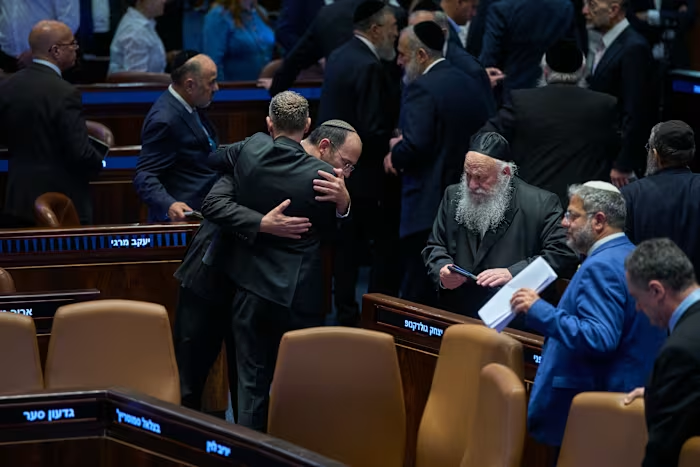

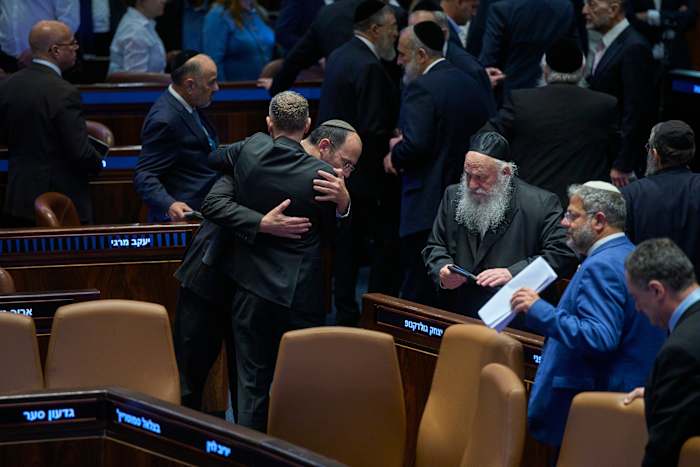
TEL AVIV – Israel’s parliament was formally dissolved in the early hours of Friday, closing out Prime Minister Benjamin Netanyahu’s governing coalition with a frantic final push of legislation.
The Knesset had been due to begin its summer recess on Friday, but lawmakers will now stay away until after Israel’s next national elections, set for Oct. 27.
The dissolution had been widely anticipated as Netanyahu faces a difficult fight to remain in power, with Israel approaching the third anniversary of the Oct. 7 attack that triggered almost three years of war. Recent Israeli election polls point to rising momentum for opposition parties, including forces led by former Prime Minister Naftali Bennett and a well-known centrist former military commander.
In the final week before the Knesset shut down, lawmakers pushed through a series of contentious measures during long, late-night sessions, as Netanyahu sought to secure several key priorities before the political clock ran out.
Among the most significant moves were two bills passed earlier in the week that effectively freeze the military enlistment of ultra-Orthodox men, a step seen as aimed at keeping ultra-Orthodox parties aligned with Netanyahu in any future coalition government.
The Knesset also advanced legislation tied to Netanyahu’s long-running push to reshape Israel’s judiciary, including measures that would expand government influence over broadcast media and reduce the authority of the attorney general. Attorney General Gali Baharav-Miara, who has resisted the judicial overhaul, has repeatedly drawn criticism from Netanyahu and figures on Israel’s right wing.
“We are completing a four-year term, we passed nine budgets and hundreds of bills, I thank you for the trust you placed in me, through which together we succeeded in maintaining a four-year term,” Knesset Speaker Amir Ohana said while announcing the parliament’s dissolution.
A Knesset serving out a full four-year term is an uncommon milestone in Israel’s often turbulent political history.
The last time Israel’s government fulfilled a full term without breaking for early elections was in 1988. Israel has no term limits, and Netanyahu has served more terms than any other prime minister in Israel’s history, but it is rare even for him to finish a full, four-year term.
Between 2019 and 2022, Israelis went to the polls five times. Israel holds elections on average every 2.4 years, making it second-lowest ranked country in the OECD for periods between elections, a marker of political instability, according to the Israel Democracy Institute.


