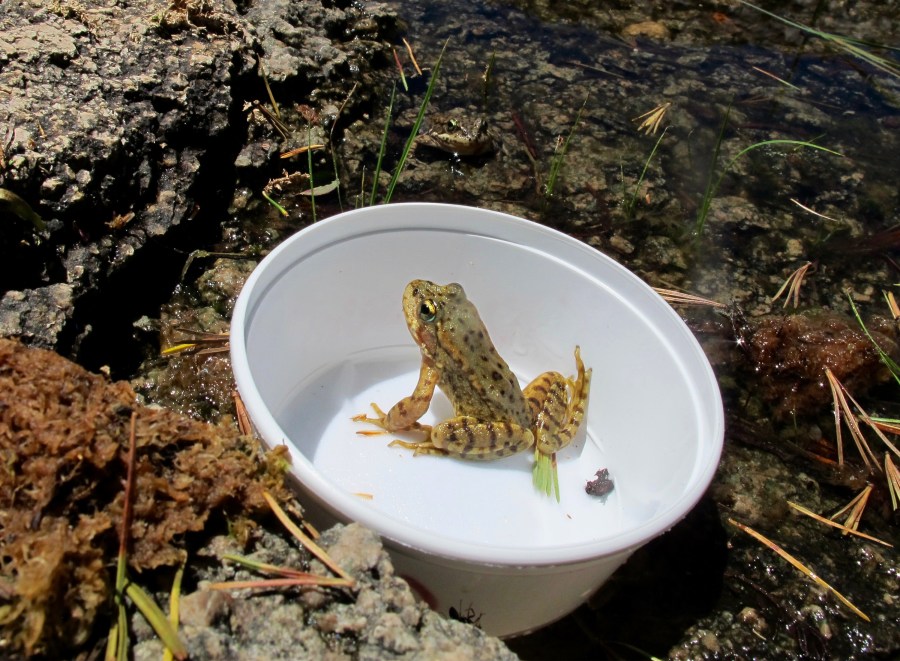

(KRON) — The Oakland Zoo released its 1,000th yellow-legged frog into California’s wilderness this week, marking a milestone for efforts to bring the native species back from the brink of extinction.
The zoo’s wildlife experts have been working for a decade to save the frog species, which was nearly wiped out by a deadly fungal disease, Chytridiomycosis (chytrid).
On Tuesday, an Oakland Zoo crew flew 43 frogs on a helicopter to a release site in Sequoia and Kings Canyon National Park.

“Releasing our 1,000th mountain yellow-legged frog is a major milestone. It’s a number that you hope to achieve when you start a program. We need to keep this movement going to continue helping native California wildlife and make sure that these frogs don’t disappear,” said Samantha Sammons, Wildlife Recovery Program Manager at Oakland Zoo.
Yellow-legged frogs once were a keystone species in high-elevation lakes. They experienced a 90 percent population decline due to the devastating effects of chytrid fungus, zoo officials said.

For its frog project, the Oakland Zoo worked with Mountain Lakes Research Group, the U.S Fish and Wildlife Service, and the National Park Service. Yellow-legged frogs are important because they play a crucial role in California’s ecological food webs, serving as prey for larger animals, and as predators for insects.
Frogs, however, are fragile animals. Their permeable skin makes frogs easily affected by environmental changes. “This trait makes them excellent bioindicators, alerting us to environmental stressors,” Oakland Zoo officials wrote.

For the frog recovery program, the zoo collected three types of yellow-legged frogs — Mountain, Sierra Nevada, and Foothill — as tadpoles. Back in Oakland, the tadpoles were raised through their life cycle. During the “froglet” stage, they underwent anti-fungal chytrid treatments to protect against the virus once reintroduced to the wild. After treatment, they were tagged for monitoring and received their final inoculations before being released into the wild.