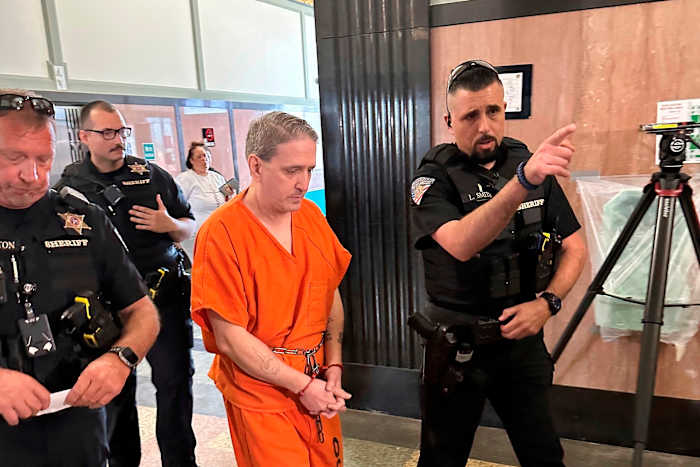

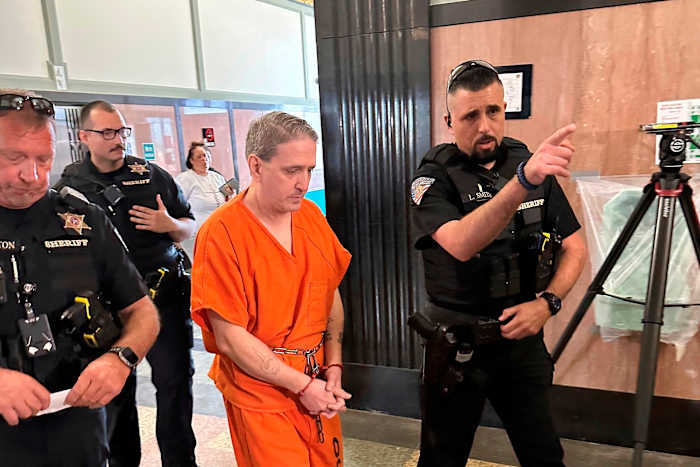
An Oklahoma judge made a pivotal decision on Thursday, granting former death row inmate Richard Glossip the opportunity to be released on bond as he awaits a new trial for a 1997 homicide that nearly led to his execution on three separate occasions.
This ruling paves the way for Glossip, now 63, to step outside the confines of prison for the first time since his arrest almost three decades ago. The U.S. Supreme Court annulled his previous conviction last year, and his persistent assertions of innocence have garnered the attention and backing of celebrities like Kim Kardashian and other notable individuals.
Judge Natalie Mai has set the bond at $500,000, imposing conditions that include Glossip wearing an electronic monitor and restricting his travel to within Oklahoma. Additionally, he is prohibited from contacting any witnesses related to the case and must abstain from drug and alcohol use.
Glossip’s death sentence stemmed from the 1997 murder of Barry Van Treese, his former employer and motel owner in Oklahoma City. Prosecutors have claimed that Glossip orchestrated a murder-for-hire plot.
The Supreme Court’s decision to overturn his conviction was based on the revelation that prosecutors allowed testimony from a key witness they knew was false, thus infringing on Glossip’s constitutional right to a fair trial.
Although Glossip remained incarcerated following Oklahoma Attorney General Gentner Drummond’s announcement of a retrial on murder charges, the state has chosen not to seek the death penalty this time around.
“The court fully expects that the state will rigorously prosecute its case going forward and the defense will provide robust representation for Glossip,” the judge wrote in the order. “The court hopes that a new trial, free of error, will provided all interested parties and the citizens of Oklahoma, the closure they deserve.”
During his time on death row, courts in Oklahoma set nine different execution dates for Glossip, and he came so close to being put to death that he ate three separate last meals. In 2015, he was even held in a cell next to Oklahoma’s execution chamber, waiting to be strapped to a gurney and die by lethal injection.
But the scheduled time for his execution came and went. Behind the walls of the Oklahoma State Penitentiary, prison officials were scrambling after learning one of the lethal drugs they received to carry out the procedure didn’t match the execution protocols. The drug mix-up ultimately led to a nearly seven-year moratorium on executions in Oklahoma.
“Mr. Glossip now has the chance to taste freedom while his defense team continues to pursue justice on his behalf against a system that the United States Supreme Court has found to be guilty of serious misconduct by state prosecutors,” his attorney, Donald Knight, said.
Glossip’s case attracted international attention after actress Susan Sarandon — who won an Academy Award for her portrayal of death penalty opponent Sister Helen Prejean’s fight to save a man on Louisiana’s death row in the 1995 movie “Dead Man Walking” — took up his cause in real life. Glossip’s case also was featured in the 2017 documentary film titled “Killing Richard Glossip.”
“Both Richard and I are grateful for the court’s decision,” Glossip’s wife, Lea, said in a text to The Associated Press. “We have been praying for this day.”


