
WASHINGTON – President Donald Trump is reportedly reconsidering the continuation of a $1.8 billion fund designed to compensate his allies, according to a source familiar with his current deliberations. This development coincides with the Justice Department’s decision to temporarily halt the fund’s implementation, following a court order.
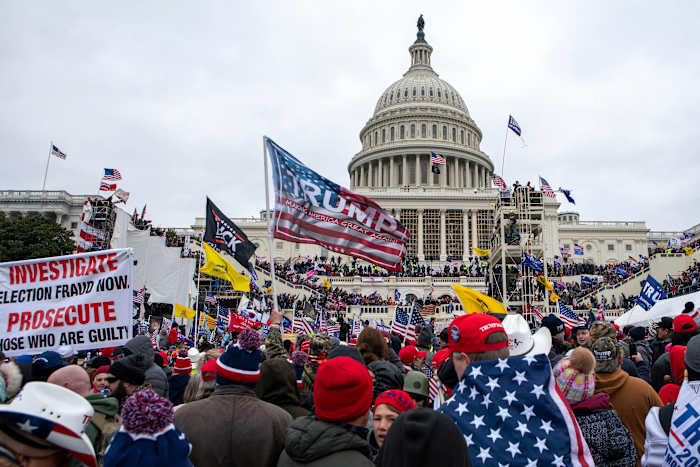
The hesitancy to proceed with the fund reflects the legal challenges it has faced since its introduction just two weeks ago, as well as increasing political opposition. Many Republicans have voiced concerns over the lack of oversight in how the funds are distributed and the potential for money to be allocated to individuals involved in the January 6, 2021, Capitol riot.
Initially, the Trump administration justified the $1.776 billion “Anti-Weaponization Fund” as a corrective measure. It was intended to settle Trump’s lawsuit against the Internal Revenue Service over the unauthorized release of his tax returns, which his administration claims was a misuse of law enforcement power during President Biden’s tenure.
While some of Trump’s supporters, including those involved in the Capitol riot, welcomed the fund’s announcement, it has faced significant opposition from Congressional Republicans. The tension reached a peak at a recent closed meeting with acting Attorney General Todd Blanche, which Senator Ted Cruz of Texas described on his podcast as “one of the roughest meetings I’ve seen in my entire time in the Senate.”
This discord has created complications in the Senate, where Republicans left Washington ten days ago without passing crucial legislation to fund immigration enforcement agencies. This delay was partly due to Democratic proposals to amend or diminish the judgment fund.
Upon returning to Washington, Republicans have indicated that they lack the necessary votes to pass the Homeland Security spending bill unless the White House collaborates with them to introduce constraints on the fund. Many are urging the administration to either impose strict limits on the fund or abandon the proposal entirely.
Amid the backlash, a person familiar with the matter, who insisted on anonymity to discuss the president’s thinking, said Monday that Trump was reconsidering whether to move forward with the fund. The Justice Department separately said Monday that it would comply with a judge’s order from Friday that temporarily halted implementation of the fund pending additional arguments later in the month.
But Republicans said they were still seeking a more explicit commitment that the fund would be pulled back.
“They need to say what they actually mean,” said Republican Sen. Jim Lankford. “They need to say, ‘We’re setting this whole thing aside.’”
Senate Majority Leader John Thune indicated Monday that he hoped the White House would move to drop the fund. He said he wasn’t sure if the immigration spending bill would move this week.
“I do think the best way to handle it is if the administration decides to shut it down themselves,” Thune told reporters.
He said any additional statements from the administration would be helpful, but: “I think the statement they made effectively shuts it down. We’ll find out.”
Alaska Sen. Lisa Murkowski said that if the settlement is “completely pulled, then I’m satisfied. But I haven’t heard anybody say that.”
It was not immediately clear whether the retreat being signaled on the fund Monday indicated that the administration would also backtrack on another element of the IRS settlement — a commitment by the government to abandon any probes of Trump, his family and other associates over whether they’ve paid their fair share of taxes.
The fund was dealt a pair of legal blows on Friday, including an order by U.S. District Judge Leonie Brinkema that temporarily barred it from being implemented. The judge scheduled a June 12 hearing for arguments on whether to extend her order. The Justice Department statement did not say whether the government intended to continue to make legal arguments for the fund.
“This Fund was open to anybody who was so weaponized, targeted, or persecuted, whether they were Democrat, Republican, Conservative, Independent, or otherwise,” the statement said. “The Department will abide by the Court’s ruling.
Separately, the federal judge in Florida overseeing Trump’s lawsuit against the IRS ordered Trump’s attorneys on Friday to respond to “grievous allegations” by settlement critics that the president abandoned his claims to avoid the court’s scrutiny of an illegal deal. U.S. District Judge Kathleen Williams gave them until June 12 to respond in writing to allegations of collusion and whether the case should be reopened because the court was the “victim of a fraud.”
_____
Associated Press writers Mary Clare Jalonick and Fatima Hussein in Washington contributed to this report.