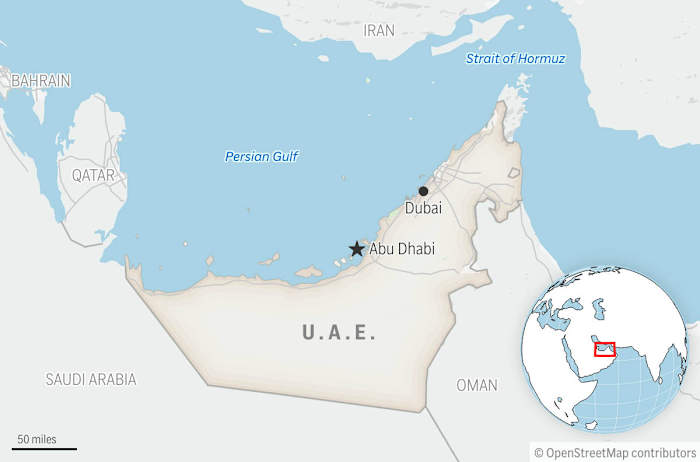


DUBAI – In a significant development, the United Arab Emirates declared on Tuesday its intention to exit the Organization of the Petroleum Exporting Countries (OPEC) and the extended OPEC+ coalition, effective May 1. This decision, while anticipated by some, marks a pivotal shift as the UAE seeks to assert its autonomy amidst long-standing production constraints and a cooling relationship with Saudi Arabia.
The UAE’s affiliation with OPEC dates back decades, beginning with Abu Dhabi’s membership in 1967 and extending through the establishment of the UAE as a nation in 1971. However, in recent years, the Emirates have increasingly pursued an independent foreign policy, occasionally clashing with Saudi Arabia’s strategies, especially as both countries vie for foreign investments. This rivalry has intensified as Saudi Arabia, under Crown Prince Mohammed bin Salman, has taken bold steps to open its economy.
The announcement of the UAE’s withdrawal was made through the state-run WAM news agency, highlighting the nation’s evolving energy strategy. “This decision reflects the UAE’s long-term strategic and economic vision and evolving energy profile, including accelerated investment in domestic energy production,” stated the UAE. The move underscores the country’s commitment to maintaining a responsible and forward-thinking role in the global energy sector.
Despite leaving OPEC, the UAE remains committed to responsible energy production. It assures that it will continue to increase its oil output gradually and in alignment with global demand and market conditions, ensuring a stable transition that respects the intricacies of the market.
“This decision reflects the UAE’s long-term strategic and economic vision and evolving energy profile, including accelerated investment in domestic energy production, and reinforces its commitment to a responsible, reliable, and forward-looking role in global energy markets,” the UAE said.
“Following its exit, the UAE will continue to act responsibly, bringing additional production to market in a gradual and measured manner, aligned with demand and market conditions,” the country added.
Saudi Arabia long has been considered a heavy weight of OPEC, an oil cartel based in Vienna that has seen some of its market power wane as the United States increased its production of crude oil in recent years.
Saudi Arabia and the UAE increasingly have competed over economic issues and regional politics, particularly in the Red Sea area. The two countries had joined in together in a coalition to fight against Yemen’s Iran-backed Houthi rebels in 2015. However, that coalition broke down into recriminations in late December, when Saudi Arabia bombed what it described as a weapons shipment bound for Yemeni separatists backed by the UAE.
Saudi broadcasters long based in Dubai, the economic hub of the UAE, have pulled back to the kingdom in recent months as well as the tensions rose.
Copyright 2026 The Associated Press. All rights reserved. This material may not be published, broadcast, rewritten or redistributed without permission.