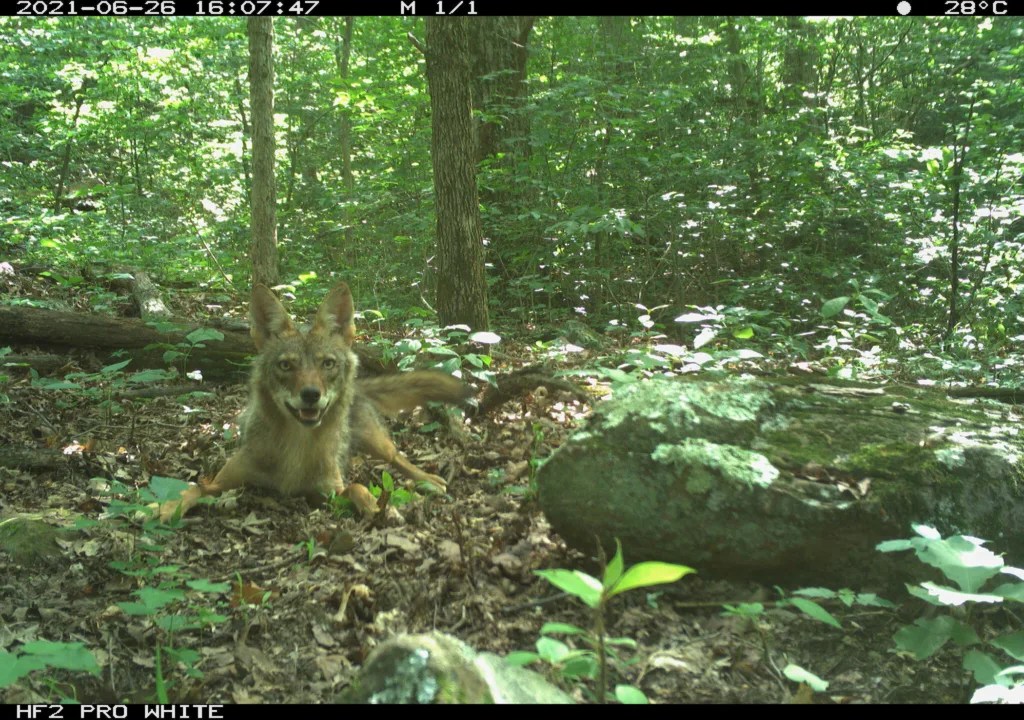

SAVANNAH, Ga. () — A recent study has revealed that coyote populations in the Southeast are able to recover more swiftly than they can be diminished, suggesting that alternative strategies might be necessary to control their increasing numbers.
While coyotes were initially recorded in parts of the eastern U.S. during the early and mid-1920s, they did not appear in Georgia until the 1970s, according to findings from a University of Georgia (UGA) study in collaboration with the Atlanta Coyote Project.
The research team utilized a combination of camera footage, howl surveys, and scat analysis to determine the density of coyotes in the United States Department of Energy’s Savannah River Site (SRS) in South Carolina. This comprehensive study encompassed data collected over the last 18 years.
The results indicated that there was more than one coyote per square mile, with estimates ranging from 45 to 50 coyotes inhabiting every 38 square miles.

Despite attempts to control their numbers through lethal means, the study found that coyote populations could rapidly regain their numbers once such efforts ceased.
“Managing predator populations is generally challenging, but coyotes pose a particular difficulty due to their exceptional reproductive capabilities, allowing them to recover very quickly,” stated Heather Gaya, the study’s corresponding author and a postdoctoral research associate at the Warnell School of Forestry.
Some populations even spiked in numbers after removal attempts were made. The study also found that coyotes from other neighboring states would travel into areas with reduced numbers.
With lethal control methods costing around $30,000-$50,000, the UGA researchers determined that other options like adjusting hunting regulations or enhancing habitats to support other species could better control the species populations.

It is legal to hunt coyotes in Georgia, and there are few regulations in place when hunting or trapping them.
While the non-native species has been labeled a nuisance population due to their ability to kill pets and livestock and destroy property, they do serve purposes like keeping a balance in the rodent population, Georgia Department of Natural Resources (DNR) officials reported.
You can read more about the study by clicking or tapping here.