
Share this @internewscast.com
The U.S. Coast Guard has officially called off the search for survivors from a commercial fishing boat that sank off Massachusetts, leaving seven crew members unaccounted for. The announcement came Saturday, as hopes for finding anyone alive faded.
Early Friday, the Coast Guard initiated a rescue operation after being alerted by the 72-foot vessel, Lily Jean, approximately 25 miles from Cape Ann. Upon arrival, search teams discovered a debris field, a body, and an unoccupied life raft near the alert’s location, according to Coast Guard reports.
Over a 24-hour period, rescue teams scoured roughly 1,000 square miles (2,589 square kilometers) with the help of aircraft, cutters, and small boats. Despite these efforts, search coordinators and on-scene commanders concluded that exhaustive search measures had been taken, prompting the decision to suspend the mission on Saturday.
Authorities noted that no distress call was made by Lily Jean as it traversed the chilly Atlantic waters en route back to Gloucester, Massachusetts, a town steeped in fishing tradition. The Coast Guard was alerted only by the boat’s emergency beacon, which activates upon immersion in water.
Another tragedy befalls fishing town
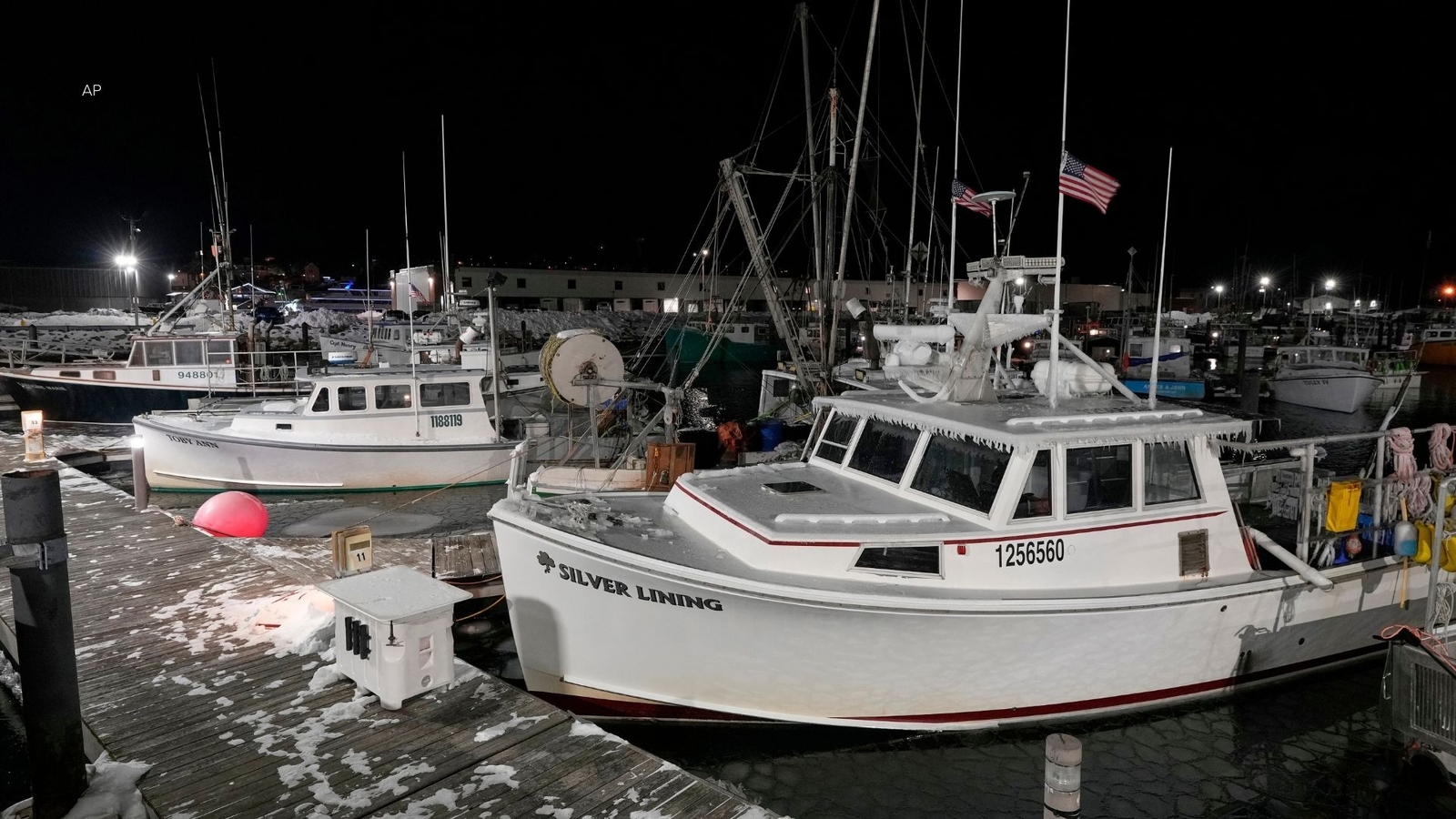
This incident marks another heartbreaking chapter for Gloucester, a historic fishing hub immortalized in “The Perfect Storm,” a narrative based on the FV Andrea Gail that vanished in 1991. The community is deeply intertwined with its maritime past, a history spanning 400 years that includes triumphs and tragedies alike.
Reacting to the loss, Vito Giacalone, leader of the Gloucester Fishing Community Preservation Fund, described the tight-knit fishing community as being in a state of collective mourning and disbelief.
“Everybody’s just heartbroken,” Giacalone told The Associated Press in a phone interview Saturday. “To have that many lives lost all at once, we haven’t seen that in a long time.”
Captain is a beloved fisherman
The Lily Jean, its captain, Gus Sanfilippo, and his crew were featured in a 2012 episode of the History Channel show “Nor’Easter Men.” Sanfilippo is described as a fifth-generation commercial fisherman, fishing out of Gloucester, Massachusetts, in the Georges Bank. The crew is shown working in dangerous weather conditions for hours on end, spending as many as 10 days at sea on one trip fishing for haddock, lobster and flounder.
“We loved each other,” Giacalone said about his relationship with Sanfilippo. “He treated me like a big brother and I treated him like my younger brother. To know the tragedy of this and to know the kind of character that Gus had, he’d be mortified to know that these lives were all lost.”
Republican State Sen. Bruce Tarr, grew emotional as he talked about Sanfilippo, who was a good friend.
“He’s a person that has a big smile, and he gives you a warm embrace when he sees you,” Tarr said Friday. “He is very, very skilled at what he does.”
Tarr said the “fact that vessel now rests at the bottom of the ocean is very hard to understand,” given the owner’s experience.
Weather, ocean conditions made search difficult
The Coast Guard’s Sector Boston Commander Jamie Frederick acknowledged frigid temperatures, stormy conditions and the vast ocean makes finding survivors at night difficult, a task made more challenging with a nor’easter approaching the East Coast this weekend.
“That is the equivalent of searching for a coconut in the ocean,” Frederick said Friday.
At the time of the emergency alert, the National Weather Service said wind speeds out at sea were around 27 mph (24 knots) with waves around four feet high. It was 12 degrees (-11 Celsius) with water temperatures about 39 degrees (4 degrees Celsius.)
Commercial fishing is dangerous
Deep-sea fishing in New England can always be hazardous, but it can be especially dangerous in the winter because of high waves, frigid temperatures and unpredictable weather. Commercial fishing is often cited as one of the most dangerous jobs in the world.
Everett Sawyer, 55, a childhood friend of Sanfilippo, said he has known 25 people who were lost at sea. Cold winter conditions can complicate operations even for experienced sailors, Sawyer said.
“Things happen very quickly when you’re out on the ocean,” he said.
The National Oceanic and Atmospheric Administration said it was aware that there was a fishery observer on board the vessel. Fishery observers are workers who collect data on board fishing boats for the government to use to inform regulations.
____
Casey reported from Boston, Ngowi reported from Gloucester, Massachusetts, and Whittle reported from Portland, Maine. Associated Press reporter Adrian Sainz contributed from Memphis, Tennessee.
Copyright © 2026 by The Associated Press. All Rights Reserved.