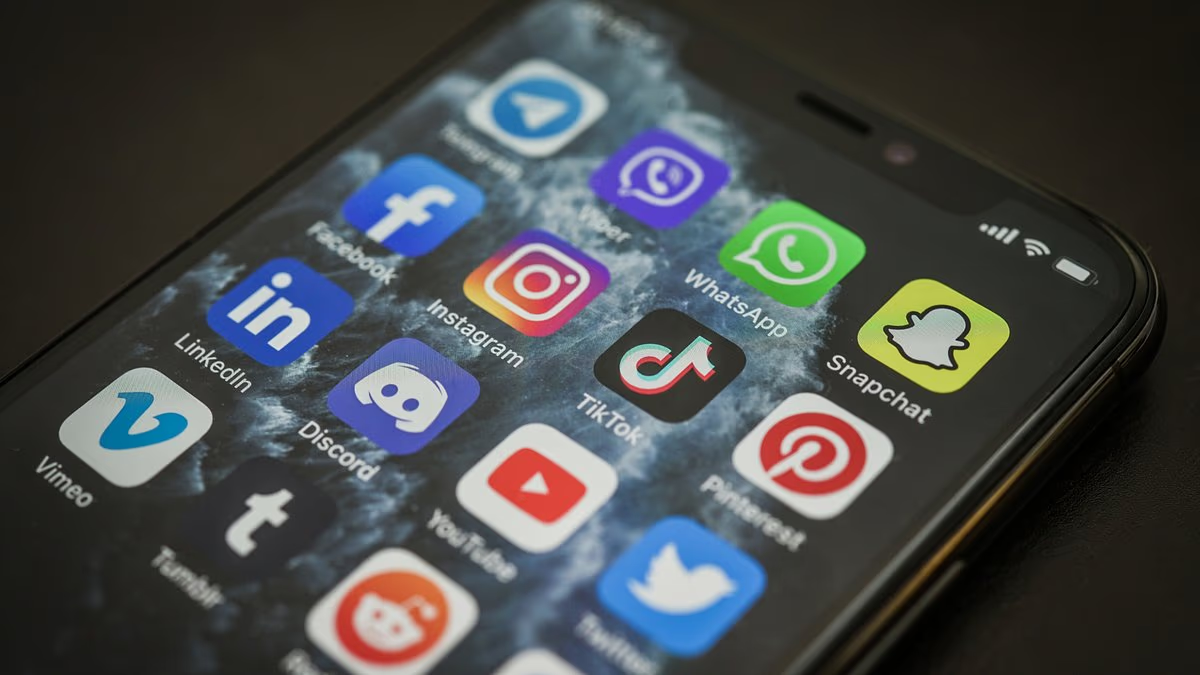

Apple and Google faced fresh scrutiny today as the UK’s competition watchdog took aim at their disputed “app tax”, warning that the charges may not be “fair and reasonable”.
Under the proposed measures, the two Silicon Valley firms could be required to let iPhone and Android users access cheaper subscription deals for their favourite apps, a change that may ultimately save consumers billions of pounds.
The Competition and Markets Authority (CMA) set out the plans, arguing that action in the market was “sorely” needed to tackle the power of the dominant mobile platforms.
Backers of the intervention described it as “a big step forward” in efforts to curb the influence of Big Tech, strengthen consumer choice and ease pressure on the UK’s growing technology sector.
Currently, Apple’s rules make it difficult for customers to find lower prices elsewhere when buying subscriptions or other digital services through apps on its devices.
Developers are barred from offering iPhone users alternative payment routes, including external links or QR codes, meaning transactions must be processed through Apple’s system.
Google has eased some comparable restrictions, but the CMA says limits still remain in place on its mobile ecosystem.
As a result, UK consumers can end up paying what critics call a “stealth” charge of as much as 30 per cent on in-app purchases, a fee widely referred to as the “app tax”.

A crackdown was launched by the CMA on Apple and Google over their controversial ‘app tax’, which imposes charges of up to 30 per cent on in-app purachses and subscriptions

Apple charges a levy of up to 30 per cent to app developers on subscriptions and in-app purchases, which critics say is too

Google also charges a levy of up to around 25 per cent to app developers on subscriptions and in-app purchases
Critics have accused the tech giants of ‘exploiting’ consumers while branding the fees ‘excessive’.
While they are paid by app-makers, including dating platforms such as Tinder and Hinge, campaigners say it is passed on to consumers.
This forces them to pay up to a third more for their favourite services after downloading them via Google’s Play or Apple’s App Store.
Critics also argue it hits the UK’s tech sector by sucking away profits that could be re-invested, choking off competition.
On Monday, the Mail revealed how research has found that Britons are projected to shell out an extra £4billion over the next five years thanks to the ‘tax’.
The CMA, which launched a consultation on the plans, hopes the intervention will force Apple and Google to drop their charges in order to compete with cheaper offers consumers would begin to have direct access to.
It said this would ensure fees charged by Apple and Google are ‘fair and reasonable’.
MORE STORY: Unmasking the Church: Hugh Jackman's Faith and Emily Watson's Chilling Accusations
However, the regulator resisted calls to issue fines or bring in a cap on the fees Google and Apple can charge.
Will Hayter, the CMA’s Executive Director for Digital Markets, said: ‘We see this as the best way to introduce some competitive pressure in a vital part of the mobile eco-system that is otherwise sorely lacking such pressure.’
The regulator added that it believed consumers were currently overpaying for services because of this, and that it expected ‘fees to be lower than current app store charges’ under the changes.
Tory peer Baroness Stowell said: ‘The CMA’s proposals to make Apple and Google’s app stores pricing regime fairer and to limit their market control are a big step forward for UK app developers and consumers.

Tory peer Baroness Stowell said the CMA’s proposals were ‘a big step forward’ for UK app developers and consumers

Former Tory tech minister Damian Collins said said the CMA’s announcement was ‘welcome progress’
‘Whether they go far enough remains to be seen, and the CMA must act again if they don’t.’
Former Tory tech minister Damian Collins said: ‘This is welcome progress to make it easier for consumers to access better deals off of Apple and Google platforms.
‘It will also help businesses to innovate and offer new services to their customers.
‘The CMA, though, should also review the pricing regime in app stores, an issue where they have previously raised concerns about Apple and Google making billions in excessive profits.’
But campaign group the Coalition for App Fairness said the plans ‘risk being little more than cosmetic’ and don’t go far enough.
A spokesman for the group said: ‘Today’s measures fall short of what is needed to meaningfully increase competition, reduce discrimination against digital businesses and improve outcomes for developers and consumers in the UK.’
They added that they would have preferred the CMA to cap fees to ensure the tech giants can’t profiteer.
The CMA’s consultation will be finished by August, with changes to start from later this year.
Apple said it would resist the announcement. A spokesman said: ‘When users are directed away from Apple’s trusted payment infrastructure, they lose the protections they rely on Apple to provide [from fraud].
‘We will continue to make our concerns clear in our ongoing dialogue with the CMA.’
Google insisted it already allows so-called ‘steering’, when consumers are provided direct access to cheaper deals elsewhere.
A spokesman said: ‘We have already made the changes that the CMA is proposing today.’
Apple does not charge the levy on free apps or those that provide tangible services, such as Deliveroo and Uber. It is broadly similar for Google.


