
US health officials have raised the alarm to their strongest possible level, warning Americans not to travel to several provinces in Africa as a deadly Ebola outbreak continues to spread and has killed thousands of people.
The Centers for Disease Control and Prevention has issued a Level 4 travel health notice for the Ituri and Nord-Kivu provinces in the Democratic Republic of the Congo, advising US travelers to avoid all trips to the area. The move marks a sharp escalation from the agency’s initial Level 2 advisory issued on May 18.
The CDC has also placed Haut-Uele and Tshopo provinces, also in the DRC, under a Level 3 warning, urging Americans to reconsider non-essential travel. For the rest of the country, officials are advising heightened precautions amid the ongoing Ebola outbreak.
The outbreak is linked to the Bundibugyo virus, an uncommon Ebola strain that has historically killed between 25 percent and 50 percent of those infected. The surge in cases has strained local healthcare systems and intensified concerns that the virus could spread beyond the region.
There is currently no approved vaccine or treatment for the virus, which causes viral hemorrhagic fever — a dangerous and frequently fatal disease that attacks the blood vessels. Symptoms can include fever, headache, muscle aches, weakness, diarrhea, vomiting and abdominal pain, with bleeding or bruising possible in later stages.
Alongside the CDC travel warnings, the US has introduced temporary travel restrictions preventing people, including American citizens, from boarding commercial flights to the United States if they have been in the DRC within the past 21 days.
US citizens and nationals who have recently been in the Democratic Republic of the Congo are being told to spend 21 days in another country before attempting to return to the United States.
Travelers who have been in nearby Uganda or South Sudan — countries that have confirmed Ebola cases connected to the DRC outbreak but have not reported a broad, separate outbreak of their own — may enter the US only through four designated airports equipped with enhanced health screening protocols.

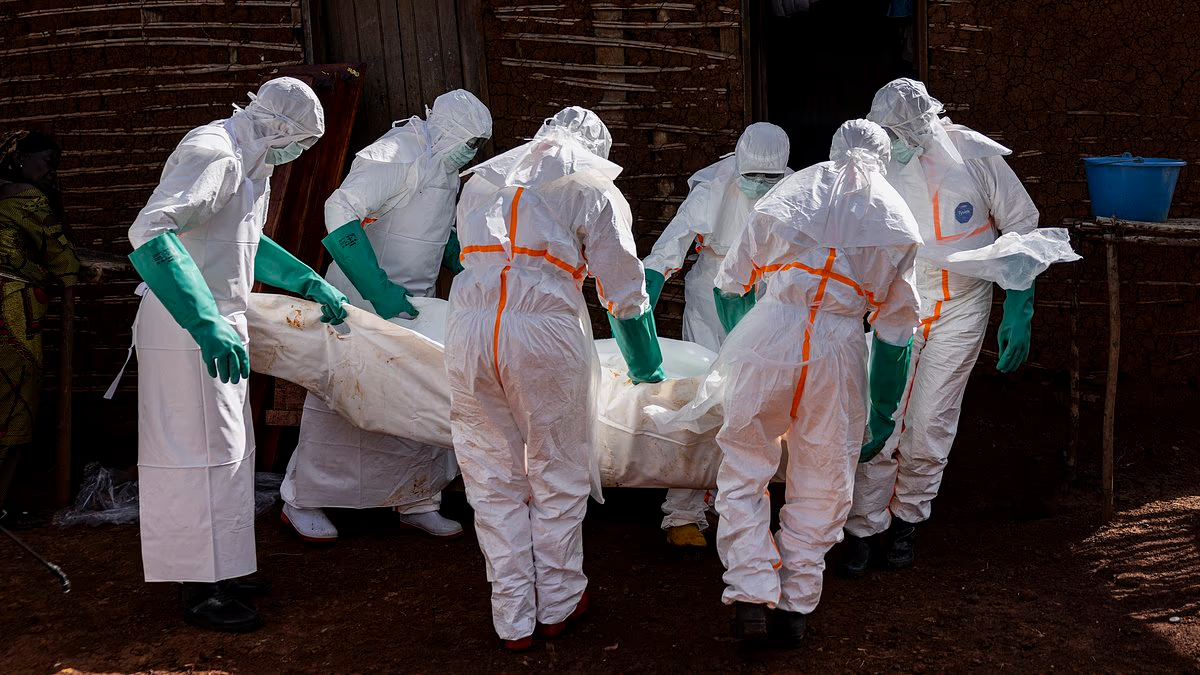
Health workers in full protective gear prepare to transport an Ebola victim’s body for a safe burial at Sofepadi Hospital in Bunia, Democratic Republic of the Congo, on May 23
As of August 9, CDC and WHO data show 4,381 confirmed cases and 2,011 confirmed deaths in the DRC, plus 20 confirmed cases and two deaths in Uganda, bringing the combined outbreak total to more than 4,400 confirmed cases and over 2,000 confirmed deaths linked to the Bundibugyo virus.
Exact figures remain difficult to confirm, however, due to challenges in surveillance and reporting in conflict-affected regions.
And health officials have warned that the virus was spreading for weeks before it was detected.
A Lancet study cited by WHO found that retrospective investigations suggest transmission began in early April, meaning the virus circulated undetected for roughly six weeks before the outbreak was officially declared on May 15.
Ituri and Nord-Kivu provinces in the DRC have been particularly hard-hit, with healthcare facilities struggling to contain the virus amid ongoing insecurity and community resistance.
Health officials have stressed that early supportive care improves the chance of survival, though there are currently no vaccines or specific treatments approved to prevent or treat Bundibugyo virus disease.
This stands in contrast to other Ebola strains, where vaccines and therapies have been deployed successfully in recent outbreaks.
The lack of approved medical countermeasures has made containment efforts more challenging and has heightened the urgency of travel restrictions.

A doctor is decontaminated at an Ebola treatment center in Bunia, DRC, on July 13

Health workers carry the body of a suspected Ebola victim during a safe burial in Mongbwalu, Ituri Province, DRC, on May 24
Ebola is spread through direct contact with the blood or bodily fluids of infected individuals, as well as through contact with contaminated objects such as clothing, bedding, needles and medical equipment.
The virus can also be transmitted through contact with infected animals, including bats and nonhuman primates, or through contact with the bodies of those who have died from the infection.
Traditional burial practices, which often involve washing and preparing the dead, pose a particularly high risk of transmission, experts warn.
For those who must travel to Ituri or Nord-Kivu provinces despite the Level 4 advisory, the CDC has issued a series of strict precautions.
Travelers are advised to review health information for the DRC, consider purchasing travel insurance including health and medical evacuation coverage and avoid all contact with people who have symptoms such as fever, muscle pain and rash.
They should also avoid contact with blood and other bodily fluids, contaminated objects, healthcare facilities, traditional healers and dead bodies.
Travelers should not participate in funeral or burial practices that involve touching the deceased, nor should they have contact with semen from men who have recovered from BVD until testing confirms the virus is no longer present.
Additionally, the CDC advises avoiding contact with bats, forest antelopes, nonhuman primates and any blood, fluids or raw meat from these or unknown animals.

The 2026 Bundibugyo virus outbreak in the DRC and Uganda has grown into the second-largest Ebola outbreak on record, with more than 4,400 confirmed cases and over 2,000 confirmed deaths as of August 9
Travelers should stay out of areas where bats live, such as mines or caves.
Anyone in the DRC must monitor themselves for symptoms for 21 days after leaving and should immediately isolate themselves if they develop fever, headache, muscle pain, weakness, diarrhea, vomiting, stomach pain or unexplained bleeding or bruising.
They should not travel and should contact local health authorities or a healthcare facility for advice, calling ahead before visiting any medical facility.
The incubation period for Ebola is up to 21 days, meaning travelers could carry the virus without showing symptoms for weeks.
This has prompted the US to implement strict entry requirements and screening measures at designated airports for travelers arriving from affected regions.
Malaria, which is widespread in the DRC, can cause similar early symptoms such as fever, headache, and muscle pain, making diagnosis difficult in the early stages.
Ebola symptoms tend to worsen rapidly, while malaria can be confirmed with a simple blood test.
The State Department is urging all US citizens in the DRC to register with the US Embassy for assistance and updates.
For now, the outbreak remains largely contained to the eastern provinces, but health officials around the world are watching closely as the country battles what has become a deadly and complex public health emergency.


