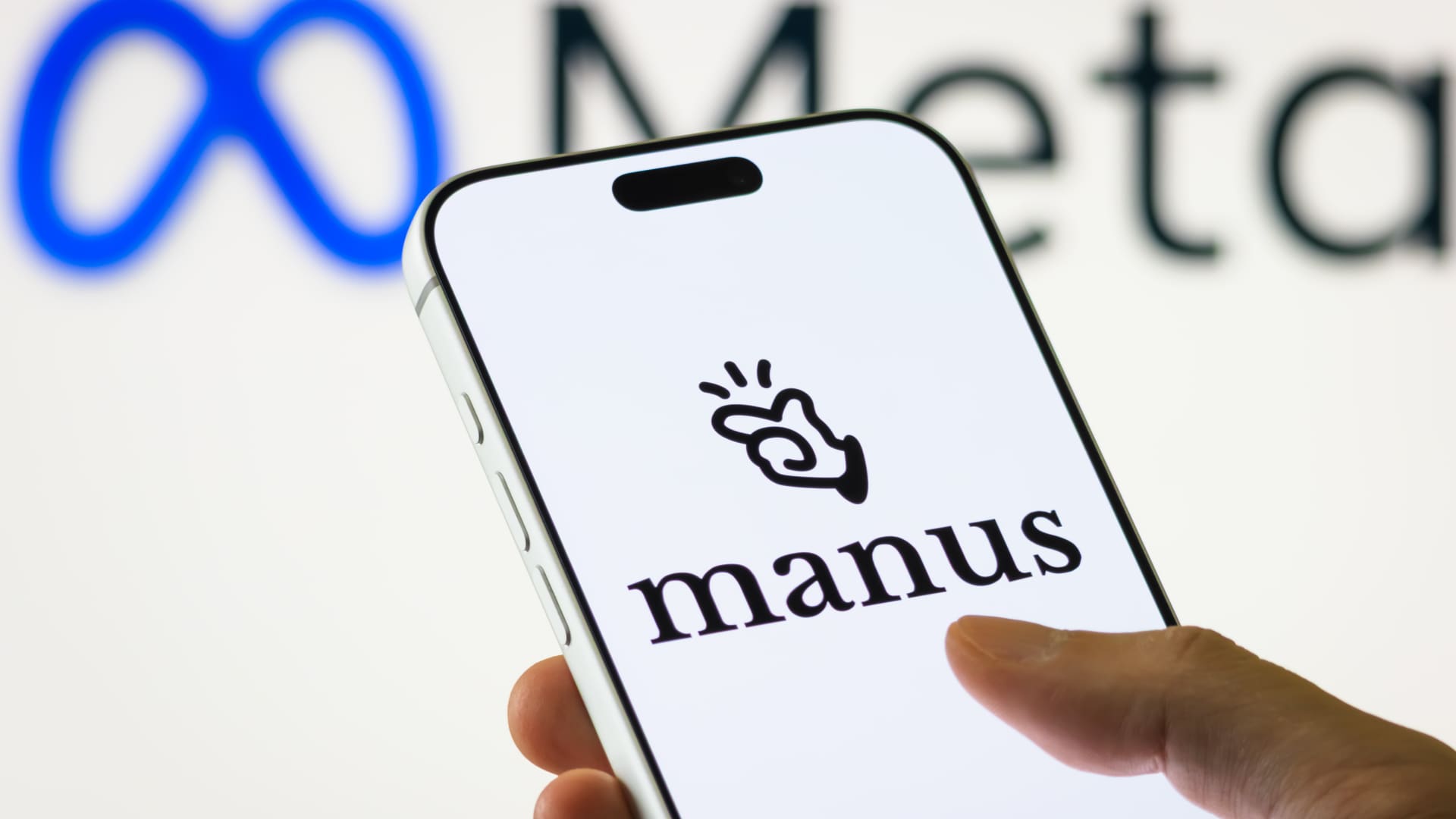

On Monday, China’s state planner urged Meta to reverse its $2 billion acquisition of Manus, a Singaporean AI startup with Chinese origins. The call came amidst growing scrutiny over foreign investments in technology firms with ties to China.
The National Development and Reform Commission (NDRC) stated that the decision to block the investment was in line with existing laws and regulations. They have requested that all parties involved in the transaction step back from the deal.
Meta has yet to respond to CNBC’s request for comment, and its shares showed a slight decline of 0.2% in premarket trading following the announcement.
This acquisition had already been under the microscope due to concerns from both Chinese and U.S. authorities. In Washington, lawmakers have banned American investors from directly funding Chinese AI firms, while Beijing has intensified efforts to keep Chinese AI entrepreneurs from relocating their businesses abroad.

China’s intervention has caused a stir among tech founders and venture capitalists, particularly those banking on the “Singapore-washing” strategy. This approach involves companies moving from China to Singapore to escape scrutiny from both Beijing and Washington.
Originally founded in China, Manus eventually moved its base to Singapore. The company specializes in developing general-purpose AI agents, with its first major release in March of last year. This AI agent can perform intricate tasks such as market research, coding, and data analysis, earning Manus comparisons to the pioneering AI company DeepSeek.
Manus said it had passed $100 million in annual recurring revenue (ARR) in December, eight months on from launching a product, which it claimed made it the fastest startup in the world at the time to hit the milestone from $0.
The company raised $75 million in a round led by U.S. VC Benchmark in April last year.

When Meta announced the deal late last year, the tech giant said it would look to accelerate AI innovation for businesses and integrate advanced automation into its consumer and enterprise products, including its Meta AI assistant.
But in January, China’s Ministry of Commerce said it would conduct an assessment and investigation into how the acquisition complied with laws and regulations concerning export controls, technology import and export and overseas investment.
A Meta spokesperson told CNBC in March that its acquisition “complied fully with applicable law,” and that the team anticipated “an appropriate resolution to the inquiry.”
When asked about China’s move to block Meta’s Manus acquisition, APEC Senior Officials Meeting Chairman Chen Xu told reporters that it is “important that all parties act in a spirit of mutual benefit.”
While Chen said he did not know the specifics of the issue, he said that “if such an issue can be handled properly, it can help facilitate more substantive discussions in APEC.” That’s according to an official English translation of the Chinese.
— CNBC’s Anniek Bao and Dylan Butts contributed to this story.