
Noa Beri isn’t involved in politics or activism, nor does she spread propaganda. At 31, she’s a survivor of the events on October 7 and has dedicated nearly three years to recounting that harrowing day so it remains in public consciousness.
She endured the horrific attack at the Nova music festival, where members of Hamas launched an assault, killing and capturing civilians after they stormed the event in southern Israel.
Beri witnessed scenes of devastation, including charred vehicles and armed militants firing at people at close range.
Recently, she spoke again about the sexual violence that occurred that day, referencing a voice message she received from an individual in hiding near the festival grounds.
“She was saying they’re raping someone. You could hear screams,” Beri recounted.
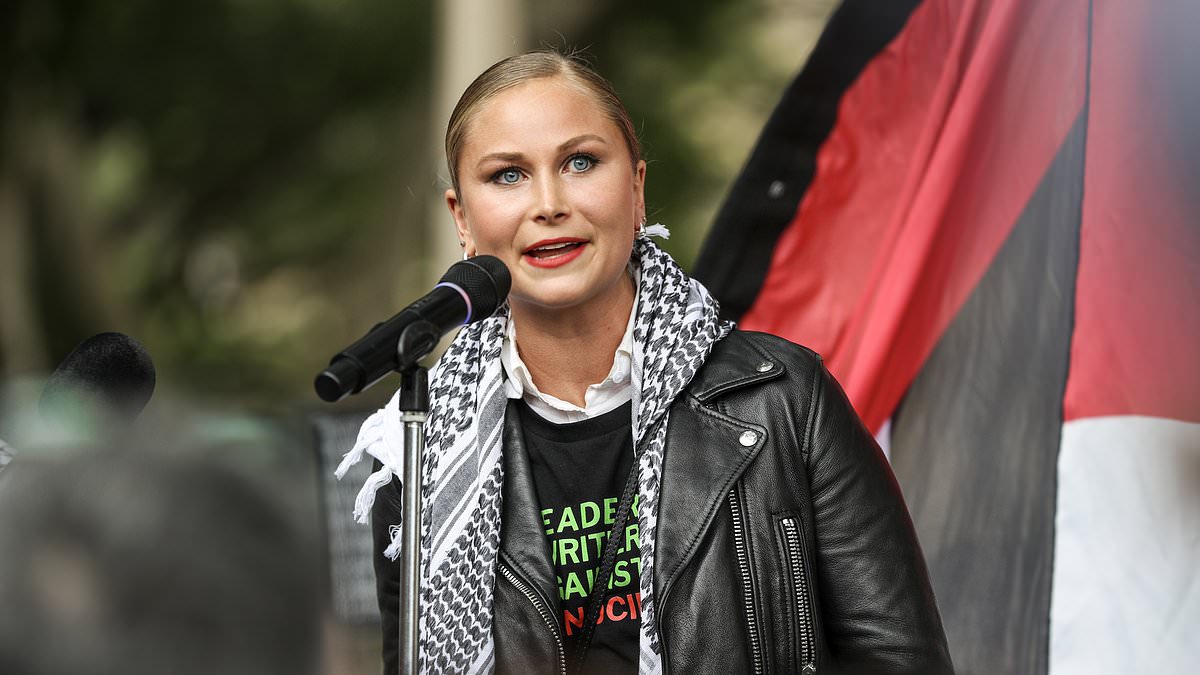
Despite these accounts, Grace Tame, a former Australian of the Year, has dismissed the claims of sexual violence on that tragic day as ‘propaganda’ and insists they have been ‘debunked.’ She has not retracted these statements.
Tame once understood, better than most in Australian public life, the cruelty of disbelief – what it meant for victims of sexual violence to be doubted, minimised, politicised and talked over.
She built a public identity around that moral clarity. Tame became a national figure by insisting that sexual abuse must not be treated as an inconvenience, a partisan distraction or a story too uncomfortable to hear.
Which is why her comments on ABC Radio were not merely wrong; they were grotesque. And Noa’s activism bears that out.
Former Australian of the Year Grace Tame once understood, better than most in Australian public life, the cruelty of disbelief. That all changed following her comments about October 7
October 7 survivor Noa Beri (pictured) has spent nearly three years reliving the worst day of her life so others can’t pretend it never happened
Asked whether she had spoken out for Israeli women who were raped and killed by Hamas on October 7, Tame didn’t pause to express sorrow.
Nor did she say all allegations of sexual violence deserve serious investigation. She appeared incapable of separating her views on Gaza from the obligation to recognise the suffering of Israeli victims.
Instead, Tame said: ‘I’m not going to sink to the level of entertaining any kind of propaganda.’ Pressed on what she meant, Tame replied: ‘Those things have been debunked.’
They have not. And this is not some unfair paraphrase seized upon by critics, by the way.
The ABC Ombudsman later reproduced the exchange in its own finding after complaints were made about the interview.
The Ombudsman didn’t uphold the complaints, concluding quite rightly that my former colleague at Network 10, Hamish Macdonald, had challenged Tame sufficiently in the moment.
But the transcript remains devastating, because Tame’s comments are the issue, not the way Macdonald conducted the interview.
Tame was asked about Israeli women raped and killed by Hamas, and she answered by invoking ‘propaganda’ and saying ‘those things’ had been ‘debunked’. Grace Tame believed women, until the women were Israeli.
Grace Tame claims that allegations of sexual violence on October 7 are ‘propaganda’ and have since been ‘debunked’
If Grace Tame believes sexual violence allegations must be treated with caution and care, she might try applying that standard consistently to her own commentary, Daily Mail political editor, Peter Van Onselen, (pictured) wrote
Join the discussion
Should politics ever decide whose stories of sexual violence are believed and supported?
Not every allegation made in the fog of war is automatically true.
Not every claim can be verified. But the existence of sexual violence committed by Hamas on October 7 has not been ‘debunked’.
The United Nations found reasonable grounds to believe that rape and gang rape occurred during the attacks. Survivors, first responders, investigators and hostage accounts have described horrors that should make any decent person hesitate before reaching for cheap slogans.
Tame did not hesitate, however. She dismissed it as propaganda.
Not some anonymous crank denying atrocities from behind a keyboard. This was an Australian of the Year, a survivor advocate, using the language of denial about sexual violence when the victims didn’t fit her politics.
Thankfully we have eyewitnesses like Noa Beri to call out such bad behaviour.
For years, Australians were told that the starting point for sexual violence was belief, empathy and care.
Victims were not to be forced to perform their trauma over and over again for public consumption.
They shouldn’t be cross examined by ideologues before their pain was acknowledged. Their suffering couldn’t be cast as inconvenient because it complicated someone else’s political worldview.
Yet when the victims were Israeli women and girls, all of that apparently vanished.
Suddenly, sexual violence became something to be filtered through ideology.
Noa Beri survived the Nova music festival massacre, where Hamas terrorists murdered and kidnapped civilians after overrunning the event in southern Israel

More than 1,200 Israelis were killed during the October 7 attack, more than 250 others were kidnapped and dragged into Gaza
The question seemingly was no longer whether women were brutalised by terrorists, but whether acknowledging it might help the wrong side. The instinctive solidarity Tame demanded for some victims was withheld from others.
There is a word for that: hypocrisy. And there is a worse word for it when the subject is rape: denial.
Tame’s defenders will say she was talking about propaganda, not victims. There is always an excuse, but it collapses under the weight of her own words.
She was asked about Israeli women raped and killed by Hamas and she called the question propaganda. Then she said ‘those things’ had been debunked.
‘Those things’ were rape and murder.
If Tame misspoke, she should have said so. If she meant only that some claims were unverified while others stack up, she should have clarified that.
If she believes sexual violence allegations must be treated with caution and care, she might try applying that standard consistently to her own commentary.
But the problem is larger than Grace Tame.
She is a symptom of a broader moral rot in sections of activist politics, where victimhood is no longer a human category but a political one. Some victims are sacred, others are inconvenient.
The great shame is that Tame once knew better.
Her public authority came from challenging a culture too willing to look away from abuse. But on October 7, Jewish and Israeli women were abused in the most barbaric ways imaginable, and when asked about them, Tame looked away. Worse, she sneered.
But Noa Beri is not going to let that denial go unanswered. Nor should anyone else.