

JD Vance sharply criticized Israeli opponents of Donald Trump’s agreement with Iran, telling them they needed to “wake up and smell the reality.” The vice president delivered a public reprimand to figures in Prime Minister Benjamin Netanyahu’s cabinet who have voiced frustration over the newly signed accord. The deal, finalized this week, is designed to halt the conflict in Iran, reopen the Strait of Hormuz and launch a 60-day window for negotiations on broader disputes, including Tehran’s nuclear program. But some Israeli critics have questioned whether Iran will negotiate in good faith now that Washington has eased economic and military pressure.
‘Wake up and smell the reality’

Vance escalated his message on Thursday with an unusually blunt warning, cautioning Israeli critics against antagonizing what he described as their last “powerful ally.” His remarks came amid rising strain between Netanyahu and President Donald Trump. “Donald J Trump is the only head of state in the entire world who’s sympathetic to the nation of Israel at this moment in time,” Vance said at a White House press briefing. “If I was in the cabinet of the Israeli government, I might not be attacking the only powerful ally that I have anywhere left in the entire world.” He continued: “Anybody in Israel who thinks their biggest problem is the president of the United States needs to wake up and smell the reality of the situation that country is in.”
Israeli cabinet divisions emerge over deal

Netanyahu has avoided directly condemning the ceasefire arrangement, but several members of his government have spoken far more openly. Israeli National Security Minister Itamar Ben Gvir, who heads a small ultranationalist faction, said this week that Israel is not “bound” by Trump’s agreement and insisted the country would not yield to international pressure. Vance also singled out Ben Gvir and Finance Minister Bezalel Smotrich in an interview with the New York Times, criticizing both for their attacks on the deal. “I guess my response to them would be – what is your exact proposal? You’re a country of nine million people. You can’t just kill your way out of solving every single national security problem that you have,” Vance told the Times.
Vance highlights US military aid to Israel

The vice president gave Netanyahu credit for refraining from personally denouncing the accord, but he also pointedly referenced the scale of US military assistance provided to Israel, Washington’s central ally in the Middle East. The United States and Israel jointly opened the war against Iran on February 28, though Trump has since rebuked Israel over continued strikes in Lebanon that risked disrupting the deal with Tehran. “Over the last three months, two-thirds of the defensive weapons that have protected your homeland have been built by American hands and paid for by American tax dollars,” Vance said. The Daily Mail contacted both the White House and Netanyahu’s office for comment.
Trump criticizes Israeli military strikes in Lebanon

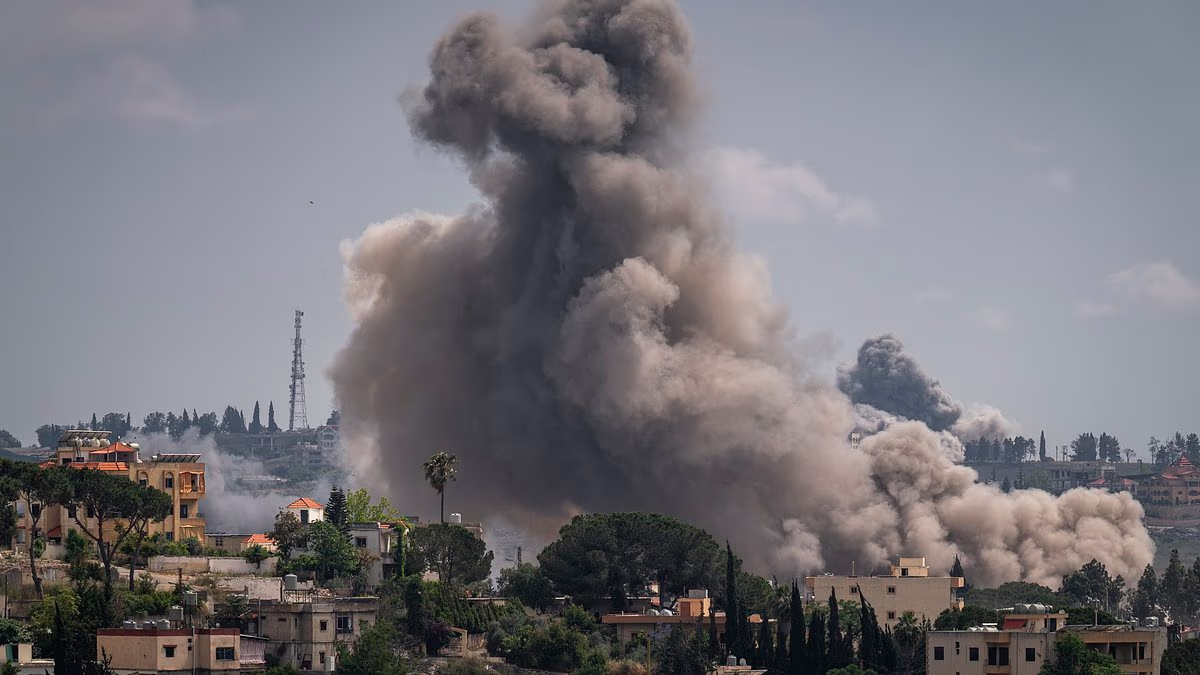
Trump, meanwhile, has grown increasingly vocal about the heavy death toll from Israeli strikes, especially those targeting the Hezbollah militia in Lebanon. “When two drones are shot into the desert and drop harmlessly, you don’t have to knock down buildings in Beirut. They could behave better, and frankly they could do a better job,” Trump said Wednesday during a press conference at the G7 summit in France. In recent days, the president has shown mounting irritation with Netanyahu, taken credit for Israel’s existence and described the Israeli leader as “crazy.” On Thursday, Trump called on Israel and other Middle Eastern nations to observe the truce. “We expect a complete ceasefire on all fronts, including Lebanon, Hezbollah, and Israel. Thank you for your attention to this matter!” he wrote on Truth Social.

Israel and the US began the war against Iran together on February 28, coordinating closely throughout a military campaign that lasted more than a month. However, divisions surfaced soon after a preliminary ceasefire was reached on April 8, with Netanyahu pressing to keep the operation going while Trump sought to bring an end to a war that had become deeply unpopular in the United States and had unsettled global markets. Adding to the friction, an Israeli government official told NBC News that Netanyahu’s government was not shown the memorandum of understanding drafted to conclude the war.

Yair Lapid, Israel’s opposition leader, delivered a scathing assessment, saying: “Netanyahu promised us a historic victory – and we got a crisis with the Americans, Hormuz open to the Iranians, money for the Revolutionary Guards, ballistic missiles aimed at Israel, and Israel waiting in the corridor like a scolded child.” Others in Israel viewed the agreement more favorably. Danny Citrinowicz, a former head of the Iran branch of Israeli military intelligence, said the deal suggested that reality had “finally returned to US policy on Iran.” “Before events spiraled completely out of control, the US administration stepped back from maximalist objectives and returned to a more measured and realistic approach,” Citrinowicz said Wednesday.
Netanyahu breaks silence on deal

In Netanyahu’s first remarks on the newly signed memorandum of understanding, he said Thursday that Israel’s military would remain in an area it occupies in southern Lebanon “as long as Israel’s security needs require it.” The statement risked weakening the agreement, which calls for an end to all fighting and respect for Lebanon’s territorial integrity. Still, Netanyahu stressed the importance “to maintain the important relationship with our American friends who fought shoulder to shoulder with us, and we greatly appreciate that.”


