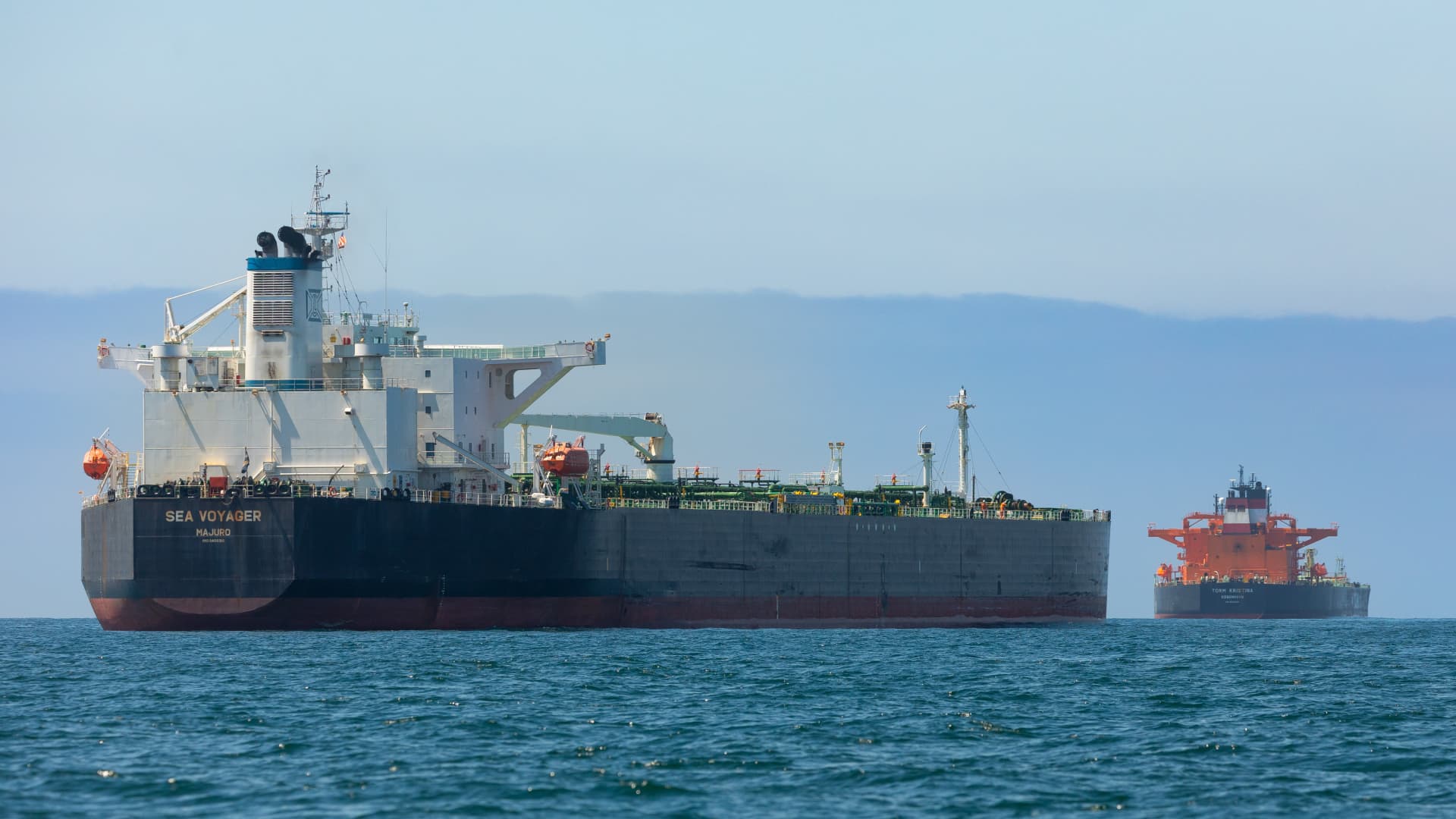

The Sea Voyager, a crude oil tanker, was seen anchored near the Port of Long Beach in California on Thursday, May 7, 2026.
Oil prices experienced an upward trend on Monday as Israel commanded its military to advance further into Lebanon. This move heightened concerns over potential clashes with Hezbollah, a group supported by Iran, which could jeopardize the tenuous ceasefire between Washington and Tehran.
Brent crude futures, a key international oil price benchmark, climbed by 2.43%, reaching $93.33 per barrel. Meanwhile, West Texas Intermediate futures increased by 2.76%, settling at $89.77 per barrel.
This escalation in tensions comes on the heels of U.S.-facilitated discussions between Israel and Lebanon in Washington, which took place on Friday. The developments have dampened optimism that Washington and Tehran might soon extend their ceasefire agreement.
On Sunday, Israeli Prime Minister Benjamin Netanyahu, alongside Defense Minister Yisrael Katz, announced, “I instructed the IDF to expand the maneuver in Lebanon.” This directive was issued despite a ceasefire that had been declared in April.

“Together with Defense Minister Yisrael Katz, I instructed the IDF to expand the maneuver in Lebanon,” Benjamin Netanyahu said Sunday. The order came despite a ceasefire declared in April.
Goldman Sachs said risks to its fourth-quarter 2026 Brent and WTI forecasts of $90 and $83 per barrel remain “two-sided,” with the bank warning that while persistent Middle East supply disruptions could push prices higher, weakening demand could create meaningful downside risks.
Goldman estimated that weak April oil retail sales data from China and Western Europe together implied around 2 million barrels per day of downside risk to its already subdued demand forecasts.


