Key Points
- Four Australians are on the MV Hondius amid a suspected deadly outbreak of hantavirus.
- The ship remains anchored off Cape Verde in the Atlantic Ocean.
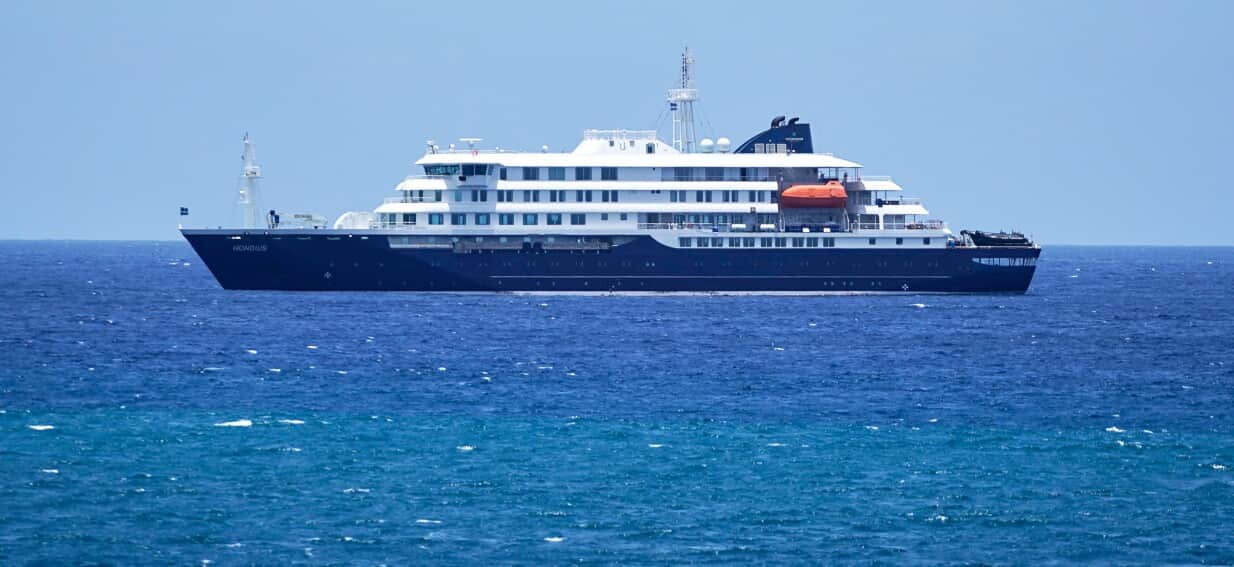
Four Australians are among the 149 passengers aboard a luxurious cruise ship currently stranded off the western coast of Africa due to a suspected outbreak of the deadly hantavirus.
A Dutch couple and a German national have tragically lost their lives, while three others have fallen ill on the MV Hondius. The ship is anchored near Cape Verde, an island nation in the Atlantic Ocean, after being denied entry to Praia, the country’s capital port.
On Monday night, AEST, the ship’s Dutch operator, Oceanwide Expeditions, released a statement indicating that the exact causes of death for the three individuals have yet to be confirmed.
A British passenger, who was urgently evacuated to South Africa and remains in critical condition, has tested positive for a hantavirus variant, according to the company.
In addition, two crew members, one from Britain and another from the Netherlands, are experiencing “acute respiratory” symptoms, though hantavirus has not been officially confirmed in their cases.
“Both individuals are in need of immediate medical attention,” the company stated.
“At this time, no other persons with symptoms have been identified.”
As a precaution, Oceanwide Expeditions said all passengers were instructed to remain inside their cabins to prevent any potential spread of the virus.
Oceanwide Expeditions said 149 people of 23 different nationalities remained on board and the company was working with local and international authorities to facilitate disembarking passengers, medical evacuation and screening.
“Local health authorities have visited the vessel and assessed the situation. The medical transfer of the two ill persons on board has not yet taken place,” it said.
The passengers are predominantly American, British, Spanish and Dutch, with four people from Australia. Of the crew, 38 are from the Philippines.
In a tearful video posted to Instagram from the ship, US travel blogger Jake Rosmarin described the situation on board.
“We’re not just headlines: we’re people with families, with lives, with people waiting for us at home,” he said.
“There is a lot of uncertainty, and that is the hardest part.”
Hantavirus, which can cause fatal respiratory illness, can be spread when particles from rodent droppings or urine become airborne. It does not transfer easily between humans.
There are no specific drugs to treat the disease, so treatment focuses on supportive care, including putting patients on ventilators in severe cases.
Although human-to-human transmission is rare, the incubation period can last several weeks, meaning some people may not yet be showing symptoms.
‘Not going to be a big outbreak’
The voyage, which cost between $22,000 to $36,000, left Ushuaia in southern Argentina in March on an Antarctic nature expedition, according to company documentation.
It travelled past mainland Antarctica, the Falklands, South Georgia, Nightingale Island, Tristan, St Helena, and Ascension before reaching Cape Verdean waters on 3 May.
On 11 April, a Dutch man died on board. He was disembarked on St Helena on 24 April with his wife, who also later died after collapsing at a South African airport, according to South African health officials.
The British man being treated in a private clinic in Johannesburg became ill on 27 April, while the German victim on the ship died on 2 May, Oceanwide Expeditions said.
Daniel Bausch, a visiting professor at the Geneva Graduate Institute in Switzerland, said there was some evidence of human-to-human transmission in the Andes virus, a species of hantavirus found in Argentina and Chile.
“So it’s significant that this cruise ship started its journey in Argentina,” he said.
“The good news is … this is not going to be a big outbreak,” he added.
— With additional reporting by Reuters news agency.
For the latest from SBS News, download our app and subscribe to our newsletter.


