
Share this @internewscast.com
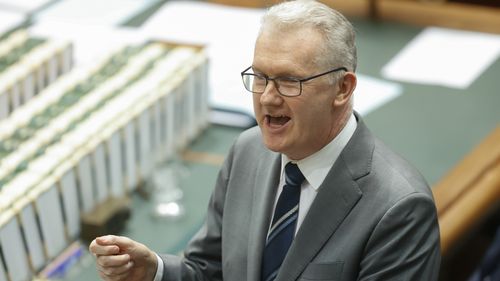
In a significant development, Australia’s Home Affairs Minister, Tony Burke, announced today that the Australian Security Intelligence Organisation (ASIO) has advised that Hizb ut-Tahrir meets the criteria to be banned. This comes as part of a new approach that allows for prohibiting groups even if they do not meet the traditional definitions of a terrorist organization.
Speaking on ABC’s Insiders, Minister Burke clarified that this marks a precedent-setting moment for the country. “For the first time, we have the potential to ban a group without it being officially listed as a terrorist organization,” he explained. “The key factor is not necessarily calling for violence directly, but rather engaging in activities that elevate the risk of communal or politically motivated violence.”
The procedural next steps involve the Attorney-General, who can authorize the ban after receiving a briefing prepared by a minister and notifying the opposition leader. This measure highlights a broader effort by Australian authorities to address groups that pose potential threats to public safety and social harmony.
Hizb ut-Tahrir is known as a radical political organization with the goal of establishing a global Islamic caliphate. Its central operations are based in Lebanon, but it maintains a presence through branches in various countries worldwide.
The attorney-general can sign off on the ban once ASIO has given the all clear and a minister has prepared a brief and the leader of the opposition is advised.
Hizb ut-Tahrir is a radical political organisation that aims to establish a global Islamic caliphate, with headquarters in Lebanon and branches across the world.
Hizb ut-Tahrir has also been banned in Germany, Egypt, Bangladesh, Pakistan and other Central Asian and Arab countries.
The new laws will create powers for authorities to designate certain organisations as “hate groups”, allowing members and donors alike to face possible jail time.
It will create new aggravated offences for religious or spiritual leaders who advocate violence, as well as penalise religious leaders who preach hate to children.
The new framework will also give ministers more powers to cancel or refuse visas to those who spread hate or extremist views.
NEVER MISS A STORY: Get your breaking news and exclusive stories first by following us across all platforms.