
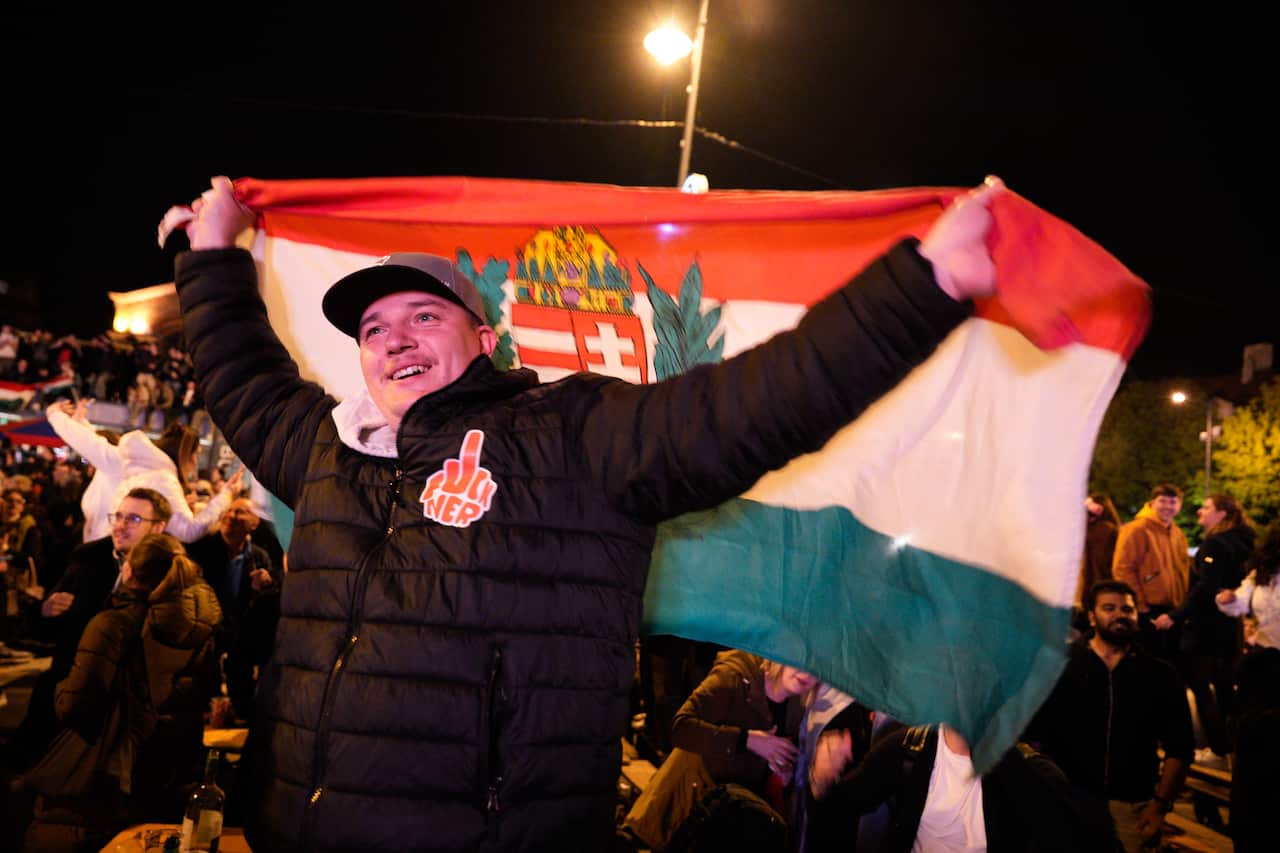
The unexpected triumph of Péter Magyar and his Tisza party has taken Hungary by storm. With an impressive coalition spanning the political spectrum from the far left to the hard right, they forged a common mission to dismantle the longstanding grip of Orbánism in the country.
Viktor Orbán, in recent years, had become a thorn in the side of Europe. He was celebrated by the MAGA populist faction in the United States and found a strategic ally in the Kremlin. This mixed reputation often placed him at odds with European leaders.
Europe celebrates
Before Péter Magyar could even deliver his victory address to the throngs of supporters along the Danube, congratulatory calls flooded in. Notable figures such as Emmanuel Macron from France, Friedrich Merz from Germany, and an especially enthusiastic Donald Tusk from Poland reached out, with Tusk humorously remarking, “I am so happy, probably more happy than you!”
Orbán’s tenure had worn thin among European leaders, including those on the right, due to his persistent obstructionism and the alarming tilt towards autocracy in Hungary. Concerns over judicial independence and corruption led to the freezing of approximately €17 billion ($28.1 billion) in EU funds earmarked for Budapest.
The newly elected prime minister, Péter Magyar, has vowed to travel to Brussels to release these funds. However, European leaders are likely to demand concrete evidence that Hungary is reinstating its system of checks and balances before they release the funds.
New hope for Ukraine
During the campaign, Orbán targeted Volodymyr Zelenskyy as a primary adversary. Campaign posters ominously paired the Ukrainian leader’s face with that of Magyar, cautioning the public that an opposition victory might bring war to Hungary’s doorstep.
The incoming prime minister agrees with his predecessor that arms should not be sent to Kyiv, but is expected to be far less confrontational in dealings with Kyiv.
It’s expected Magyar will lift the Hungarian veto on a €90 billion ($149.2 billion) loan for Ukraine that the EU had hoped to approve months ago.
Zelenskyy wrote: “We are ready for meetings and joint constructive work for the benefit of both nations, as well as for the sake of Europe’s peace, security, and stability.”
MAGA-Fail
One of the strangest moments of the election came when JD Vance, the US vice president dispatched to Budapest by his boss to show support for Orbán, tried to call Donald Trump on speakerphone at a rally, but the call was put through to voicemail.
It summed up the bizarre, bungled and ultimately unhelpful American intervention in the campaign. Orbán had hoped his close relationship with the White House would convince voters he had the respect of the most powerful leader on the planet. Most voters didn’t care or saw it as more evidence their prime minister was siding with Washington over the rest of Europe.
The MAGA movement didn’t understand this election. This was not a battle of the left versus the right, pro-Trump versus anti-Trump.
When Hungarians cast their ballot, it’s doubtful any were thinking about Trump. Domestic issues were key. The economy, living standards and the rule of law.
The silence from the White House after the result became clear is telling. Trump doesn’t like a loser. Now, his closest ally in Europe is one.
Russian dismay
“I am at your service.”
That’s what Orbán reportedly told Vladimir Putin during a phone call in October last year, the transcript of which leaked in the final week of campaigning.
Then, another bombshell.
Allegations the Hungarian foreign minister had called the Kremlin during breaks at EU summits to provide information about confidential discussions regarding Ukraine.
Orbán said his relationship with Moscow allowed Hungary access to cheap Russian energy. That is true.
But former Hungarian foreign minister Géza Jeszensszky told me it came at the cost of his country’s sovereignty.
“I am not hesitant to say Hungary has become the satellite of Russia. This is voluntary, without any reason. To do so, that’s a crime that’s incomprehensible to explain.”
When the Kremlin eventually commented on Magyar’s win, the comments were brief.
“Hungarians have made their choice and we respect it,” said a spokesperson, who added “the election has nothing to do with the Russian-Ukrainian conflict”.
But Putin will know he’s lost a valuable and rare ally within the EU.
For the latest from SBS News, download our app and subscribe to our newsletter.


