
Share this @internewscast.com
in brief
- The energy minister said there would be “some” disruption to petrol production after an oil refinery fire in Geelong.
- Viva Energy said it expected to be able to replace any supply shortfall caused by the fire with imports.
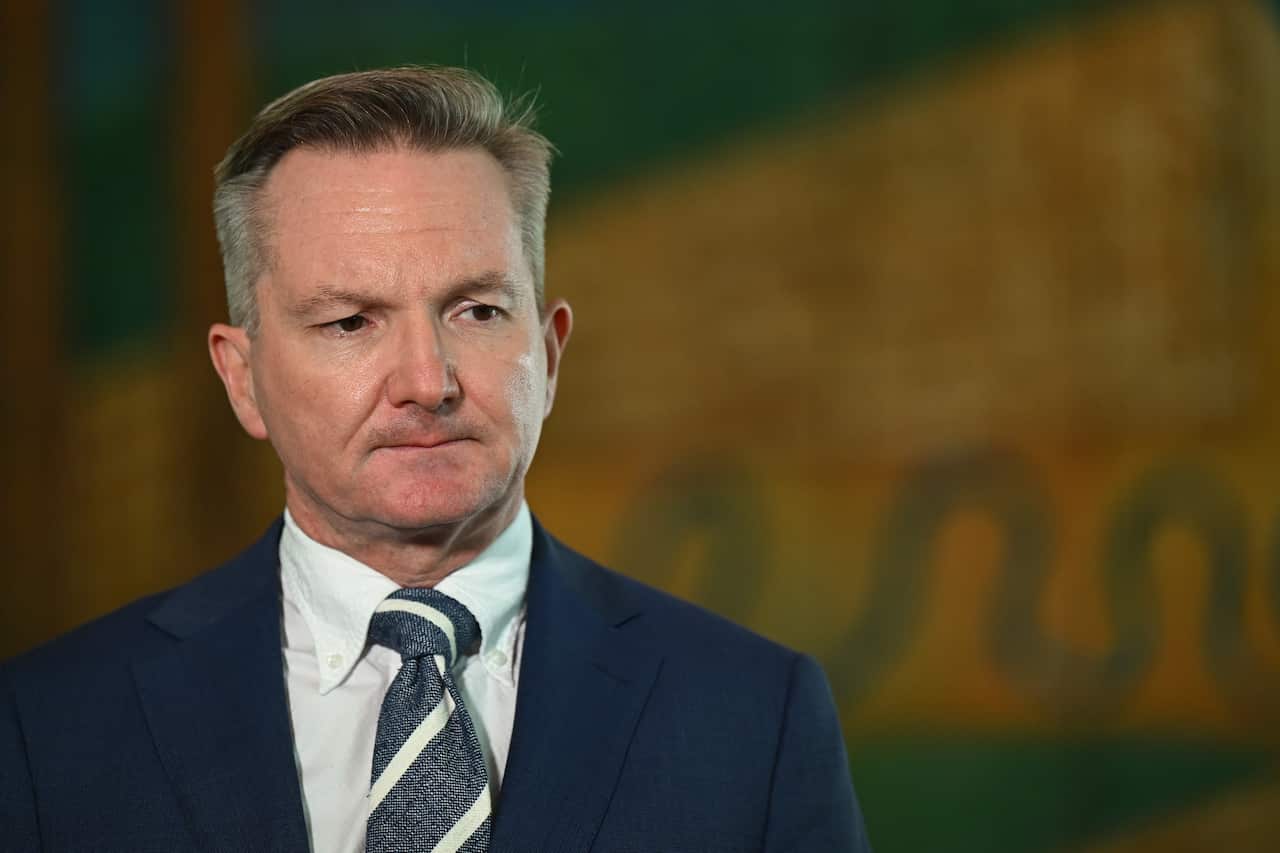
Energy Minister Chris Bowen has acknowledged that a fire at one of Australia’s two oil refineries poses a challenge and is likely to affect petrol production, though the full impact remains unclear.
The blaze erupted on Wednesday night at the Geelong refinery and continued into Thursday morning before being brought under control. This incident comes amid ongoing global oil disruptions caused by the conflict in the Middle East, further complicating the situation.
In a Thursday afternoon press briefing, Bowen remarked, “The timing is unfortunate, and it certainly represents a setback.”
Nevertheless, he assured the public that both the government and industry stakeholders are collaborating closely to mitigate the fire’s effects and maintain fuel security for Australians.
Located in Geelong, Victoria, the Viva Energy refinery is one of only two operating oil refineries in the country, with Australia primarily relying on fuel imports from Asia to meet its needs.
Experts caution that this incident, coupled with the ongoing fuel crisis, highlights fundamental vulnerabilities in Australia’s fuel security strategy and its dependence on international supply chains.
The fire is expected to primarily impact production of petrol and aviation gasoline, a type of fuel used mostly for small planes. It differs from jet fuel, which is kerosene-based.
Bowen said diesel and jet fuel production at the Geelong facility would remain underway “at reduced levels for a period of time as a safety precaution, but we’re confident that will return to strong levels quickly”.
He said there would be “some” impact on petrol production at the facility, but suggested it would not cease altogether, with further assessments required to determine the extent of the damage.
Meanwhile, Viva Energy is confident it will be able to fill the gaps in production with imported petrol, he said.
The facility is responsible for roughly 10 per cent of Australia’s fuel supply, processing up to 120,000 barrels of oil daily and generating fuel types including petrol, diesel, LPG and jet fuel.
‘Thorough investigation’ to take place
Bill Patterson, Viva Energy’s executive general manager of energy and infrastructure, said the refinery was operating at a lower rate while the company made sure the site was safe and started investigating the damage.
“It is fair to say that we’re still making petrol, diesel and jet fuel at pretty decent rates, so it hasn’t been a very large impact at this stage,” he said.
He said two units at the site were damaged, in a part of the refinery that combines LPG to make molecules that are used for blending gasoline.
While the refinery was built in 1954, Patterson said “that doesn’t mean everything on the site is 70 years old”.
“The condition of the equipment that was involved in this event will be definitely part of the investigation. We are determined to not have events like this happen again.”
“We’ll do a thorough investigation into this incident, and we will learn from it.”
Australia used to have more domestic oil refineries, but six of eight facilities closed between 2003 and 2021, after newer, more economical mega-refineries were built across Asia in the 1990s.
‘Small leak’ the likely culprit for blaze
The fire was likely caused by a “small leak” after valve failures in mechanical equipment, Fire Rescue Victoria (FRV) deputy commissioner Michelle Cowling told ABC News earlier on Thursday, adding that a plume of LNG then ignited due to “several ignition sources” in the refinery.
She said firefighters had responded to a “significant” blaze at the refinery in Corio, Geelong, which started at around 11pm on Wednesday and was extinguished shortly after 12pm on Thursday.
Patterson said Viva Energy was still investigating the mechanisms that caused the issue, but confirmed there was a leak of gas from a mechanical component in the system.
“All aspects of the cause of the fire, both the release of the flammable material and what caused it to ignite, will be subject to investigation,” he said.
FRV said that it had responded to multiple calls reporting explosions overnight.
Hussein Dia, a professor of future urban mobility at Swinburne University, said the incident would add pressure to an “already tight and globally exposed fuel system”.
“The loss or reduction of output from a major domestic refinery reduces flexibility and resilience in the system. This doesn’t mean people will run out of fuel tomorrow, but it does narrow the buffer we have to absorb shocks,” he said.
‘Disappointing on so many levels’
Viva Energy CEO Scott Wyatt told reporters on Thursday morning that the outbreak of the fire was “disappointing on so many levels”.
“Naturally, petrol will be one of the products that will potentially be impacted, depending on how we operate the units after,” Wyatt said.
However, he said he was confident that refined fuel imports would be able to fill any potential shortfall in petrol production.
Australia imports some 80 per cent of its refined fuel, with the rest processed from domestic supplies at the Geelong facility and another in Lytton, Queensland.
The country has faced fuel security concerns since Iran effectively closed the Strait of Hormuz at the end of February after it was struck by the United States and Israel.
Earlier, Patterson said that production had been ramped up in response to the events in the Middle East and that maintenance had been “pushed back” in a separate, diesel-producing section of the plant, but that this had not been a contributory factor to the fire.
Prime Minister Anthony Albanese last month announced the excise on fuel and diesel would be halved in response to surging prices.
Albanese has visited several Southeast Asian countries in recent days, meeting regional leaders to shore up domestic fuel supplies. He is currently in Malaysia for the final leg of his trip.
Singaporean Prime Minister Lawrence Wong pledged not to restrict fuel exports to Australia following a meeting with Albanese last week.
Bowen urged Australians not to purchase more fuel than they needed in response to the news.
SBS has contacted Bowen, FRV, and Viva Energy for comment.
For the latest from SBS News, download our app and subscribe to our newsletter.