
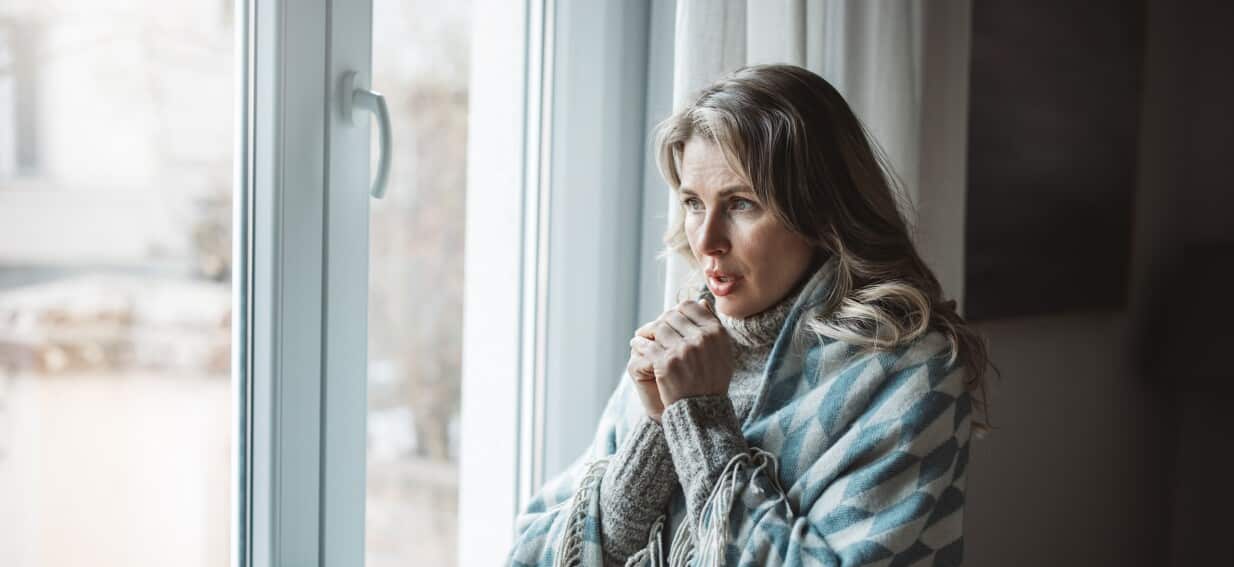
As winter settles in Australia, you might feel your home is just as chilly — or even chillier — than the outdoors.
Although Australia is generally seen as a warm nation, winter temperatures don’t dip to the extreme lows seen in some other parts of the globe.
However, the situation inside many homes tells a different tale.

Here’s why they seem so cold and how you can stay warm.

Why are Australian houses so cold?

If you live in Australia and you’re feeling the cold, you’re not alone.

People from colder regions, like Canada, the US, and the UK, have voiced on social media their surprise at how chilly Australian homes are compared to their own.

The World Health Organization (WHO) recommends houses should be kept at a minimum of 18 degrees to support general health and wellbeing.
According to the WHO, colder temperatures can have negative impacts on respiratory, cardiovascular and mental health. Cold temperatures can also make mould in a house worse and weaken a person’s immune system.
But according to a 2023 study published in the Energy Research and Social Science journal, across the sampled homes, 81 per cent were below 18 degrees from June to August, with an average temperature of 16.5C.
Australian homes were colder than Finland, which averaged temperatures of 20 to 24 degrees, and Greenland, which had an average indoor temperature of 21.8C.

Typically, Australian homes lack insulation, are drafty, or contain inefficient heating systems, allowing cold air in and warm air out.

Australia’s regulatory standards and building codes have also historically been less stringent than other countries, according to Professor Ralph Horne, associate deputy vice chancellor of research and innovation at RMIT.
“As far back as 2005, research comparing Australian cities to those overseas found housing in compatible climate zones in North America and Europe was 55 per cent more efficient for heating and cooling energy compared to minimum standard housing in Australia,” he said.

“The average energy efficiency [NatHERS] rating of all the overseas comparison homes was over seven stars, and we have yet to implement seven stars here in Australia, almost 20 years later.”

What can you do to make your house warmer?

Fortunately, there are a few things you can do to enhance the warmth inside your home.
If you own your property, consider retrofitting and upgrading your heating and insulation systems.

This can include improving insulation in the floor, walls and ceilings, and sealing cracks in windows, door frames and floors.

Installing a split-system air conditioning and heating system, as well as floor heating, can also help make your house feel warmer.
You should also regularly maintain heating systems and clear out filters to ensure they are working efficiently.
Upgrading heating systems can be costly, and energy efficiency expert Adam Corrigan, founder of Your Energy Friend, said each household is different and there are many energy-saving options to consider.
The first thing he recommends for households is to analyse their power bills and shop around to get the best deal, followed by making your house more energy-efficient.

“If you want to make your home more comfortable, get your insulation sorted and do your draft proofing. That’s your best return on investment. That’s your best bang for buck,” he said.

Corrigan said simple changes such as installing heavy-lined curtains and a box pelmet (which goes around the top of the curtain) can be very effective at keeping your home warm and are much cheaper than double-glazed windows, for example.
While renters cannot make such changes to homes, there are some affordable options to stay warmer in winter.
If your house has draughts, you can apply weather strips, ‘door snakes’ or other barriers around windows or door frames to prevent cold air from entering the house, and to block warm air from escaping.

If you have hard floors, adding rugs can provide some insulation and add warmth underfoot, and if you have ceiling fans, using the reverse setting can distribute warm air from the ceiling.

For rental homes without heating systems, portable electric or oil heaters can be an effective option for heating up single rooms. To maintain the desired heating in a specific area, ensure doors and windows are closed to prevent heat from escaping.
Horne said while Australia has had a longstanding awareness of drought and water efficiency, there has not been enough of a focus on energy efficiency in homes — meaning many residents are now left in cold houses, and unable to afford heating.
“An implicit reliance on cheap energy has now become increasingly challenged by the need to respond to climate change, and the rise in energy poverty.
“For a variety of reasons, energy costs have risen across Australia and this has brought to light the inefficiency of Australian homes, as households struggle to keep the heating on and pay the bills.”

You May Also Like
Missing four-year-old Gus

Police Disheartened After Exhaustive Three-Day Search for Gus Yields No New Leads

South Australian police have announced that their latest search efforts around the…
NRL star Jai Arrow has retired aged just 30, with his devastating motor neurone disease diagnosis leaving rugby league fans shattered

Experts Weigh In: Are Football Legends Jai Arrow and Neale Daniher at Higher Risk for Motor Neurone Disease?

The recent passing of Neale Daniher and the shocking diagnosis of Jai…
Shoppers at Pitt Street Mall in Sydney.

Australians Poised for Temporary Respite Amid Current Challenges

Encouraging inflation statistics might provide relief to borrowers weary of potential rate…
In a special episode of the Daily Mail's Palace Confidential, royal editor Rebecca English tours an exhibition which charts Queen Elizabeth's historic reign through clothes, guided by its curator, Caroline de Guitaut. To mark what would have been the monarch's centenary, Queen Elizabeth II : Her Life in Style puts many of her most iconic outfits and accessories on public display for the first time at The King's Gallery, Buckingham Palace. Among the pieces visitors can study up close is the historic gown from the Queen's 1953 coronation, created by royal couturier and longtime collaborator Sir Norman Hartnell. Hartnell was given around eight months to realise his vision for the outfit, eventually presenting the monarch with eight separate designs to choose from.

Queen Elizabeth’s Unique Coronation Dress Request Revealed

In a unique episode of the Daily Mail’s Palace Confidential, royal editor…
Lauren Huxley is a name most Australians will always remember.

Shocking Parole Denial: Lauren Huxley’s Attacker Remains Behind Bars

Robert Black Farmer, infamous for a brutal and nearly deadly assault on…

Labor Drives Controversial Tax Reforms Amidst Growing Public Dissent

In brief Treasurer Jim Chalmers has introduced a bill to legislate changes…

Australia’s Next Move: Will It Adopt US and Canada’s Ebola Travel Restrictions?

in brief Countries including the United States and Canada have started placing…
Father of Nesrine Zahab, Zakariah Zahab.

Father Defends ‘ISIS Bride,’ Argues Against Legal Charges for Past Mistake

The father of a woman labeled as an “ISIS bride” recently returned…
US launches new strikes on Iran

US Conducts Strategic Strikes on Iran: Key Developments and Global Implications

In a bid to bolster Ukraine’s defense capabilities against escalating Russian missile…

Breaking News: Hamas Military Leader Reportedly Neutralized in Israeli Airstrikes on Gaza

In brief Israel says it has killed the new head of Hamas’…
Ashley Paul Griffith has launched a bid to slash the life sentence he received for abusing dozens of young children.

Infamous Pedophile Challenges Life Sentence: Is Justice Truly Served?

In a shocking turn of events, Ashley Paul Griffith, a former childcare…
The four spent two hours wrangling the massive fish.

Epic $70,000 Catch: Why This Aussie Trio Missed Out on a Fortune

Three brothers have hooked a monster tuna weighing 107.5 kilograms off the…