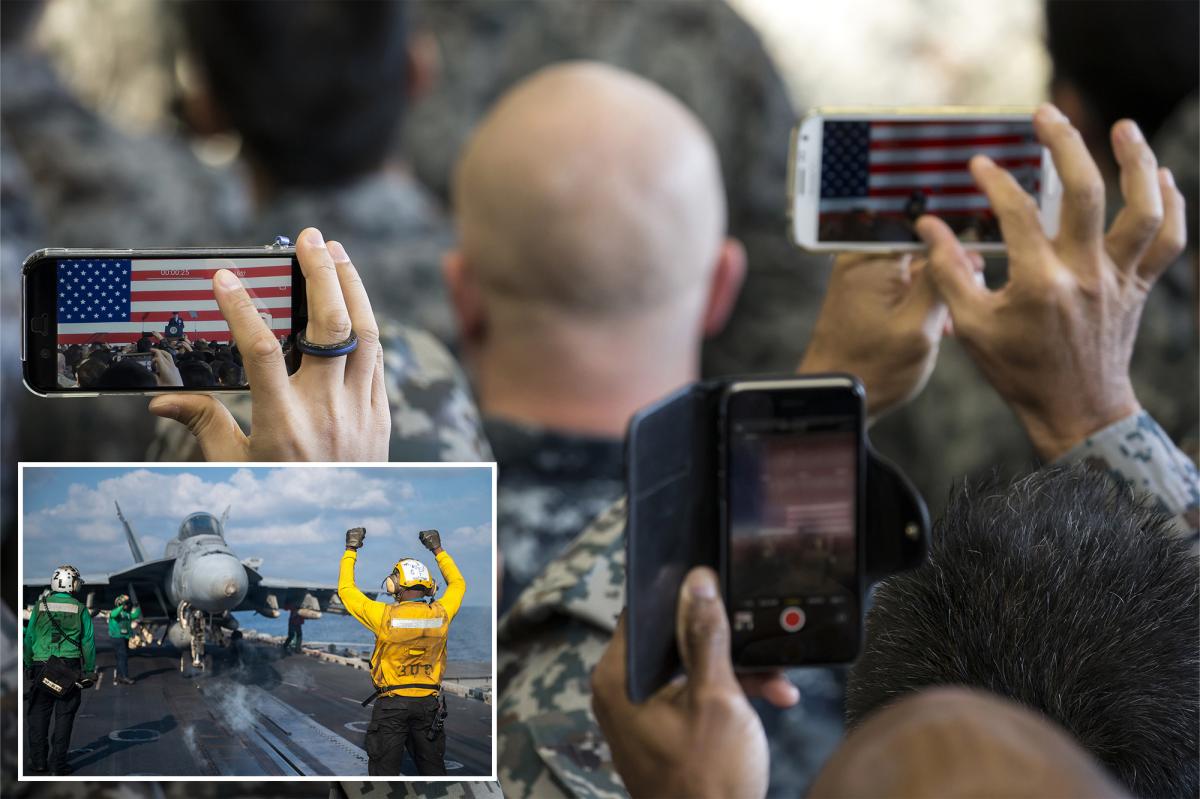

According to recent reports from military officials, U.S. forces stationed in conflict zones have become targets through the use of commercially available location data. This highlights the impact of the global surveillance industry on modern warfare.
A letter from U.S. Central Command, shared with Reuters by U.S. Senator Ron Wyden of Oregon, revealed that there have been “multiple threat reports” regarding adversaries exploiting commercial location data to monitor or target U.S. personnel in these areas.
While the letter, dated April 14, did not provide further details, it is known that Central Command oversees operations in the Gulf region, where tensions with the Iranian military over the Strait of Hormuz are ongoing.
This revelation marks the first official acknowledgment of U.S. forces being specifically targeted in active war zones, as noted by Wyden and a bipartisan group of lawmakers in a letter addressed to the Pentagon.
The letter emphasized the potential dangers of commercial location data, noting it could reveal where U.S. troops gather and their routines. Such information could be used by adversaries to launch attacks using missiles, drones, or roadside bombs, and could also have counterintelligence implications. Wyden expressed in a statement that the time has come to consider the advertising technology industry a national security threat.
The Pentagon has not responded to requests for comment. Lawmakers also mentioned in their letter that attempts to gather more information from military officials regarding these threats have not been successful.
Location data is widely used in digital advertising, which is a key source of revenue for many tech companies. Such data is typically collected from smartphones or other devices by apps or service providers before being sold to data brokers who collate and resell the data, sometimes via complex networks of intermediaries.
Although the threat to privacy inherent in selling the details of people’s day-to-day movements on the open market has long been a matter of public discussion, its potential as a national security risk has recently drawn concern as well.
As far back as 2016, one US defense contractor was able to leverage commercially available location data to track special operations forces from their bases in the United States to a sensitive staging post in Syria, according to an account first disclosed by the Wall Street Journal.
More recently, journalists at Wired and two German news outlets drew on billions of coordinates collected by a data broker to expose the granular comings and goings of people stationed at or around 11 US military and intelligence sites in Germany.
Two groups that represent digital advertisers, the Interactive Advertising Bureau and the Association of National Advertisers, did not return emails seeking comment.
The letter from US lawmakers to the Pentagon said that, given what military officials know about the trade in location data, they should have acted faster to protect their personnel, for example by disabling the unique advertising ID attached to military-issued devices, automatically turning off location sharing on smartphones in the field, and steering staff away from Google’s Chrome web browser toward more privacy-focused alternatives.
One of the letter’s cosigners was US Representative Pat Harrigan, a North Carolina Republican who was formerly a US Army Special Forces officer. Harrigan said that browsers like Chrome “are built from the ground up to collect and share user data” and that every day they remain on government-issued devices “is another day we are handing our adversaries a weapon against our own troops.”
In a statement, Alphabet’s GOOGL.O Google said that Chrome had “industry leading security.” The company added that it had “long advocated for stronger rules and safeguards against data brokers.”