As winter nears, a severe weather alert focused on sheep farmers becomes more prevalent in multiple areas of Australia.
Typically issued by the Bureau of Meteorology (BoM), these warnings might not be significant for many, but for those in the sheep farming industry, they can be the difference between a profitable and a loss-making year.
Farmer Keith McGrath is among the many Australians who will heed these alerts seriously.
He has been raising sheep in the Yass Valley region of NSW since 1977 and currently operates his own enterprise, Billa Burra Burra, spanning 115 paddocks.
In the Southern Tablelands, livestock farmers face uniquely cold and wet weather conditions.

He informed SBS News that the frigid winter months necessitate meticulous planning for the wellbeing of sheep.

‘Sheep grazier warnings’, as the name suggests, warn farmers about upcoming cold or wet conditions that could cause their livestock harm.
The alerts are key to ensuring animal welfare, especially when conditions can be unpredictable or fast-changing.

McGrath currently maintains about 1,500 sheep on his farm — a tiny portion of the 78.8 million sheep estimated to exist in Australia in 2023, according to Meat and Livestock Australia.

When and where are most sheep grazier warnings received?

These alerts are most often sent to farmers in southwest Western Australia, southern South Australia, Tasmania, Victoria and much of NSW, a BoM spokesperson told SBS News.

NSW has the most sheep in Australia — around 36 per cent — followed by Victoria at 24 per cent and Western Australia at 19 per cent.

A map of where Australia's sheep are located

Source: SBS News

The BoM spokesperson said the frequency of warnings would likely increase as the weather becomes colder and wetter, especially for people living in Australia’s southern regions.

“The bureau uses a combination of wind, temperature and rain thresholds to determine if a warning needs to be issued,” the spokesperson said.
“When the temperature is colder, combined with strong winds and rain, a warning is more likely to be issued.”
“For example, if it is 11C and rainy, but with no breeze, a warning wouldn’t be triggered. Once winds of 25km/h are added in, this would trigger a warning,” the spokesperson explained.

“By extension, the colder and rainier it is, the lighter the winds need to be to trigger a warning.”
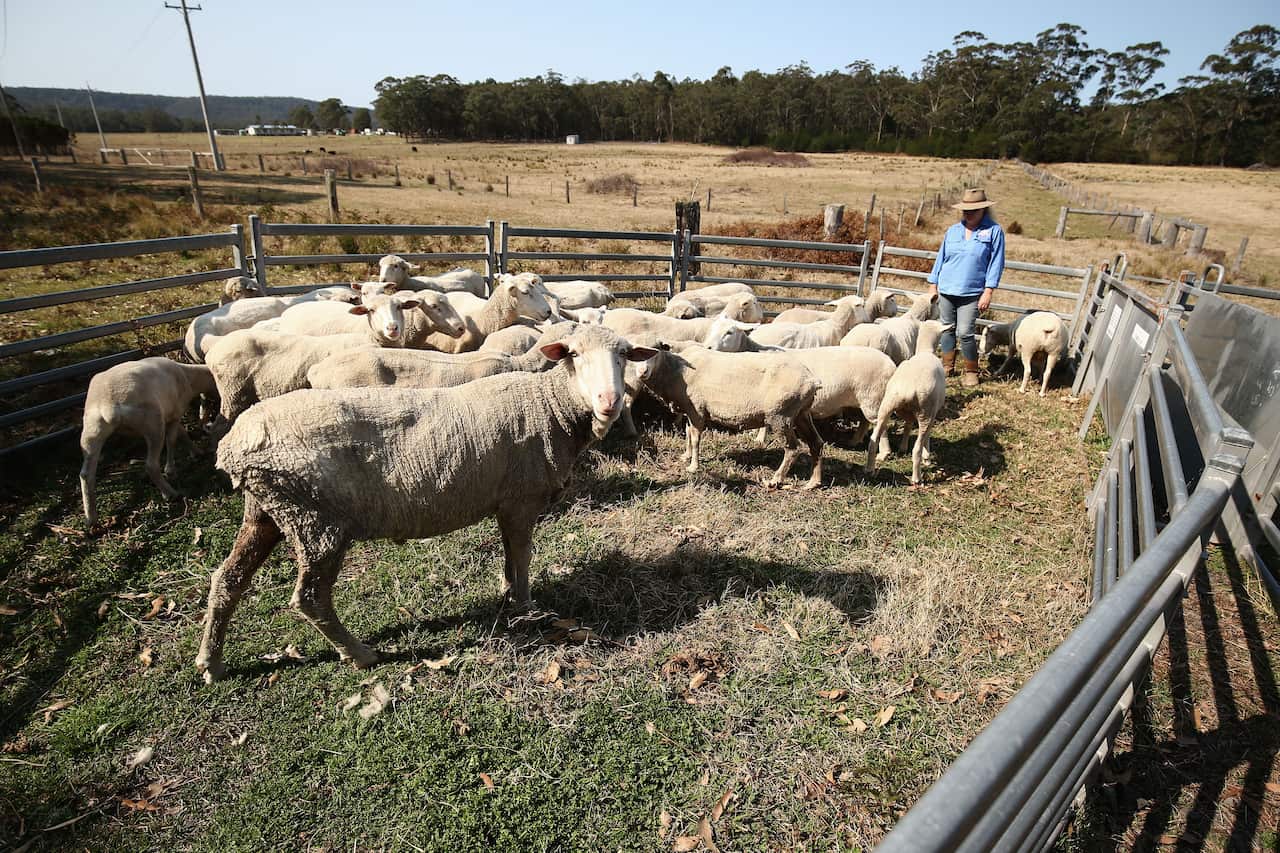
A farmer tends to several sheep in a pen.

Farmers shear sheep at certain times of the year to ensure that they have thicker wool for winter. Credit: Bloomberg via Getty Images

Lambs, sheared sheep most vulnerable

McGrath said that sheep shearing takes place in October and November and that the birthing of lambs happens around September or October.
When winter does roll around, the lambs are older and more resilient to the cold, and the sheep have regrown their wool.
“We manage our whole operation around trying to keep our sheep from being cold,” he said.
“We have all our property fenced so that we can shelter those sheep in the best possible locations when we get a [sheep grazier] warning.”
There are also sheds on his property where sheep can be housed in cold and wet weather.

But temperature and rainfall can be unpredictable.

‘We would’ve lost 200 lambs in a night’

McGrath recalled a cold night in September decades ago when a large number of his lambs died due to harsh weather conditions.
Newborn lambs are susceptible to hypothermia (low body temperature) and can die from it.
“The lambs were a week old, and the ewes didn’t go to the shelter in the paddock. They stood out in the middle, and we lost lambs,” he said.
“We would’ve lost 200 lambs in a night.”
He said it’s a night he won’t forget and has learned from.

“We’re in a vastly different situation with our set-up — with our paddocks and our infrastructure — now than we were then, 40 years ago.”

Livestock welfare guidelines

The Australian wing of the Royal Society for the Prevention of Cruelty to Animals (RSPCA) publishes guidelines on animal welfare for livestock farmers.
One such online resource advises how livestock owners can stay prepared for extreme events and weather.
“Emergency events like droughts, fires, floods and other natural disasters are an unfortunate reality … becoming more frequent as a result of climate change,” it reads.

“Owners of cattle, sheep, goats, pigs, poultry and other farm animals have a duty of care to always ensure the welfare of their animals.”

How much is Australia’s sheep wool and meat industry worth?

In Australia, sheep are reared primarily for their wool and meat.
As of 2023, Australia was the world’s largest exporter of sheepmeat, both by volume and value, according to the Department of Agriculture, Fisheries and Forestry.
The sheep and wool industries employed over 16,000 Australians directly and contributed more than $7.9 billion to the Australian economy in 2023-24.
Market research company IBISWorld forecasts that the industry will contribute an additional $1 billion to the Australian economy by 2030.

The Organisation for Economic Co-operation and Development and the Food and Agricultural Organization of the United Nations anticipate a 48 per cent surge in the producer price of Australian sheepmeat over the next decade.

A chart showing how the value of wool has changed since 2021

Source: SBS News

Meat and Livestock Australia estimates that the country had approximately 5.8 per cent of the world’s sheep flock in 2022.


 

The gross value of Australian lamb and mutton production is expected to rise by 5 per cent to $4.6 billion in 2024–25.
The increase is due to higher prices and higher production cited by the federal government’s June 2024 Agricultural Commodities Outlook.
Wool has long been associated with Australia. The National Wool Museum in Geelong, Victoria, has artefacts from the sheep industry dating back to the 1790s.
The industry has thrived since, making Australia the world’s largest producer of wool, in addition to being the world’s largest exporter of sheepmeat.
According to Trading Economics, as of 21 May, 100 kilograms of Australian wool was priced at $1,189.

You May Also Like

Controversy Erupts as Police Remove Man in Swastika Shirt from Royal Commission Hearing

A man wearing a swastika t-shirt outside the Royal Commission on Antisemitism…

Bluey’s $2 Coin Collection Makes a Triumphant Return: A Must-Have for Fans and Collectors

Australia’s beloved blue heeler has made a return to the spotlight at…

Why This All Blacks Legend Could Be the Perfect Fit for Munster’s Future – and How It Benefits Him Too

When Ireland, plagued by fatigue and injuries, arrived at Eden Park in…

Comedian Faces Backlash Over Controversial Joke on Alleged Murder: Public Outcry Grows

WARNING: Aboriginal and Torres Strait Islander readers are advised this story contains…

Breaking News: Bondi Suspect Faces 19 Additional Charges While Behind Bars

In brief The man accused of committing the 2025 Bondi shooting was…

Australians Face Financial Struggles as Economic Challenges Persist

The Reserve Bank‘s third successive rate hike hit mortgage holders like a…

High-Profile Australians Face Setback as Local Seats Reject Voice Referendum

Several high-profile Labor Members of Parliament are advocating for a Yes vote…

Australia to Arrest Returning Members of ISIS-Linked Group Amid National Security Concerns

Some members of the cohort of ISIS-linked families that will return home…

Shocking Twist: Renowned Author Craig Silvey Admits to Child Exploitation Charges

In brief Author Craig Silvey has pleaded guilty to child exploitation crimes.…

Experts Question Validity of Victorian Budget’s Claimed Operating Surplus

Unveiling Victoria’s 2026/27 budget papers today, Premier Jacinta Allan and Treasurer Jaclyn…

Australians Aboard Virus-Affected Cruise Ship: Passenger Issues Heartfelt Appeal

Key Points Four Australians are on the MV Hondius amid a suspected…

Witnesses Reveal Disturbing Indifference to Public Assault in Antisemitism Hearing

In brief The Royal Commission on Antisemitism and Social Cohesion has heard…