Share this @internewscast.com
This Sunday marks a significant moment for Hungary as its citizens head to the polls to decide the future of their leadership. Prime Minister Viktor Orbán, who has held power for 16 years, faces a critical electoral test that could end his lengthy tenure.
For those who stand by Orbán, he is seen as a staunch protector of Hungary’s traditional values. However, his detractors argue that his policies are anti-LGBTQI+, hostile toward migrants, authoritarian in nature, and marred by corruption.
Current polling data indicates that opposition leader Péter Magyar, representing the center-right Tisza party, is poised to potentially unseat Orbán, signaling a shift in the political landscape.
The upcoming election has stirred considerable interest and engagement among voters, who have shared their intentions and motivations with SBS News as they prepare to make their voices heard in this crucial vote.
‘Many people will come home’: The expat
Among those actively participating in the campaign is Ildi Amon, a Melbourne resident who has journeyed to Hungary to support the Tisza party’s efforts. Amon’s personal experience living under Orbán’s governance for nine years offers her a unique perspective.
“I lived in Orbán’s Hungary for nine years, so I know exactly what it’s like in Orbán’s Hungary, to earn a Hungarian salary, to use the healthcare we have here,” Amon reflected, highlighting her firsthand understanding of the current political climate.
Amon believes that if Orbán wins, many Hungarians will decide there’s no future for them in the country and will move abroad.
“It’s such a tragedy for Hungary when someone leaves and I really hope that if Tisza wins, many people come home.
“There’s so much work to be done to rebuild this country.”
The fighter
Fencing is a popular sport in Hungary, but rarely do people first pick up a foil at age 52.
Irén isn’t afraid of a fight. In between matches at the national veterans’ championships, the mother-of-three explained why she’s been campaigning for Tisza.

“The past 16 years have been tragic for me,” she said.
“As a lawyer, with knowledge of totalitarian systems and how they dismantle the rule of law, it has been painful for me to experience.”
Like many Tisza supporters, she’s concerned Orbán may refuse to concede if he loses in a tight race.
“They will certainly try every means and method, but let’s not forget that leading military officers and leading police officers have switched to Tisza’s side. I think if there is fraud here, or God forbid, they overrule the election results, I think it is conceivable that there will be military or police reinforcement to hand over power.”
The traditionalist
Edda Budahazy’s shop might look like a place for tourists to buy souvenirs. But the arrows on sale are very much real, so too the axes.
Need a ceremonial horn to blow to start a battle? She’s got those too.
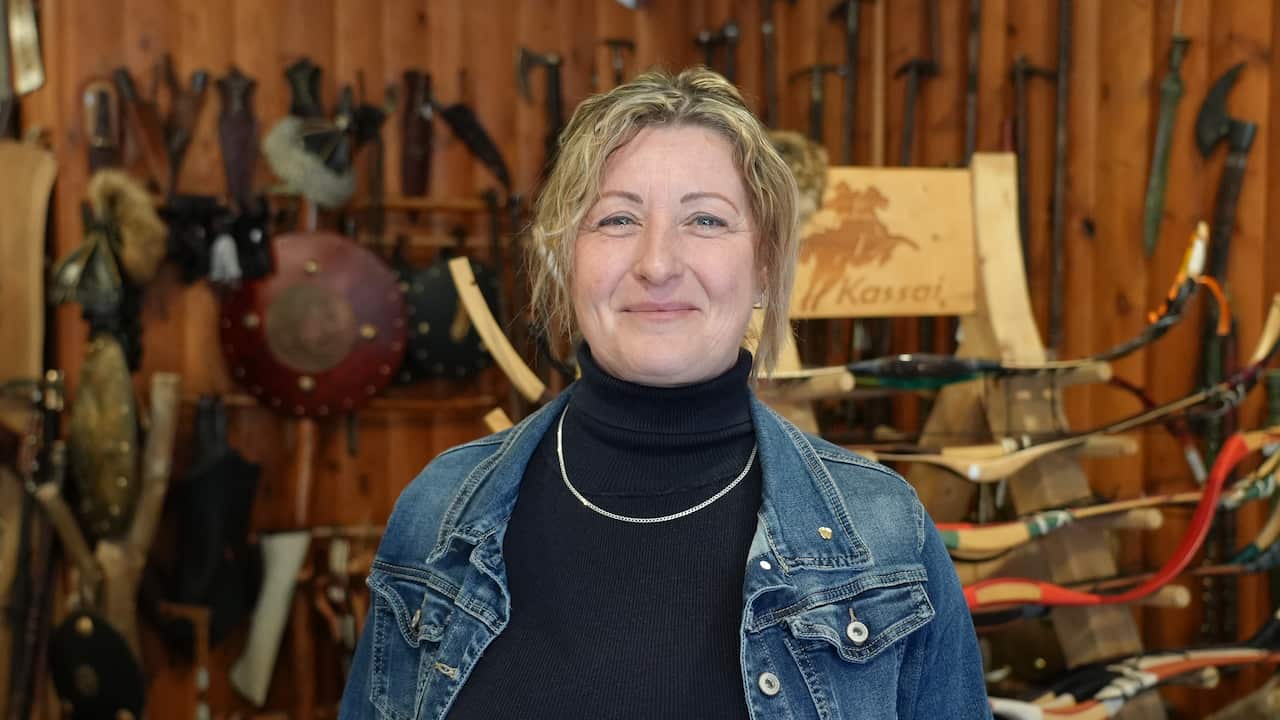
They are products from a bygone era, when Hungarian archers fought their foes on horseback.
Budahazy is a traditionalist in every sense. In Budapest, the cosmopolitan, liberal capital of Hungary, that makes her an outsider.
She will be voting for Fidesz, the party of Viktor Orbán.
“Conservative values are strong in Hungary,” she insists.
“The family is the fundamental building block of society. The male-female relationships, thinking in terms of the nation … I think these [values] are still quite strong, especially in the countryside.”
Orbán, who has long been friendly with Russian President Vladimir Putin, has suggested that if Fidesz wins power, Hungary will be drawn into the Ukraine war.
“If [Orbán] does not win, the country will have a leadership that will be much less able to resist the influence of the European Union leaders,” Budahazy says.
“We see that the EU is not interested in and does not do anything to stop the war but is constantly financing it with money and weapons. This is a very big danger.”
The queer community
Life under Orbán has been difficult for Hungary’s LGBTIQ+ citizens.
His government attempted to ban pride marches, made it illegal for gay couples to adopt children, ended the legal recognition of gender identity for transgender people and passed a law prohibiting the “portrayal or promotion” of homosexuality.
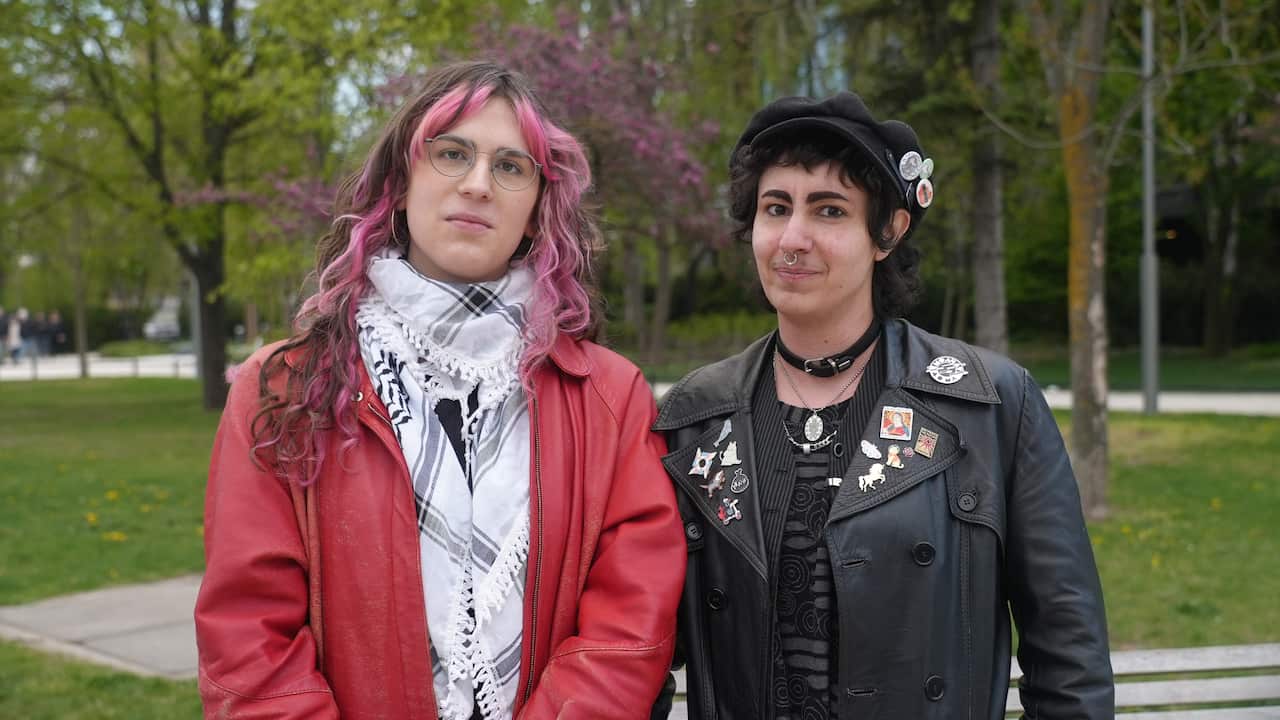
Lili Somogyi said the so-called “family-friendly Hungary” campaign has had a lasting impact.
“I would overhear conversations on the street, when a queer-looking person or a trans person would walk past, people would talk among themselves and say, ‘that’s quite strange, I thought that was illegal now, I thought they would ban that stuff’,” Somogyi said.
“It shows how people start internalising these messages.”
Somogyi and her friend Léna Hoschek still haven’t decided who to vote for.
They know the best chance of getting rid of Orbán’s party is to vote for Magyar’s.
But the opposition leader is also a conservative and is certainly not considered a friend of Hungary’s LGBTIQ+ community. He’s barely spoken about gay rights at all while campaigning.
“As a trans person, sure it’s disappointing, but I’m not surprised,” Hoschek said.
“I can understand the logic behind it, to not alienate the voters on the right, to gain momentum and power, to have this tipping point of getting Orbán out of the government.
“I don’t want to vote for him because of this, but as a political tactic I think it’s smart, even though it’s bad.”
For the latest from SBS News, download our app and subscribe to our newsletter.