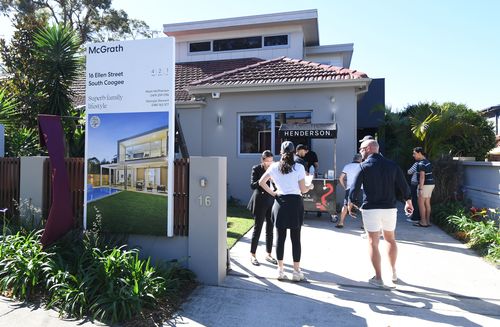

Previously, homeowners could offset losses from their residential investment properties against their total income, effectively lowering their annual tax liabilities.
Starting in July 2027, this benefit will only be applicable to new construction homes, superannuation funds, and properties purchased before the budget announcement.
A representative for Chalmers confirmed to the Australian Financial Review (AFR) that these property purchases include those made by owner-occupiers.
This change implies that Australians who currently own homes purchased before the budget announcement could later buy another property and turn their existing home into a negatively geared investment property.
Brendan Rynne, KPMG’s chief economist, explained to the AFR that the grandfathering policy might encourage current homeowners and investors to retain their properties to maintain the ability to negatively gear.
“As a result, we could see a decrease in housing turnover compared to historical levels,” Rynne noted.
It’s thought that defining investment property status in legislation would have been prohibitively complex, so the loophole was likely deemed a necessary part of simplifying the reforms.
The negative gearing exemptions may seem friendly. One property expert warns it’s a’ trap’
This could inspire new investors to buy into sprawling apartment developments or house-and-land packages on the outskirts of major cities â but these types of properties historically “underperform” as investments.
Property investment guru and Your Empire chief executive Chris Gray said the federal government’s new build exemption may “screw investors” who buy solely based on their freedom to apply negative gearing.
“It’s basic economics. If something’s in short supply and lots of people want it, the price goes up. Where you’ve got lots of supply, it won’t.”

First-time Australian investors who weren’t lucky enough to buy before 7.30pm on budget night now have two choices: buy a newly-built home for the negative gearing benefit, or lose the tax break and buy an existing property.
Gray, who has 30 years of experience buying and selling property, said seasoned investors will know to give new builds a wide berth.
He would still choose the option of buying a second-hand home in a high demand area, despite the chance it won’t be positively geared for at least a decade.
Some inexperienced buyers, however, could still be fooled by something called “manufactured capital growth”.
And it could take years before the reality of their bad investment sinks in.
“Developers might sell 20 at a time and slowly release them. They sell the first lot at say $500,000 and the next one at $525,000 and then $550,000,” Gray added.
“Everyone thinks that it’s rising, but it’s not.
“It’s not until you get someone selling it to another person in maybe five years’ time that you actually realise, potentially, the property hasn’t grown in value at all.”
NEVER MISS A STORY: Get your breaking news and exclusive stories first by following us across all platforms.


