Share this @internewscast.com
With food waste driving a measurable share of Australia’s emissions, efforts to divert it from landfill start in unexpected places — including a Sydney warehouse where startup founder Olympia Yarger is busy sweeping up mouldy bread.
Yarger is hands-on at her factory in the city’s west, where piles of discarded vegetables and stale loaves arrive daily from supermarkets and food producers.
Yarger, a sheep farmer turned entrepreneur, has built her business around keeping this waste out of landfills.
“We’ve developed a technical system that accepts and manages food waste using insects,” she told SBS News.

At the heart of a pioneering initiative are automated, modular farms employing black soldier fly larvae, more commonly known as maggots, to transform food waste into valuable animal feed and fertilizer.
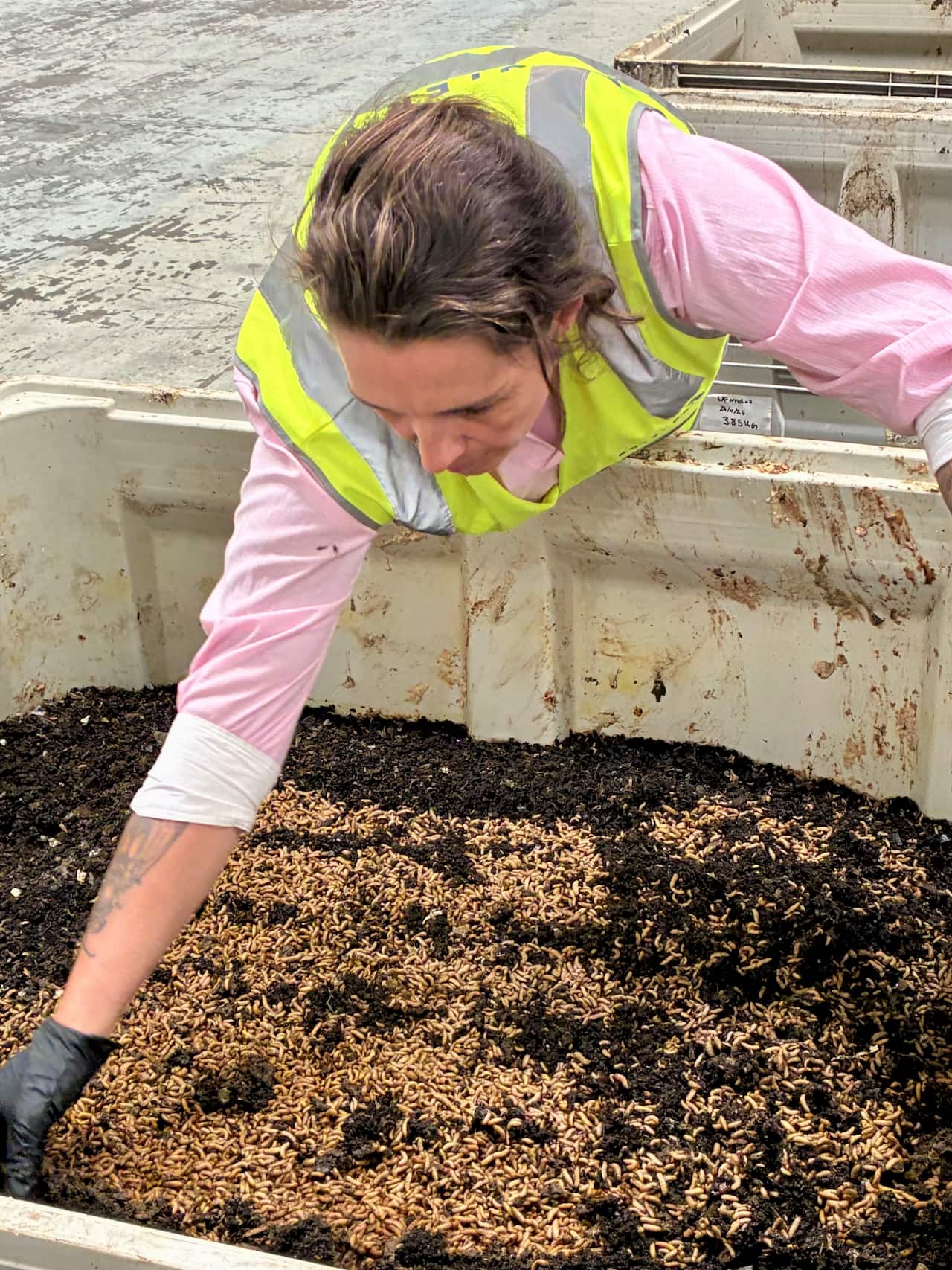
A woman in a pink shirt and hi vis vest leans over a white plastic crate filled with maggots.

Olympia Yarger, who transitioned from sheep farming to entrepreneurship, has established a business aimed at diverting food waste from landfills. Her efforts focus on sustainable solutions to reduce environmental impact.

Yarger acknowledges that the idea of using maggots might make some people uneasy. However, the environmental benefits speak for themselves.
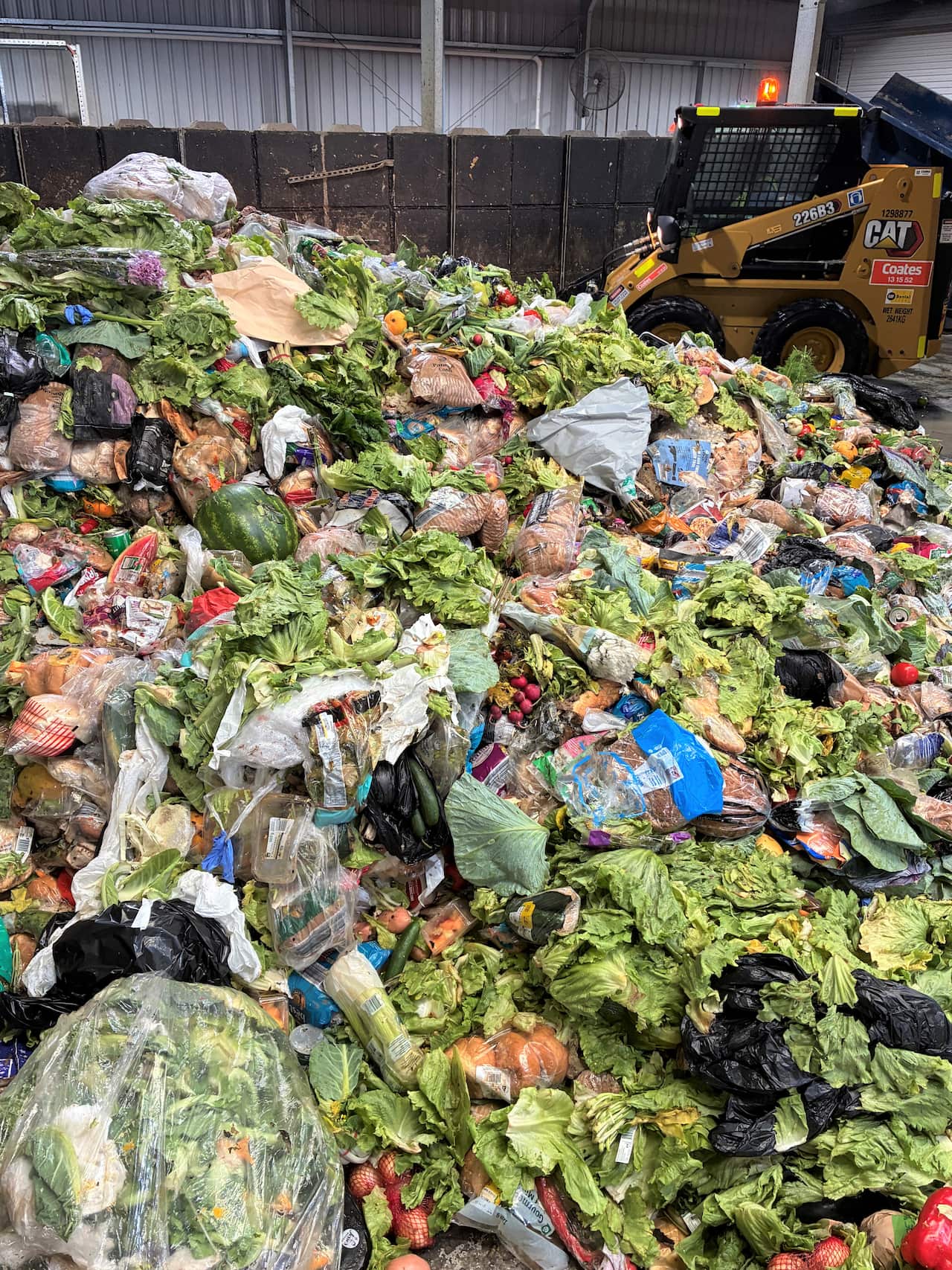
A mound of food waste including green vegetables and bread.

According to the Department of Climate Change, Energy, the Environment and Water, food waste is responsible for roughly 3% of Australia’s yearly emissions. This significant statistic underscores the urgent need for effective waste management solutions.

Australia faces an enormous challenge with over 7.6 million tonnes of food waste produced annually, which incurs a staggering economic cost of more than $36.6 billion each year.

Australia is facing ‘a landfill crisis’

One reason for the shift is simple: we are running out of space.
“There is a landfill crisis and we will run out of landfill capacity by 2030,” Geddes said. 

“Between one quarter and one third of all the waste generated is food waste. We need to keep this out of landfills.”

According to federal government projections, halving food waste by 2030 could deliver a net economic benefit of $58 billion.
For Yarger, that transition is already evident on her factory floor, where tonnes of spoiled produce arrive each week. The work starts with shovelling and sorting — and ends with waste that never reaches landfill.
At the company’s Wetherill Park facility, portable crates full of fly larvae grow fat on the leftover food.
“The insect part is not unique; there are great companies across the world that have been using insects as a food waste solution. However, we are the first in the world to commercially manage food waste as a boxed solution,” Yarger said.
“We created a box that’s a unit of processing capacity. So, one box can process 1.7 tonnes of food waste a day. 
“We can take a box to someone’s business and manage their waste on site.”

The clever system allows her business, Goterra, to address the food-waste problem while also turning a profit.
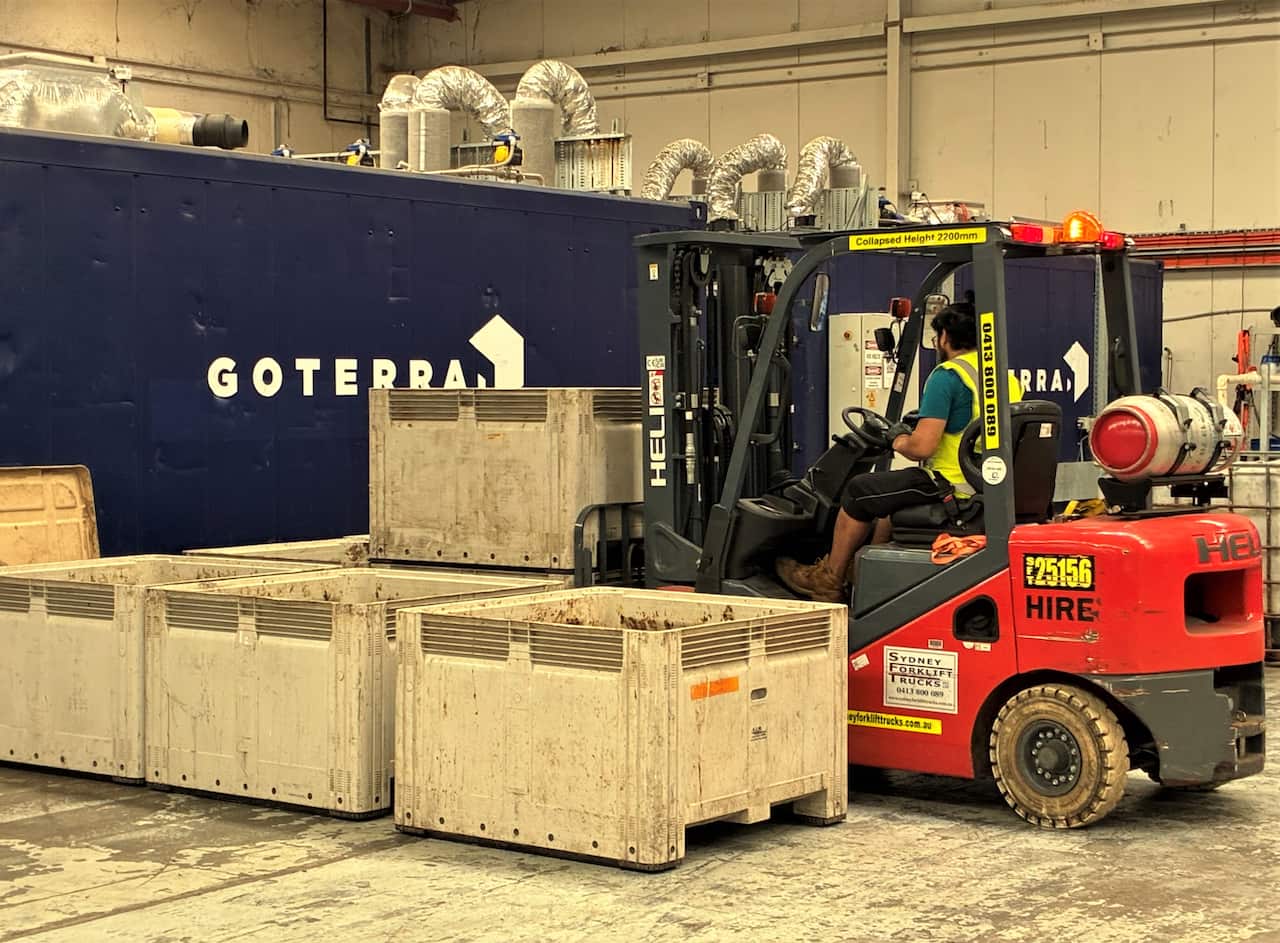
A bobcat moves white crates around a factory floor.

Halving food waste by 2030 is expected to deliver a net economic benefit of $58 billion, according to government projections. Source: SBS / Sandra Fulloon

Larvae are placed into crates at five days old and, over 12 days, produce nutrient-rich fertiliser for farms. Before the larvae mature into flies, they are converted into poultry feed.

Justin Frank, Goterra’s chief sustainability officer, told SBS News: “The chickens love it. They are designed to eat larvae and bugs, and the feed is really good for their gut health.”

“The feed is also full of amino acids which are essential for chickens to produce eggs.”

The ‘biggest’ problem is contamination

Despite the benefits of turning food waste into fertiliser and feed, the sector faces significant challenges.
“The biggest problem for food waste treatment and management is contamination,” Bai said. 
“Contamination levels are rising. We’re not just finding metals and glass in the waste, we are also seeing PFAS and microplastics. And this is introducing a real risk for composting and anaerobic digestion.”
This is why the EPA is calling for better sorting habits.
“The rules are incredibly clear. Only food waste and food scraps go into source separation — no plastics, no metals, nothing else,” Geddes said.

“This is what businesses must do when mandates come in next year because it is so important to keep the stream of organic material clean for products like compost.”
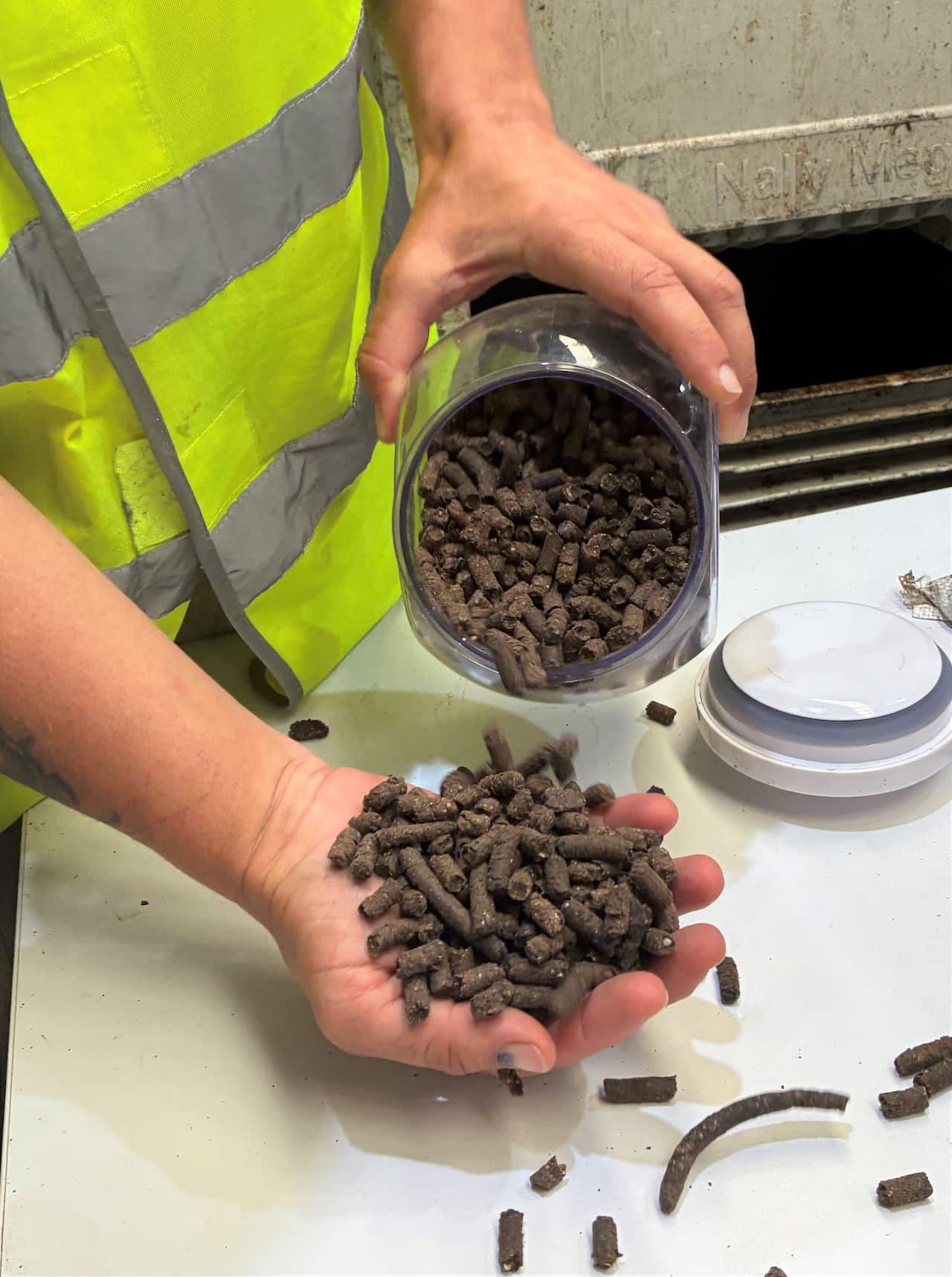
A hand holds brown pellets of fertiliser being poured from a glass jar.

Fertiliser produced by fly larvae can be used on farms and gardens. Source: SBS / Sandra Fulloon

Yarger is now preparing for major national expansion. From one small bucket in her garage in 2016, her business has grown to seven sites across four states.


“Next, we are expanding in Victoria and building out the network in Sydney with three new sites and then we are going into Western Australia,” she said.
Yarger is flipping the script on Australia’s waste of a food resource that is costly to produce and then costly to dispose of.
“So, if we can leverage technology to create a circular economy, we win at both ends of our value chain,” she said.

Share this @internewscast.com
You May Also Like

Watchdog Report: Israel Accountable for Majority of Record 129 Journalist Fatalities in 2025

IN BRIEF Gaza, Yemen, Sudan and Mexico were the deadliest regions for…
The fungus can have a severe impact on immunocompromised people.

Fungal Infection Outbreak at Prominent Hospital Results in Two Fatalities

Two patients died and four fell seriously ill after all contracting fungal…
Melissa Vincenty, from Worldwide Migration Partners, says there has been a surge in Americans wanting to move to Australia.

Exploring Cultural Perceptions: Why Exhausted Americans Envy Australia’s Lifestyle

In recent times, an increasing number of Americans are contemplating a move…
Bill Gates apologises to staff over Epstein links

Bill Gates Addresses Staff Concerns Over Epstein Connections

Bill Gates has reportedly spoken about his ties to Jeffrey Epstein in…

Tragic Fungal Outbreak Claims Two Lives at Prominent Sydney Hospital: Health Authorities on High Alert

IN BRIEF Sydney’s Royal Prince Alfred Hospital confirmed six patients were caught…
Ocean Grove whale fossil 20 million years old 26 February 2026

Australian Beach Excavation Follows Family’s Remarkable Discovery

A 20 million-year-old whale fossil has been excavated from a Victorian beach…

Albanese Responds to Grace Tame’s Critique: A Comparison to Morrison Stirs Controversy

in brief Anthony Albanese has faced criticism from Greens politicians over comments…
Samsung's new phone feature blocks prying eyes

Revolutionary Samsung Feature: Safeguard Your Screen from Prying Eyes

Samsung‘s flagship smartphone for 2026 will launch with an industry-first privacy feature…
The surprising reason supermarket shelves are being emptied across the country

Why Supermarket Shelves Are Suddenly Going Bare Nationwide

Yoghurt shelves in supermarkets are clearing out rapidly, thanks to the meteoric…

Key Takeaways from Trump’s State of the Union: Immigration and Iran Policies in Focus

In Brief: Trump spoke on foreign policy, the cost of living, tariffs,…
Video shows cyclist attacked by e-bike riders at Gold Coast sports ground

Shocking Assault: Cyclist Targeted by E-Bike Riders at Gold Coast Sports Venue

Long-running tensions between local sports clubs and young e-bike riders have reached…
Jonah Lomu was an imposing figure and an incredible athlete for the All Blacks

Uncovering Jonah Lomu’s Hidden Struggles: Childhood Trauma, Family Truths, and the ‘Curse’ That Shadowed His Life

Who exactly was Jonah Lomu? During his days electrifying the field in…