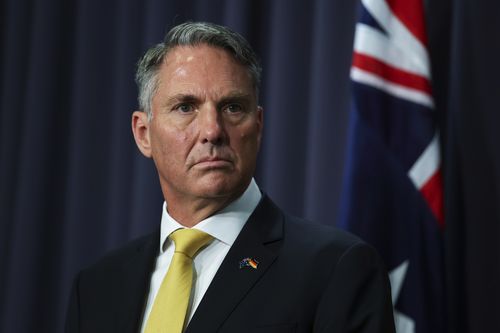

According to Marles, “This year marked the conclusion of the Cold War era’s nuclear arms control framework, which was designed to mitigate the risk of a devastating nuclear clash. The last active treaty that capped the number of strategic nuclear warheads held by Russia and the United States—the two nations with the largest nuclear arsenals—has now lapsed.”
“All nuclear-armed nations are once again expanding their stockpiles, with China leading the way in terms of significant growth,” he continued.
“Without renewed efforts in arms control, we could be on the brink of a new nuclear arms race,” Marles warned.
“This issue is far from theoretical; it poses increased risks to Australia’s security and economic well-being in the years ahead,” he emphasized.
The defense minister highlighted that the growing nuclear threat is a key reason behind Australia’s substantial investment in enhancing its military capabilities for the long term.
Marles outlined Australia’s $53 billion defense initiative, describing it as a strategy to boost the nation’s “self-reliance” over the next decade.
He said military spending under Labor has increased by up to $30 billion over the forward estimates.
This is an extra $117 billion over the next 10 years, Marles added.
“To place this in context, the former Coalition government, which governed during a period when all the trends we are wrestling with today were just as present then, increased defence spending by just $10 billion over the decade,” he said.
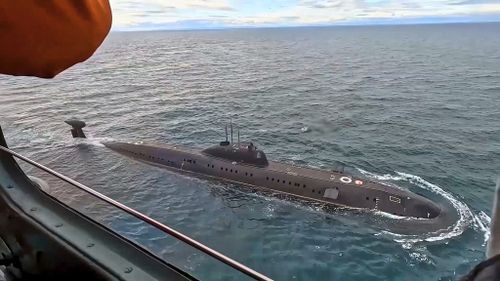
Among the major defence investments made by the government recently has been the acquisition of nuclear submarines.
Marles said “major progress” had been made on the AUKUS agreement.
“The government has undertaken the most ambitious modernisation of Australia’s maritime capability since the Second World War,” he said.
But fortifying Australia’s military in the name of self-reliance “should not be confused with military selfâsufficiency”, Marles said, adding that Australia’s relationship with allies including the US remains important.
“Alliances, especially with the United States, will always be fundamental to Australia’s defence,” he said.
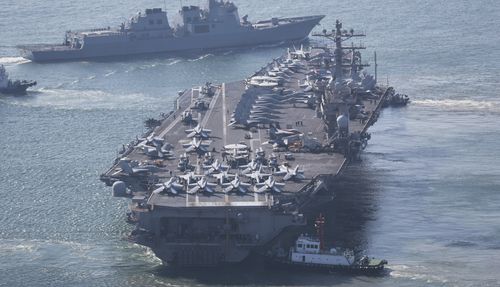
Australia will do ‘all within our power’ to bring peace
In his opening remarks, Marles insisted Australia was doing everything it could to bring lasting peace to the Middle East.
“The current ceasefire in the Middle East is an opportunity to move back from the brink,” he said.
“Open the Strait of Hormuz, restore the global fuel supply chain, and place events on a path to peace.
“For our part, Australia will do all within our power to help make this temporary ceasefire permanent.”
NEVER MISS A STORY: Get your breaking news and exclusive stories first by following us across all platforms.


