
A protest video. An urgent news update. A detailed thread dissecting a geopolitical crisis. Then yet another one. And another.
For many people, this constant stream of information brings an indescribable sensation—a blend of urgency, helplessness, and unease that seems impossible to shake off.
As the world grapples with ongoing global and economic uncertainties, distinguishing between staying informed and feeling overwhelmed is becoming increasingly difficult.
Take Tiffany*, for instance. A student of politics and international relations, she once experienced anxiety occasionally. Now, she describes herself as “hyper-aware,” feeling anxious nearly every day due to the relentless geopolitical tensions.
“It’s causing me significant anxiety. I’ve even woken up in the middle of the night with my heart pounding,” Tiffany shares with SBS News.
Tiffany’s experience is far from unique.
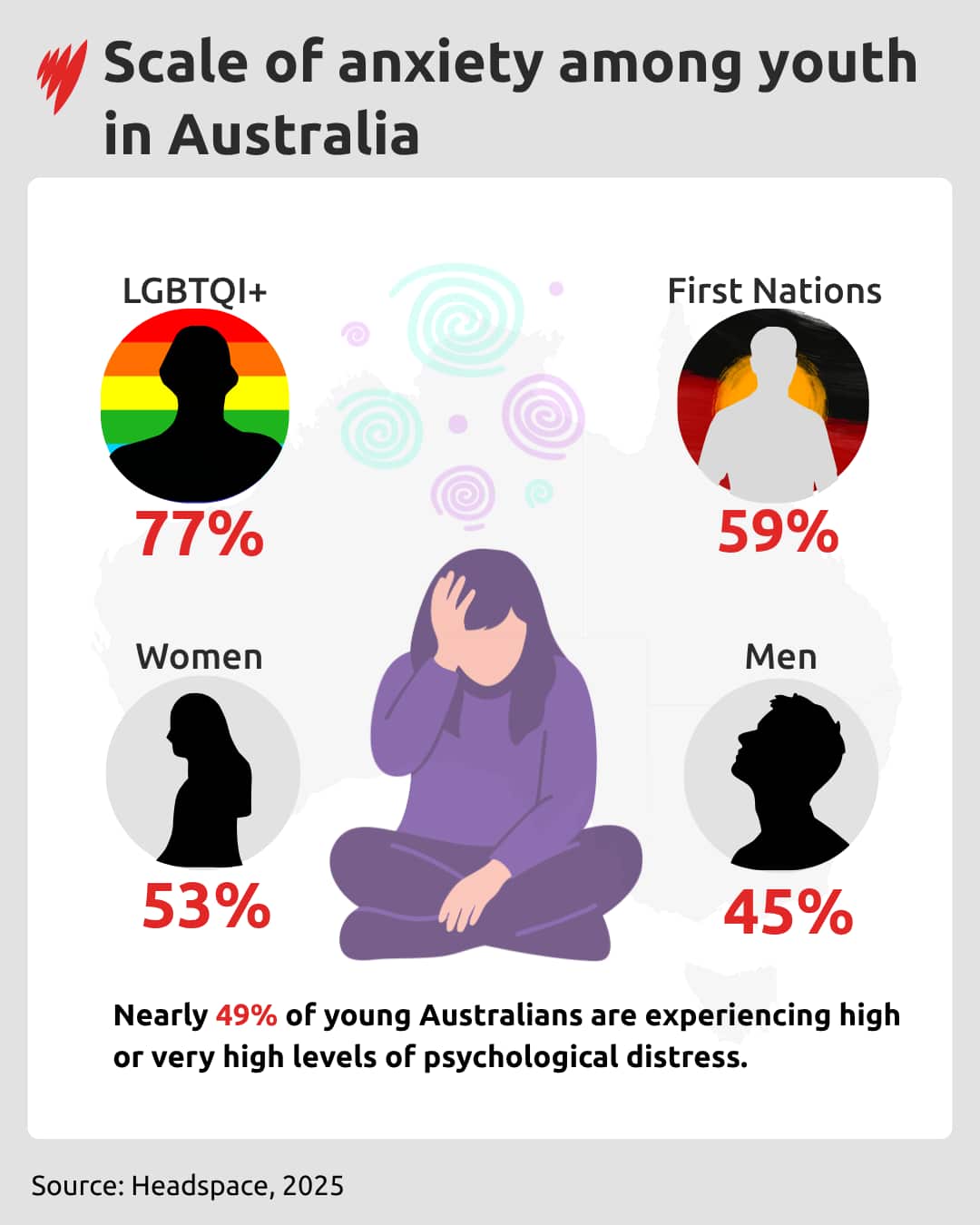
According to the Australian Bureau of Statistics’ national study of mental health and wellbeing, roughly one in six Australians aged 16-85 reported experiencing an anxiety disorder in the past 12 months.
Among younger Australians, the picture appears starker. According to research released by the national youth mental health foundation Headspace in November 2025, nearly half of young Australians report high or very high psychological distress, rising to 65 per cent among 18–25-year-olds.
But while national data shows anxiety is becoming more prevalent, it doesn’t fully capture how external circumstances, such as global and economic uncertainty, are shaping personal experiences.
So, what exactly is anxiety? And why does it seem as though everyone is feeling it more now?
Anxiety is something that ‘we all experience’
Danielle Einstein, a clinical psychologist and adjunct fellow at Macquarie University specialising in anxiety, says anxiety disorders occur when people stop doing what they need to do for everyday life.
“We recognise an anxiety disorder when somebody responds to their anxiety by avoiding whatever it is that’s made them scared, which might be an everyday challenge like talking to someone new,” she tells SBS News.
The issue that can arise with the subject of anxiety is that, because people recognise the word, they assign themselves a label.
While greater awareness has helped reduce stigma, Einstein says it may cause an individual to go from experiencing normal anxiety sometimes to developing a clinical anxiety disorder.
“There is a difference between anxiety, which we all experience and anxiety disorders, which is when avoidance is the primary response to experiencing anxiety, because the feeling itself is so intense, and it is hard to overcome it, but it’s not too hard when you understand it, and it’s certainly not too hard when you handle it quickly and effectively in the right way,” she says.
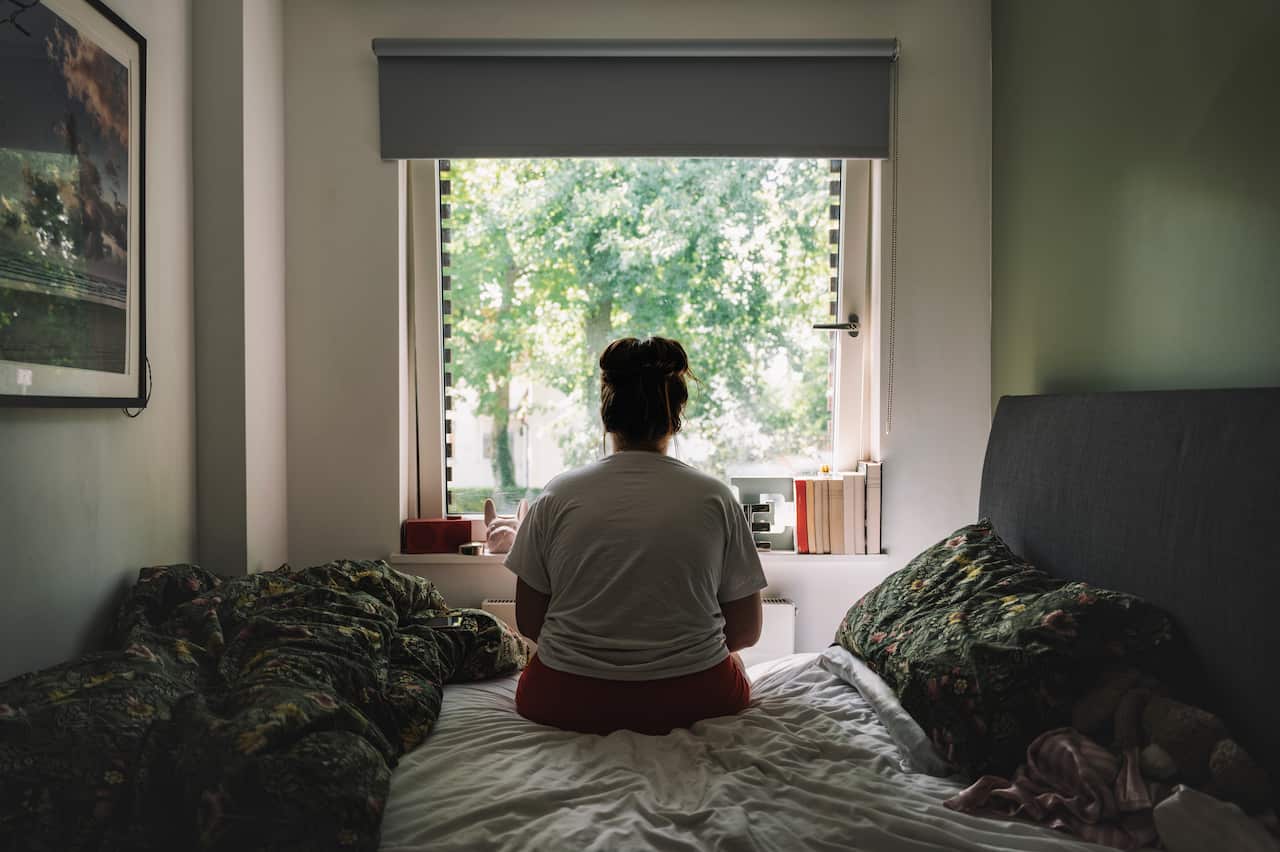
According to Einstein, people often become hypervigilant to signs of anxiety once they start noticing them — a natural response, but not always a helpful one.
We need to engage in life with a lot of trial and error and just practice. That’s how we develop as humans, that’s how we get better at things.
Uncertainty as a driver for avoidance
Over the course of her career, Einstein has developed a theory of uncertainty, which examines how people can be influenced by a dislike of uncertainty.
“Uncertainty in negative situations makes us think in the back of our mind that maybe there’s going to be something bad happening in the future. But we’re not sure whether we should spend time thinking about it or not, because maybe it won’t happen,” she says.
She explains that this internal struggle can also be exacerbated by other stimuli, such as social media and news.
“With both positive and negative events, it makes us more curious because we want to know what happens, and if it’s a negative event we care about, then we can try to come to terms with it or resolve it,” she says.
The Reuters Institute 2025 Digital News Report found that in Australia, 40 per cent of survey participants sometimes or often avoid the news.
Rubbia* works in the technology sector and remains active on social media to connect with friends and family, but says she has become “reluctantly informed”.
In the current socio-political climate, she says she has become more intentional about how she engages with news. Rather than actively following it throughout the day, she comes across it through conversations, social media and major headlines that are hard to avoid.
Despite this, she says exposure to sensitive and graphic content online has affected her mood, focus, and interactions with others.
Sometimes it feels like I am carrying things that are not directly mine to carry, and that can be quite heavy, but feels necessary.
While Rubbia feels pressured to stay constantly informed, she believes exposure alone does not necessarily lead to better understanding — nor does stepping back indicate indifference.
“For some people, especially those who feel closely connected to what is being reported, stepping back is not about not caring. It is actually the opposite. It is about recognising when something is affecting you and choosing to protect your wellbeing.”
The guilt of ‘disengaging’
Staying informed, for many, feels like a responsibility.
Luke Martin is a clinical spokesperson for the mental health and wellbeing support organisation Beyond Blue.
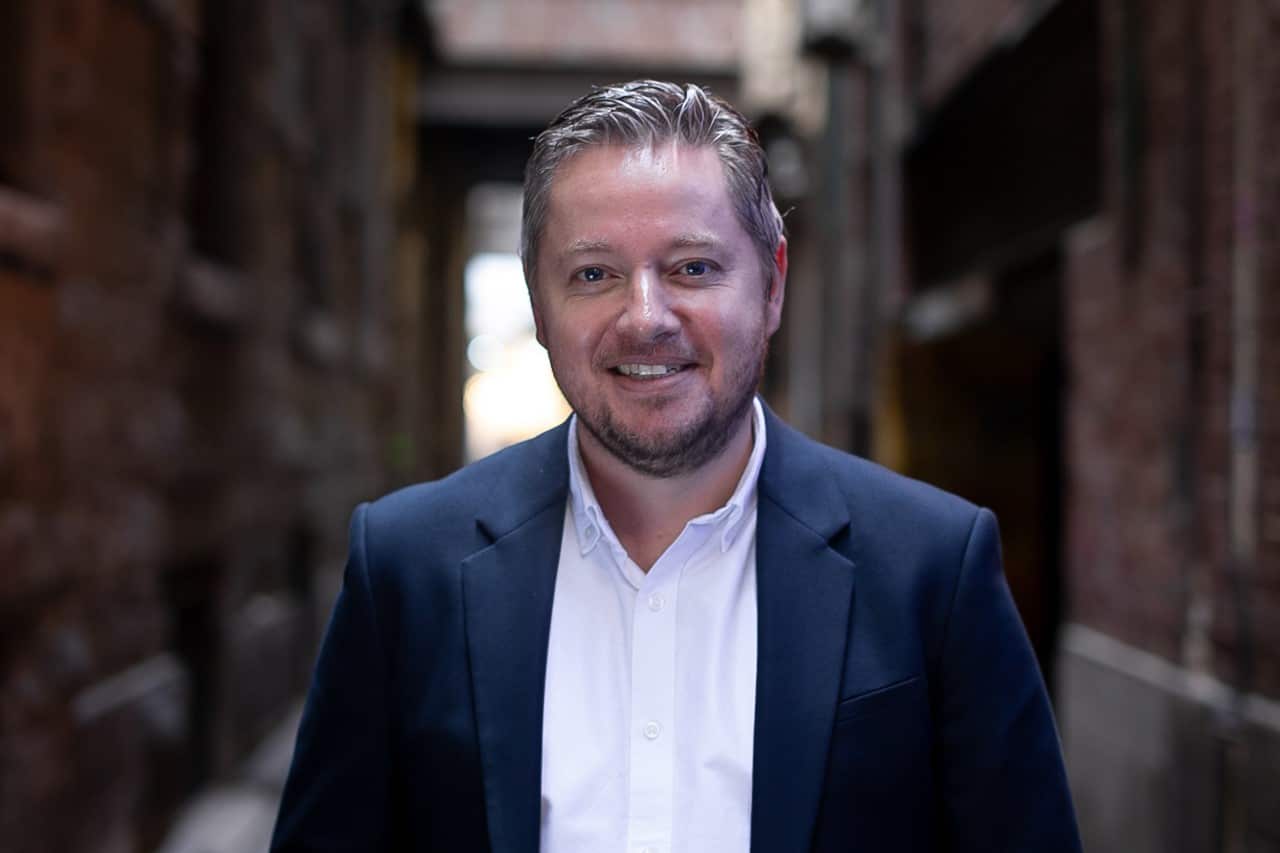
While acknowledging the difference between experiencing trauma firsthand and witnessing it online, Martin says the psychological impacts can still overlap more than people realise.
“We have a brain that reacts strongly to visual images and doesn’t fully distinguish between what is experienced and what is seen. So seeing distressing online content can activate similar areas of the brain as if you were there,” he tells SBS News.
“Over time, and with exposure that’s frequent, repeated and graphic, this can lead to symptoms that are similar to those of people who were closer to the event, such as feeling anxious or on edge when thinking about the event, having intrusive thoughts about the event, or a desire to avoid things associated with the event.”
What makes this conversation complex is the gap between exposure and experience.
Much of the distress that people feel is tied to events happening beyond their immediate lives. For those not directly affected, there is, in theory, the option to disconnect.
Tiffany argues the choice isn’t simple.
“Morally, I couldn’t look away because I know that’s what they want [those in power]. They want the general public and the working class to look away so they can keep doing what they’re doing.
I have the privilege to just not think about it, and that makes me feel guilty for even wanting to, but why should the responsibility be on my shoulders as someone who has minimal power?
Learning to manage overwhelm
David McGrath, CEO of the National Mental Health Commission, says both individuals and communities carry responsibility in navigating an increasingly complex information environment, particularly as geopolitical tensions and financial stressors continue to affect social cohesion.
“What’s really important to be able to build strengths around mental health resilience and mental health wellness is cohesive communities that assist each other. There’s a certain amount that [the] government can do, but beyond a certain point, there’s a requirement for communities to work together to be able to improve mental health outcomes,” he says.
Jenny Lai is a public speaker and mental health advocate who visits schools and businesses across NSW to share lived experiences and provide support strategies.
She says being part of a community has been integral to her mental health journey.
Once a week, she teaches English language classes and mentors through TAFE’s Adult Migrant English Program. She’s also found community through dance, which helps her to clear her mind, connect with others, and rebuild self-confidence.

“They say depression can’t hit a moving target, so when you’re dancing, it definitely can’t hit you,” Lai says.
Like Rubbia, Lai has also struggled with her relationship to social media. She decided to remove social media apps from her devices after noticing their impact on her mental health. At the time, she says she felt guilty after a friend told her that she was being selfish. Now, she advocates for finding balance rather than complete withdrawal.
“One of the hardest truths about mental health is that sometimes you have to do things for yourself first before you actually think about anything else … if you’re not going to be able to make it through the day, how can you help anyone else?” she says.
Lai says awareness of what’s happening globally continues to impact her. But when it becomes overwhelming, she has learned to adjust.
“No matter how small, no matter how big, I always take a moment to just focus on my breathing. It grounds your nervous system and cools you down to a state of calmness,” she says.
For others navigating anxiety, Martin suggests setting some gentle boundaries, such as checking the news at set times rather than all day, to maintain engagement without burning out.
The process, he says, is ongoing. While there is no clean fix, small adjustments in how people consume and respond to information may help both individual mental health and broader community resilience.
*Surnames have been withheld for privacy reasons.
This article is for general information only and should not be relied on as a substitute for professional medical advice. Readers are advised to consult a qualified health professional for guidance specific to their situation.
Readers seeking support with mental health can contact Beyond Blue on 1300 22 4636. More information is available at beyondblue.org.au. Embrace Multicultural Mental Health supports people from culturally and linguistically diverse backgrounds.
For the latest from SBS News, download our app and subscribe to our newsletter.


