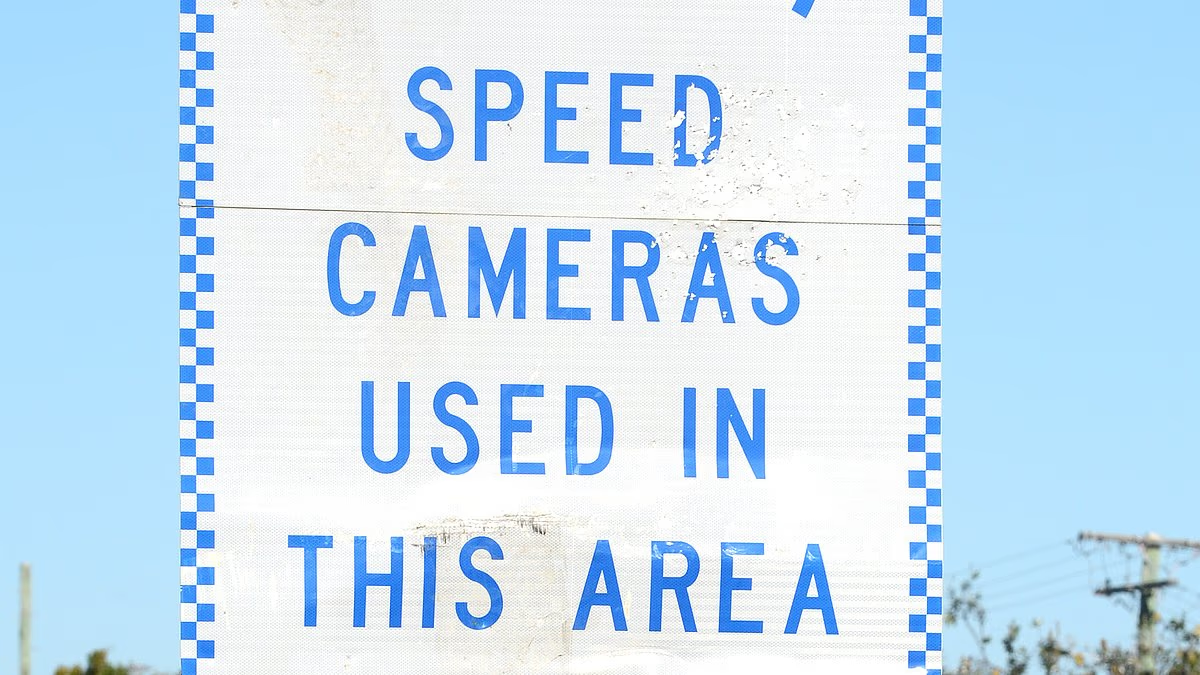

Thousands of South Australian motorists will have their speeding fines withdrawn after police uncovered a compliance problem involving the testing of mobile speed cameras.
South Australia Police announced on Friday that the notices would be cancelled because of a non-compliance issue connected to the cameras’ testing procedures.
More than 8,000 expiation notices issued after mobile speed-camera detections are being withdrawn, police said.
The notices cover offences detected by mobile speed cameras across South Australia between November 6, 2025, and October 29, 2026.
The decision follows the discovery that the timing of the cameras’ testing did not comply with the relevant Australian Standard.
Only notices resulting from offences detected by mobile speed cameras are affected.
The withdrawal does not extend to fixed cameras, point-to-point systems, hand-held devices or speeding offences recorded directly by police officers.
Acting Assistant Commissioner Scott Fitzgerald said there was no doubt the speeding offences had occurred, but the fines were being withdrawn because of a specific technical issue.

Thousands of South Australian motorists will have speeding fines withdrawn after police found a compliance problem with mobile speed-camera testing (Stock image)
Police said the notices had been issued in good faith and insisted there was no concern about the accuracy of the mobile speed cameras.
The problem relates to when the cameras were tested and whether the required Australian Standard had been followed, which affects the validity of an evidentiary certificate used in a prosecution.
The issue came to light after a matter was withdrawn in the Port Adelaide Magistrates Court in October. It involved the rider of a BMW motorcycle who had allegedly been recorded travelling at 168km/h in an 80km/h zone.
Police said a detailed review found that the Australian Standard had not been met because of when the camera’s required drive-through test had been carried out.
However, the testing requirements set out in Regulation 35 of the Road Traffic (Miscellaneous) Regulations had been satisfied.
The dispute centres on the timing of the drive-through test used to confirm a camera is operating correctly. Under the Australian Standard, the test must take place at the beginning of each operation. The regulations, by contrast, allow it to be conducted either on the day the camera is used or on the preceding day.
Police said mobile speed cameras had been deployed on the understanding that both deployments and pre-operation field tests complied with the Australian Standard. The cameras were tested under Regulation 35 and in line with the manufacturer’s recommended field-testing procedures before and during operations.
At 4pm on October 29, 2026, South Australia Police changed its mobile speed-camera procedures. A drive-through accuracy test must now be completed before every deployment begins, bringing the process into line with the Australian Standard and ensuring evidentiary certificates remain valid.

Acting Assistant Commissioner Scott Fitzgerald said the fines were being withdrawn because of a technicality in the cameras’ compliance requirements
Police said approximately 8,383 expiation notices would be withdrawn, while 13 additional matters currently before the courts were also affected.
SEE ALSO: Steelers’ Mike Tomlin Calls Rodgers-McCarthy Feud a Dumpster Fire
Naomi Oakley, a former Victorian police officer, said some drivers caught during the period may have lost their licences, with consequences that could have included losing their jobs.
She said the wider impact of a licence loss could be significant, potentially leading to unemployment and the loss of income that followed.
Oakley said she opposed speeding but supported the decision to review the notices, noting that police officers had always been taught to exercise discretion when enforcing the law.
She also suggested the decision could encourage other states to examine whether their own camera systems comply with the relevant standards.
The announcement comes as South Australia continues to face road-safety concerns, including the large number of motorists caught using mobile phones while driving.
Earlier this month, figures showed the state’s busiest mobile phone-detection camera, on Adelaide’s North-South Motorway at Regency Park, was identifying an average of 42 motorists each day.
That camera alone had issued fines to at least 32,000 motorists and generated an estimated $11.6 million in revenue.

Former police officer Naomi Oakley backed the mass withdrawal of fines and said other states may need to review their own systems

The speeding-fine withdrawals come as South Australia continues to confront road-safety concerns, including high numbers of motorists caught using phones behind the wheel
Have your say
Should drivers affected by speed-camera errors be compensated for lost licences and income?
Across South Australia, more than 36,000 drivers were caught illegally using their phones during the 2025-26 financial year.
The offences were recorded at five key locations and generated almost $28 million in fines, equivalent to nearly 100 detections a day.
Motorists caught illegally using a phone face a $592 fine, a $108 Victims of Crime Levy and three demerit points. All revenue is directed to the Community Road Safety Fund, which supports road-safety reforms.
Despite those figures, the overall number of driving offences in South Australia has fallen in recent years.
At the end of the 2024-25 financial year, South Australian Police Minister Stephen Mullighan said detections at major camera sites had dropped by 86 per cent.
Even so, 46,476 expiations were issued to drivers across the state that year—still, he said, well beyond police expectations.
Mr Mullighan warned that drivers who look at their phones instead of the road are effectively driving blindfolded.


