
California lawmakers have drawn criticism after approving legislation that could require some children to remain in booster seats until they are 16.
Assembly Bill 435 is scheduled to take effect on January 1, 2027. Under the measure, parents could face fines of up to $500 and one point on their driving record for each child who is not properly restrained.
Before legally using a standard seat belt, children would have to meet all five conditions in a seat belt safety test. Critics have called the proposal excessive and accused California lawmakers of expanding the state’s so-called “nanny state” rules.
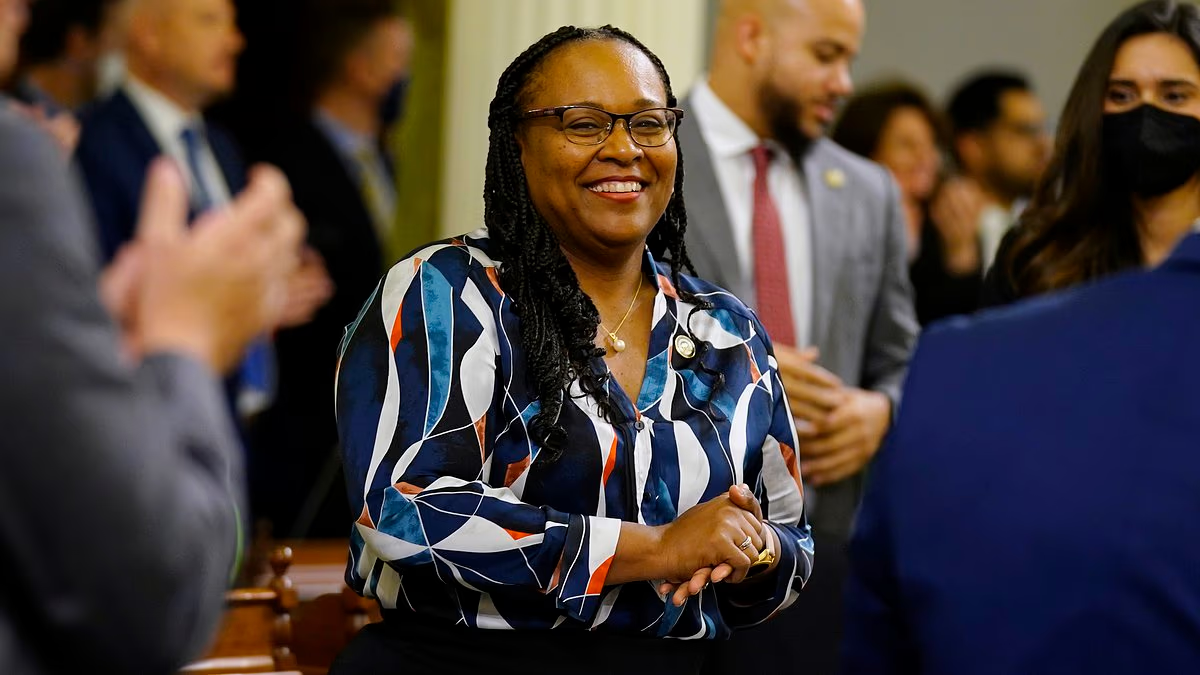
The bill was introduced by Assemblymember Lori Wilson, who said its purpose is to reduce injuries and deaths among young passengers.
Wilson has argued that the legislation is focused on ensuring seat belts fit children correctly. However, the detailed requirements have prompted objections from parents who say the rules could be difficult to enforce.
A California government safety program says children must first be able to sit with their backs flat against the vehicle seat to pass the five-step test.
They must also be able to bend their knees over the edge of the seat, keep the shoulder belt positioned snugly across the chest, place the lap belt low across the hips and touching the thighs, and remain in that position for the entire journey.

California Assemblymember Lori Wilson’s legislation could require some children to use booster seats until age 16 beginning in January 2027

Parents could face fines of up to $500 and one point on their driving record for each child who is not properly secured or fails the five-step seat belt safety test
Once the legislation takes effect, parents could be penalized if their child fails even one of the five requirements.
The measure was first considered by the California legislature in October 2025. It passed the State Senate unanimously, 40-0, before clearing a California State Assembly concurrence vote by 43-19.
Although critics have described the proposal as intrusive, Wilson has defended it by pointing to research showing that improper seat belt use is a major factor in deaths caused by vehicle crashes.
‘As the second leading cause of unintended injury related deaths among children, motor vehicle crashes present a critical focus for safety improvements,’ Wilson said, according to CalMatters.
SEE ALSO: Cruise tragedy as daughter in ‘excellent health’ dies on luxury trip
‘Extending the required age for booster use and implementing straightforward testing can significantly enhance child safety.’
A 2015 investigation by the National Highway Traffic Safety Administration found that approximately 46% of car seats were being used incorrectly, according to the New York Post.
A separate study published in 2021 found that 52% of car seats were improperly installed. Safety inspectors with the National Safety Council and AAA also reported that 73% of forward-facing car seats were installed incorrectly.
Despite those findings, the approaching law has triggered a strong reaction online. Conservative critics have accused California’s Democrat-led legislature of approving an overly broad “nanny state” measure.
Writer Paul Graham said the proposal would take California “into the territory of self-parody” and wrote: “This law should go.”

Supporters say the measure would reduce injuries and deaths among young passengers, citing studies that show car seats are frequently misused and improper restraint is linked to crash fatalities


Commentator Robby Starbuck said the legislation appeared especially unreasonable because a 16-year-old in California could potentially be required to use a booster seat while also being legally eligible to obtain a driver’s license.
‘You can’t make this nanny state c*** up,’ Starbuck wrote on X.
‘I’m starting to think what California really needs is helmets for politicians. Clearly y’all have been dropped on your heads too many times.’
Katie Miller, the wife of White House Chief of Staff Stephen Miller, also joined the debate. She argued that requiring more car seats could further discourage people from having children.
‘Car seats make motherhood significantly more complicated and difficult, from vehicle width and anchors to traveling with them,’ Miller wrote on X.
‘I’m not alone in saying that a limiting factor on the number of children we have is car seats.’
Our News Outlet has contacted Assemblymember Lori Wilson’s office for comment.


