
Australians could face a poorer retirement under Pauline Hanson’s proposed superannuation changes, according to Barefoot Investor Scott Pape.
One Nation announced the policy on Monday, proposing that renters and people with mortgages be allowed to access 3 per cent of their future superannuation as additional income for up to three years.
Under the plan, a couple with a combined annual income of $168,000 would receive an extra $4,300 a year after tax—around $82 a week. A single worker earning $90,500 could gain approximately $2,300 annually, or $44 a week, over the three-year period.
Pape said the proposal represented a major shift from current superannuation rules, which permit early withdrawals only in tightly restricted circumstances.
To illustrate the risks of accessing retirement savings early, he shared the story of a woman who withdrew super during the Covid pandemic to fund cosmetic surgery—a choice she now regrets.
“During Covid I stupidly used my super to get a boob job. I got double F implants, the largest size I could,” she told him.
The woman later asked whether she could access more of her super on compassionate grounds to pay for corrective surgery. She had learned the procedure would cost $18,000 and was not covered by either Medicare or private health insurance.
Pape said he was not criticising her personal decision, but argued the experience demonstrated how quickly long-term retirement savings can be exchanged for immediate expenses.

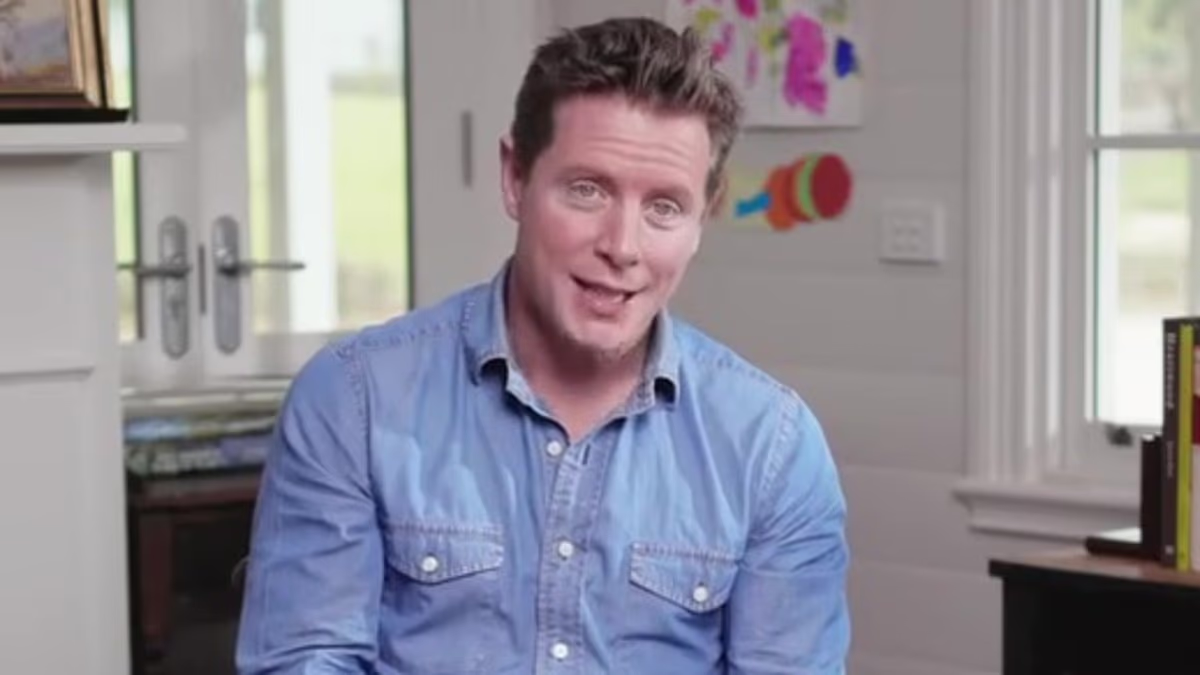
Barefoot Investor Scott Pape (pictured) has warned that One Nation’s superannuation proposal could damage Australians’ retirement savings over time.
“Her retirement money was gone, and it was never going to compound again,” he wrote.
However, Pape acknowledged that he shared some of One Nation’s concerns about the superannuation system, particularly regarding fees and government involvement.
“I actually agree with One Nation on a couple of things when it comes to super. The fees we pay are way too high,” he wrote.
He also argued Australians should maintain control over their superannuation and called on the Prime Minister not to interfere with retirement savings.
‘Anthony Albanese needs to keep his mitts off our super. It is not the government’s money. It’s ours.’
But Pape said letting workers voluntarily reduce their super contributions risks encouraging people to prioritise immediate spending over long-term financial security.
‘This new policy is a different beast. It is not a last-resort rule for people on their knees,’ he wrote.
‘It can feel like a lift at the time. Yet time still marches on, and every dollar you take out now is a dollar that can’t compound.’

Pape admitted he agreed with Pauline Hanson on some aspects of superannuation, including concerns around management fees and government interference
Join the discussion
Is tapping into super for immediate needs worth risking a comfortable retirement later in life?
Pape warned the policy could trigger wider economic consequences if millions of Australians received bigger weekly pay packets.
‘Give people more cash to spend and prices rise, then the Reserve Bank puts up rates and the mortgage gets uglier,’ he wrote.
He also mocked One Nation MP Barnaby Joyce after he was asked about the retirement impacts of the proposal on Monday.
When questioned on ABC 7.30 about the long-term consequences for workers, Joyce replied: ‘I’m the Treasury spokesman, not Jesus Christ.’
Pape said the comment was evidence supporters of the policy hadn’t fully considered the consequences.
‘It seems to me that Barnaby has done less thinking on this than the woman standing at my table,’ he wrote.
The policy has been slammed by the Albanese Government this week, with Jim Chalmers declaring the policy as ‘crazy’ during a speech to the Super Members Council on Wednesday.
‘Every dollar a 25-year-old withdraws now would mean they lose around $3 by the time they retire,’ he said, referencing the Council’s own modelling.
‘They will end super as we know it and millions of workers will be poorer as a consequence.’
READ MORE: Pauline Hanson announces radical superannuation plan to let millions of workers turn their super into pay


