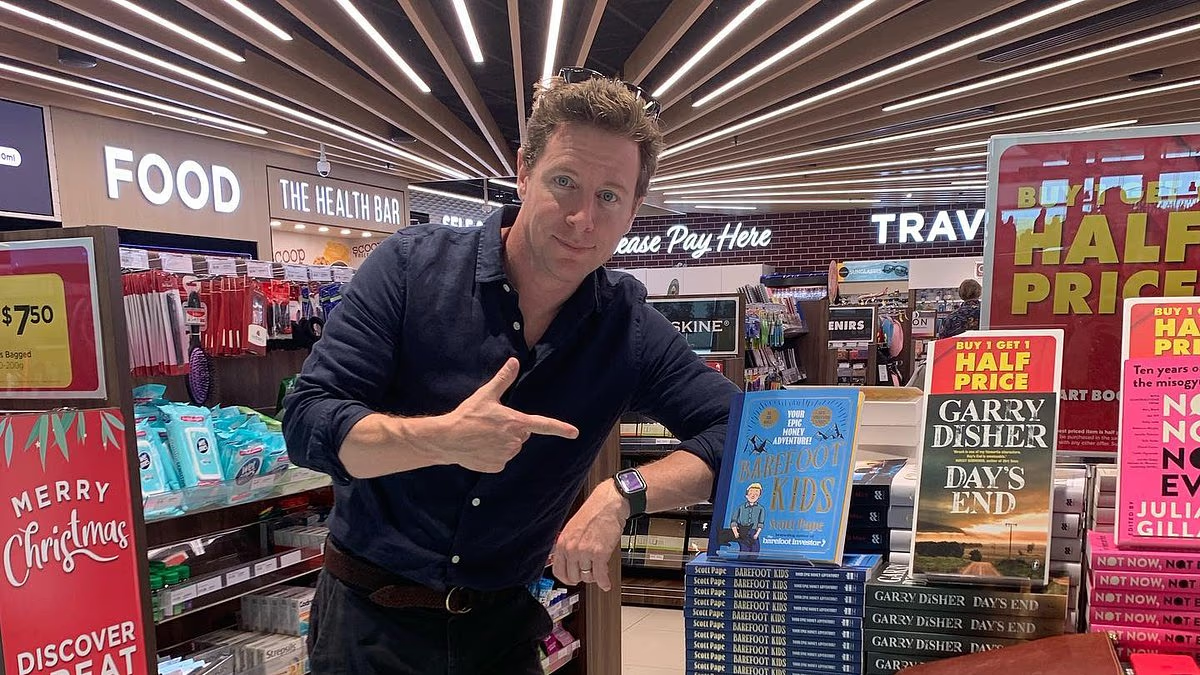
The Barefoot Investor has pushed back against alarm over falling house prices, arguing Australia’s property market has been treated too much like a stock portfolio while leaving many younger buyers priced out.
Scott Pape rejected the idea that the latest softness in housing amounts to a crisis, saying modest declines are unlikely to erase the enormous gains homeowners have accumulated over the past two decades.
Australian property values continued to weaken in July, with home prices posting another notable monthly fall as higher borrowing costs and uncertainty around tax policy kept some buyers on the sidelines.
Figures from property analytics group Cotality showed national dwelling values dropped 0.7 per cent over the month, marking the sharpest monthly decline since late 2022 and adding momentum to the current downturn.
The pace of annual growth also cooled, with prices 5.3 per cent higher over the year, well below the stronger gains recorded earlier in the cycle.
The pullback has been most pronounced in Australia’s two biggest housing markets. Sydney values fell 1.4 per cent in July, while Melbourne dropped 1.2 per cent, leaving both cities more than five per cent below their recent peaks.
Pape’s remarks come as the market cools after years of rapid growth, fuelling warnings from parts of the real estate industry about weaker auction results and sliding values.
But Pape said much of the anxiety around falling house prices overlooks the broader context.

Barefoot Investor Scott Pape (pictured) supported falling house prices in Australia
According to Cotality, combined capital city dwelling values slid 2.5 per cent over the June quarter, yet overall prices remain 3.9 per cent higher than this time last year.
‘The market is colder than a mother-in-law’s kiss,’ Pape wrote.
‘But even if prices fell 10 per cent, they’d only be back where they were in late 2024.’
Pape said any downturn should be viewed in the context of the extraordinary housing boom of the past 25 years.
He pointed out the average house price has surged by more than 400 per cent since 2000, far outpacing wage growth and feeding into Australia’s affordability woes.
‘This is a correction we’ve needed for 20 years,’ he wrote.
Pape said the housing downturn had been partly driven by government reforms designed to reduce investor demand, including scrapping the 50 per cent capital gains tax discount and winding back negative gearing concessions for existing homes.
‘The government set out to make property investing less attractive, and they get the gold star,’ he wrote.

Pape welcomed the cooling housing market arguing it would help young and first home buyers
He said many investors had always banked on one thing, that prices would keep climbing.
‘The only way the sums ever worked long-term was the price going up at a constant clip,’ Pape wrote.
Without strong capital gains, he said, investors are left with all the headaches of property ownership for underwhelming returns.
Pape also highlighted shifting public attitudes towards housing.
He cited a Resolve Political Monitor poll showing 61 per cent of Australians want prices to fall, including many existing homeowners.
He argued the survey shows growing concerns about young Australians struggling to get their start in the market.
‘That sounds kind of mad, a couple hoping their biggest asset drops in value, until you clock the 28-year-old still asleep in the back bedroom,’ he wrote.
Pape said Australia had lost sight of the true purpose of housing, treating homes more like shares than shelter and celebrating soaring values regardless of affordability.

Scott Pape (pictured) said that Australians had treated housing prices like a share market
‘Somewhere along the way we started treating houses like a share price,’ he wrote.
‘We forgot what they’re actually for… A house is for living in.’
While some in the property sector have warned of the risks from falling prices, Pape said the biggest alarm is coming from those whose livelihoods are tied to rising values and fast turnover.
‘When the news runs around with its hair on fire about ‘the crash’, look at who’s actually panicking,’ he wrote.
‘It’s not the young couple who might finally get a foot in the door. It’s the bloke with the Audi lease.’


