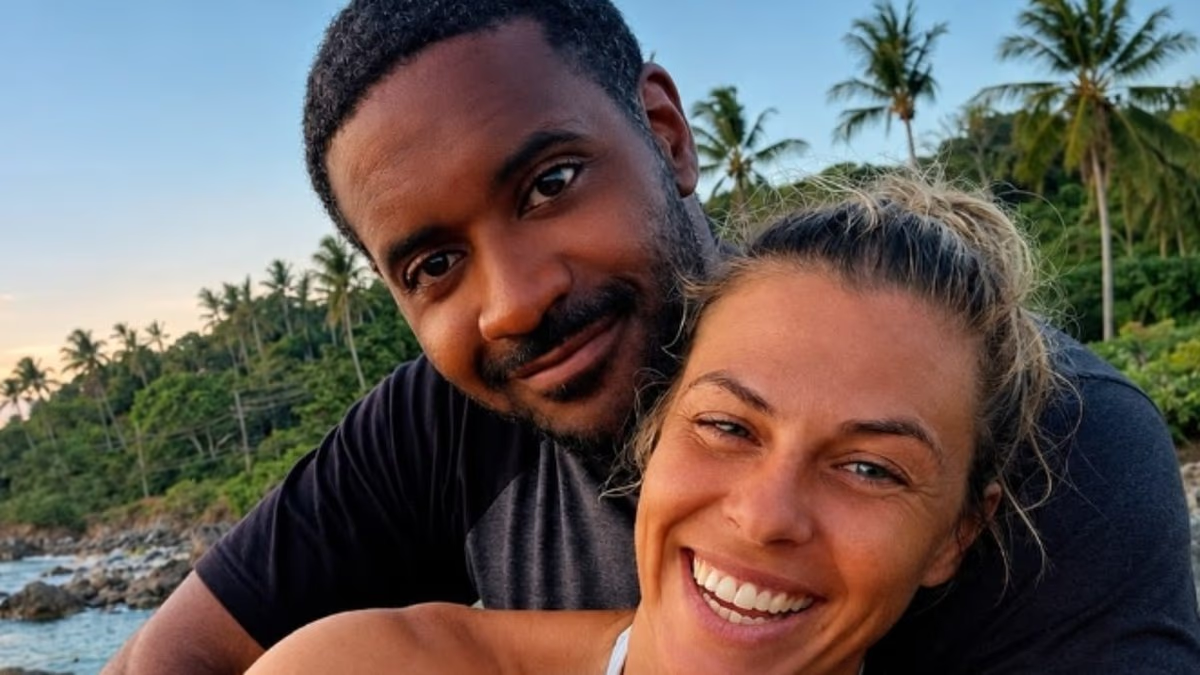
American actor Rufus Baker Jr was moved to the rear of a Qantas flight after a female passenger allegedly hit him and sprayed saliva onto the back of his neck. His Australian partner has questioned whether the decision echoed the painful history of racial segregation.
Baker was travelling from Alice Springs to Sydney with his girlfriend, Australian corporate strategist Hacia Atherton, aboard Qantas flight QF791 on Friday.
The couple had paid for extra-legroom seats to accommodate Baker’s 193cm height and 136kg build. However, during the flight, he was relocated to a smaller seat at the back of the aircraft.
Atherton said the decision to leave the other passenger in her original seat carried an “uncomfortable historical resonance” for a Black American man, recalling the segregation era when Black passengers were forced to sit at the back of buses.
According to Atherton, the confrontation began after Baker reclined his seat and the woman allegedly struck him on the arm.
Atherton said cabin crew spoke with the passenger after the alleged incident, but claimed they only instructed her to behave appropriately and did not formally document what had occurred.
After the meal service, Atherton told Our News Outlet that the woman then “appeared to deliberately fake a sneeze, projecting saliva onto the back of Rufus’ head and neck”.
The alleged second incident took place while the aircraft was still several hours away from its scheduled arrival in Sydney.

American actor Rufus Baker Jr was allegedly struck and then spat on by a female passenger during a Qantas flight, yet he was the passenger moved to the back of the plane

Baker, who is 193cm tall and weighs 136kg, was moved to a cramped rear seat for the remainder of the flight

Baker’s height and long legs made the alternative seat at the back of the aircraft particularly uncomfortable
“Recognising that the situation was deteriorating, and concerned that the crew’s response had not been sufficient to prevent further escalation, I took the initiative to ask whether we could relocate,” Atherton said.
That decision meant that Baker, “the person who had been subjected to this behaviour, ultimately moved to the back of the aircraft, while the female passenger remained in her original seat”.
“Rufus could barely fit into the replacement economy seat, which also had no reclining capability or any of the extra legroom we’d paid for to accommodate his physical stature,” Atherton said.
“Beyond the physical discomfort, there was a deeply troubling cultural and historical dimension to this experience that appeared to go unrecognised.
“For a Black American man, having to move to the back of an aircraft as a consequence of a white passenger’s behaviour carries an uncomfortable historical resonance with America’s history of racial segregation and Black passengers being relegated to the back of buses.
“I am not suggesting that this was the intention of the cabin crew, but the psychological and symbolic significance of that outcome should not be overlooked.”
Atherton said she and Baker chose to move seats “because we believed it was the safest and most responsible way to prevent further escalation”.
FIND OUT MORE: Citi Bike Rider Killed by SUV at Busy New York City Intersection
“However, the question remains: why did the responsibility for identifying and implementing a solution fall upon the people subjected to the behaviour, rather than the airline responsible for passenger safety?”

Baker and his Australian girlfriend Hacia Atherton had paid for extra legroom before being moved to different seats

Baker and Atherton had specifically purchased seats with additional legroom

The couple said they were alarmed after the woman allegedly struck Baker and later appeared to fake a sneeze, spraying saliva onto him
Atherton questioned why “more effective preventative action [had] not been taken following the initial physical incident”, saying the later alleged saliva incident might then have been avoided.
“Instead, Rufus was left to absorb the physical, emotional and psychological consequences of another passenger’s behaviour, while also sacrificing the seating accommodation we had specifically paid for.”
After the aircraft landed in Sydney, Australian Federal Police officers attended the plane, escorted Baker, Atherton and the female passenger off the aircraft, and took statements from those involved.
Atherton said the events that followed raised further concerns, including whether Baker could have been treated as the person at fault and potentially arrested.
“Through conversations with three separate AFP officers and a Qantas manager, there was a consistent indication that, had Rufus engaged in identical behaviour towards the female passenger, he would have faced more immediate enforcement action, including arrest,” Atherton said.
“We are now formally following up with the AFP regarding the investigation, the preservation of evidence and whether criminal charges will be pursued.
“As an Australian citizen, I find it deeply concerning that my partner could experience this while visiting our country.”
She said the incident also raised serious questions about whether “the same standards of protection and accountability are applied irrespective of race, gender, age or physical stature”.

Hacia Atherton, who now lives in Florida with her partner, said the incident was “deeply concerning”
“We are not seeking preferential treatment. We are seeking equal treatment,” Atherton said.
Atherton now lives in Florida, where she operates high-performance leadership consultancy MLE Advisory. She is also the author of The Billion Dollar Blindspot, a book examining high-performance corporate culture.
Baker is an actor and writer-director who has appeared in the television series Ascendance and Shiny New Things.
Our News Outlet has contacted the AFP and Qantas for comment.


