
Stephen Colbert may have landed one last joke on CBS.
Nearly a month after the former late-night host quipped on air that a bit involving a cherished Peanuts melody might wind up costing the network, that prediction appears to have come true. CBS has now had to secure a licensing agreement tied to the gag.
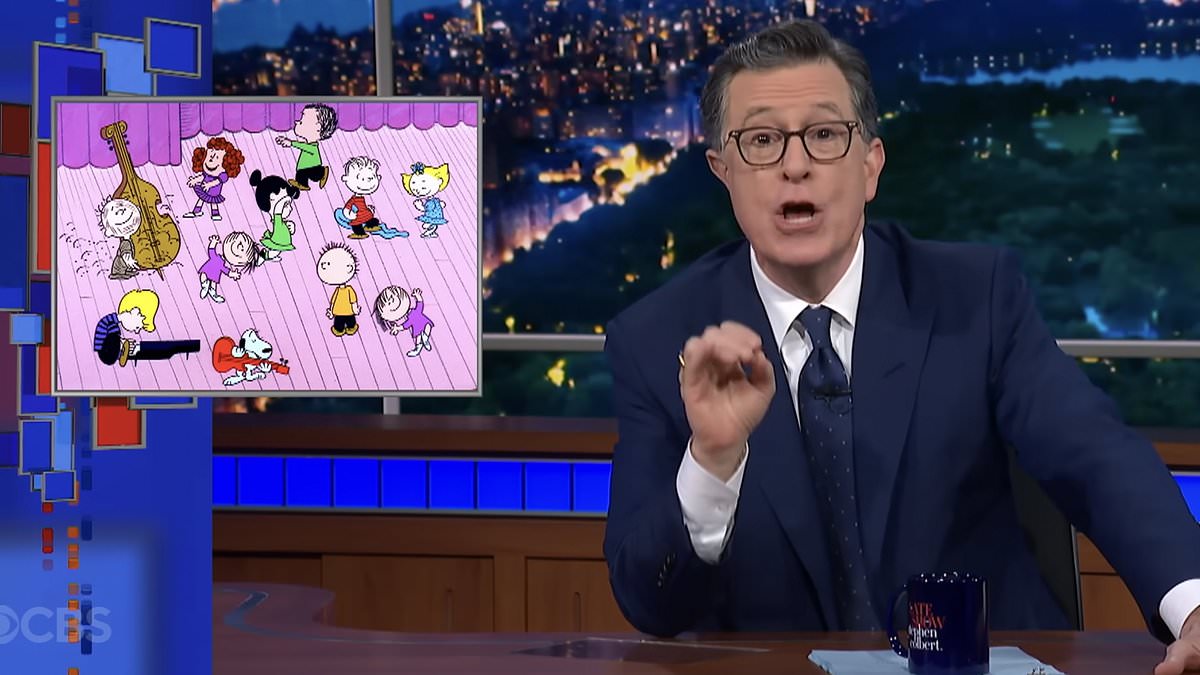
The issue traces back to the final episode of The Late Show with Stephen Colbert, when the comedian seemed to knowingly brush up against copyright concerns during a segment about legal disputes involving music from the classic Charlie Brown TV specials.
In the show’s May 21 finale, Colbert aired a performance of Vince Guaraldi’s unmistakable Linus and Lucy, the signature tune long associated with Peanuts. Weeks later, the company that controls the rights to the music confirmed that it reached a deal with CBS over the song’s use.
Lee Mendelson Film Productions, Inc., which manages Guaraldi’s musical catalog, said it entered into a licensing agreement with the network covering the performance.
The terms of the deal were not made public. However, the company said all proceeds from the agreement will be donated to Chef José Andrés’ World Central Kitchen.
The agreement stems from a comedic segment in which bandleader Louis Cato and The Late Show’s house band, the Great Big Joy Machine, launched into a rendition of the famous melody while Colbert discussed copyright enforcement efforts involving the Peanuts franchise.
While talking about recent lawsuits brought by the rights holders, Colbert warned viewers that the music was closely protected.
CBS reached a licensing agreement after The Late Show with Stephen Colbert used Vince Guaraldi’s classic composition ‘Linus and Lucy’ during its May 21 finale without permission
The owner of the music recently pursued a series of copyright enforcement actions involving unauthorized use of Vince Guaraldi’s music by businesses
‘Peanuts is a powerful brand and corporation in and of itself. Anyone illegally using that music is going to have to pay through the nose,’ Colbert said on the broadcast.
Moments later, he turned his attention to the music playing behind him.
‘Louis, Louis! Is the band right now playing the same Peanuts music I just said people were being sued for, for using without permission? Is that what you’re doing?’ he asked.
Then came the punchline.
‘Oh no, I hope this doesn’t cost CBS any money!’
According to Lee Mendelson Film Productions, the performance required formal licensing approval from the company, resulting in an agreement with the network after the episode aired.
The organization announced that funds generated through the CBS licensing agreement will be donated to World Central Kitchen.
The nonprofit founded by celebrity Andrés provides meals during humanitarian crises, natural disasters and conflicts around the globe.
During the segment, Louis Cato and the Great Big Joy Machine performed the iconic Peanuts theme while Colbert discussed copyright lawsuits involving the music’s rights holders

Colbert jokingly warned viewers that unauthorized users of the music would ‘have to pay through the nose’ before quipping, ‘Oh no, I hope this doesn’t cost CBS any money!’
Join the discussion
Should big companies crack down on playful use of classic music, or is it all in good fun?
The charitable contribution follows a major donation made during the closing days of Colbert’s program.
On the penultimate episode of The Late Show, Colbert and the show presented a $2.5 million donation to World Central Kitchen and Andrés.
Jason Mendelson, chairman of Lee Mendelson Film Productions, praised both the comedy bit and the charitable outcome.
‘LMFP found the music’s use on The Late Show funny and entertaining, and is proud to support World Central Kitchen’s mission,’ Mendelson said in a statement.
He added: ‘A principal goal of our enforcement actions is to educate individuals, businesses, and government entities about the need to obtain written license agreements to use music in a commercial setting.’


