
How timid and disengaged so many of us have become: grateful for government spending directed our way, yet rarely pausing to ask where the money comes from.
We welcome increases in the minimum wage while lamenting the shortage of jobs for young people. We applaud measures targeting landlords, then ask why so few homes are available to rent.
Our politicians, I fear, understand us all too well. They know how to manage a resentful, state-dependent and compliant electorate. This week, we received the Budget we had effectively demanded.
Start with the broader picture. Commentators had expected a fussy Budget packed with minor revisions, small subsidies and technical adjustments. In the end, the Chancellor seemed almost determined to confirm those fears, distributing modest sums across industries, charities and individual constituencies.
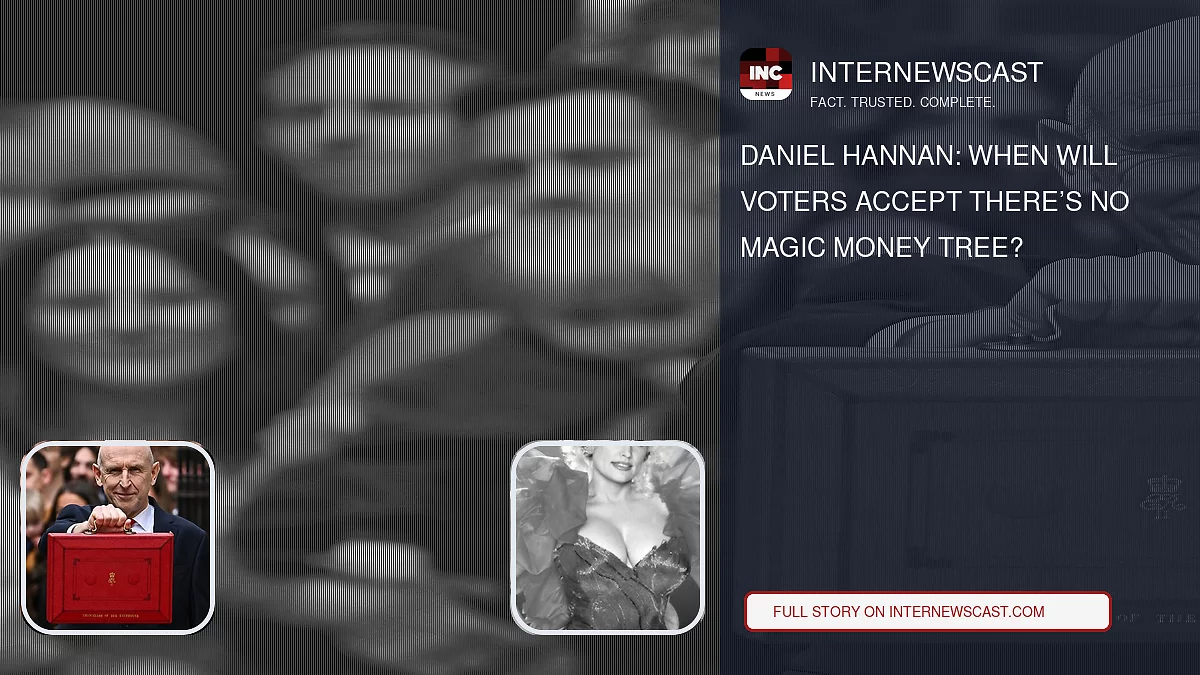
Nothing appeared too small for a place in the Budget: £15 million for Dolly Parton’s literacy project, £10 million for craft brewers and £6 million for an events venue in Glasgow.
The problem is not only that every measure must eventually be paid for. Each grant, rebate and exemption also adds another layer to an already bewilderingly complicated tax system.
As the tax regime becomes more expensive to administer, the damage it causes grows in relation to the revenue it generates.

Our politicians understand how to manage a resentful, state-dependent and compliant electorate. This week, we received the Budget we had effectively demanded, writes Daniel Hannan
Tolley’s Tax Guide, the semi-official reference work used by accountants and other advisers, has expanded from 728 pages at the beginning of the century to 1,024 today. Successive Chancellors share the blame. Gordon Brown was a particularly notable offender, although George Osborne also contributed. Yet no previous Budget created so much needless complexity for so little substantive change.
How many people recognise that a complicated tax system can restrain growth just as surely as high tax rates? The two are linked: removing the myriad exemptions and special cases would make it possible to reduce rates, much as flattening the holes in a piece of Swiss cheese would reduce its overall height.
Even setting that relationship aside, complexity imposes its own costs. The hours spent dealing with accountants, the distorted incentives and the administrative burden all act as a significant brake on economic growth.
The difficulty is that very few voters object to tax complexity in principle, while large numbers are pleased to receive a payment or concession for their particular cause. The same applies to the overall tax burden. The most important figure in the latest Budget was never spoken by John Healey: around half a million people are being pushed into the higher-rate tax band because thresholds have been frozen while inflation lifts nominal salaries.
The label ‘higher-rate taxpayer’ no longer means what it did as recently as the early 2000s.
One might expect an outcry. Once the figures are fully calculated, taxes may prove higher than at any point since 1945. Back then, the country had mobilised its resources to defeat Hitler. What is the justification now?
The Institute for Fiscal Studies says this could be the worst decade for household incomes since the Second World War. Can we connect that grim forecast with the individually popular spending increases we continue to support?
The French economist Frédéric Bastiat identified the problem as far back as 1850: ‘There is only one difference between a bad economist and a good one. The bad economist confines himself to the visible effect: the good economist takes into account both the effect that can be seen and those effects that must be foreseen. This difference is tremendous, for it almost always happens that when the immediate consequence is favourable, the later consequences are disastrous.’
IN CASE YOU MISSED IT: Toms River Mayor Daniel Rodrick Tells Resident to ‘Get a Job
Raise the minimum wage, in other words, and the immediate response may be approving: from BBC radio, Left-wing think tanks and people concerned about the lowest-paid. But the later effects may include fewer hires, a smaller overall tax base and more people reliant on benefits.
As a country, we have failed Bastiat’s test for years. We accepted Net Zero without fully considering the consequences, then grew angry as electricity bills rose. We oppose new homes being built near us, yet complain about the cost of buying and renting property.
We call for greater protection against dismissal, then wonder why companies become more cautious about taking people on.

Nothing seemed too small for a place in the Budget: £15 million for Dolly Parton’s literacy project, £10 million for craft brewers and £6 million for an events venue in Glasgow
Most damaging of all, we demanded — in part under pressure from the BBC — a severe lockdown. Since then, we have complained about the tax rises and rampant inflation that followed, blaming politicians for falling living standards instead of acknowledging our own role in the decision.
Lockdown marked the point at which the balance shifted decisively away from freedom. Watching trillions of pounds appear to fund furlough, Wagamama meals and business grants persuaded many people that a magic money tree really existed. The suggestion that the cost would eventually have to be recovered through spending cuts, higher taxes or inflation has left many genuinely furious.
Those are now the boundaries within which political parties operate. The enormous spending increases approved in March 2020 as emergency measures are treated as though they were a permanent constitutional entitlement. We can hardly blame John Healey for responding to that mood by offering the benefits voters want while, like them, avoiding the second-order consequences.
The British state is becoming a machine in which taxes rise automatically through fiscal drag, while the demands of healthcare and social security are so vast and relentless that resources are never sufficient.
We are borrowing £115 billion a year, almost all of it absorbed by the cost of servicing earlier debts — paying interest to past creditors.
The Chancellor recognises the danger. He is right to say that there is nothing progressive about spending more on debt interest than on education and defence combined. Yet, like those before him, he continues to spend now while offering only vague promises of restraint in the future.
Meanwhile, in a move that would embarrass a Latin American caudillo, he is transferring money directly into bank accounts: £100 for every household in council tax bands A to D — the key swing voters.
We can mock the measure as populist or dismiss it as crowd-pleasing. But it is popular precisely because, as a nation, we continue to fail Bastiat’s test. We vote for giveaways and assume the cost will be imposed on somebody else: landlords, banks or energy companies.
We seem incapable of accepting that, ultimately, every tax falls on us. Your bank will not pay the bank levy any more than your house pays council tax, your car pays vehicle excise duty or your television pays the licence fee. You bear those costs as a depositor, borrower, homeowner, driver or viewer. Every tax is paid by human beings.
If we refuse to understand that, and continue voting for ever more supposedly ‘free’ benefits, we can hardly blame politicians for the crisis that is likely to follow. We are getting exactly what we ask for.
Lord Hannan of Kingsclere is an independent peer and director of the Institute of Economic Affairs.


