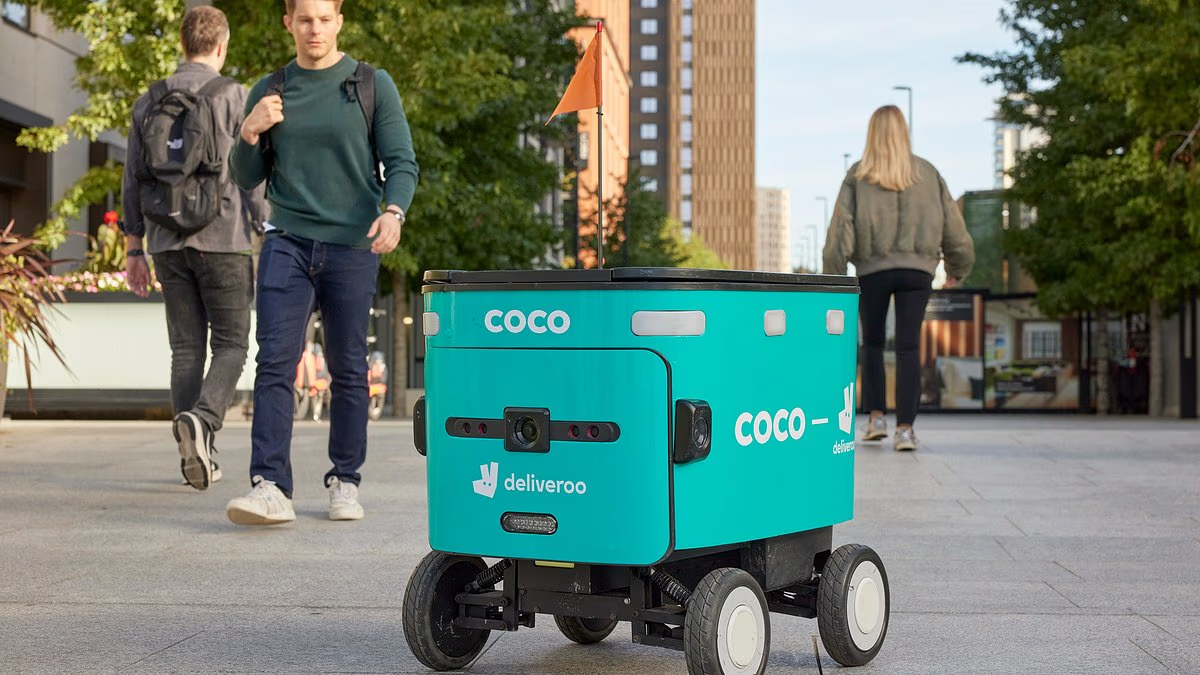

Deliveroo is preparing to introduce autonomous food delivery robots in several parts of the UK, although the company’s chief executive says the technology is intended to work alongside human couriers rather than replace them.
The takeaway platform expects the robot deliveries to begin in five locations over the next few weeks.
The move comes after Deliveroo faced criticism over its use of gig-economy workers and the employment practices underpinning its delivery network.
In August, Reform UK said it would introduce what it called “The Deliveroo Law”, amid allegations that undocumented migrants were using food delivery apps to find work.
As it seeks to strengthen its position against competitors Uber Eats and Just Eat, Deliveroo has partnered exclusively with US technology company Coco to bring robot couriers to its service.
The compact vehicles, finished in Deliveroo’s signature blue, travel on four wheels and rely on artificial intelligence to navigate streets and pavements.
Initial operations are planned for Canary Wharf in east London, along with Milton Keynes, Leeds, Stockton-on-Tees and Nottingham. Each of these areas already permits delivery robots to operate.

The four-wheeled robots, decorated in Deliveroo blue, use artificial intelligence to navigate their routes
According to The Times, Deliveroo representatives are also lobbying councils across the country and the Department for Transport in an effort to secure approval for a broader rollout.
However, Deliveroo chief executive Miki Kuusi has stressed that the arrival of autonomous delivery vehicles does not signal the end of human courier work.
He said: “This is not about replacing people.
“Especially in high-density, urban environments, you’re always going to need people who do deliveries. It’s more about what the optimal fleet split is.
“There’s no sense … having enough autonomous vehicles to do deliveries on a Friday night’s peak, because … you’re going to have a massive amount of robots that are not needed other times of the day or the week.”
Deliveroo is not alone in exploring automation as the food delivery industry looks for new ways to expand and control costs.
Just Eat already works with technology firm Starship, using its robots to deliver meals in selected parts of Britain.
FIND OUT MORE: One Nation Overtakes Labor in Shock Poll of Melbourne Stronghold
Yet the growing use of delivery robots has also sparked concerns about their impact on public spaces.
In July, walking charity Living Streets warned the Co-op that the robots used for grocery deliveries could make pavements more difficult and dangerous to navigate, particularly for older and disabled people.
The organisation said the small, six-wheeled machines could present specific obstacles for people with mobility difficulties, arguing that pavements should remain accessible routes for pedestrians rather than becoming extensions of the logistics network.
Living Streets said older residents who depend on walking to nearby shops as part of their everyday lives could be especially vulnerable to the changes.
The robots are already operating in locations including Leeds, Milton Keynes and Northampton, according to creatorzine.
But Deliveroo’s boss argued that ‘when you actually see these things on the streets and how they work as a part of the city, the reality is that they blend in quite well’.

Deliveroo has been criticised in the past for exploiting the so-called gig economy to fuel their business
US delivery giant DoorDash bought Deliveroo in October 2025 for £2.9billion.
Deliveroo was started in 2013 by US national Will Shu and Greg Orlowski after Mr Shu became dismayed about the lack of late-night food delivery options in London.
Mr Kuusi said: ‘A plastic box on wheels rolling around a city is incredibly energy-efficient, the hardware can be very low-cost, and that ultimately makes the service a lot more affordable.’
A Our News Outlet investigation in August found migrants living in illegal tent shanty towns were working as delivery drivers for brands such as Deliveroo, Just Eat and Uber Eats.
A Deliveroo spokesman said at the time: ‘We are extremely concerned to hear these reports and take these claims seriously. We have requested further information to investigate these, and we encourage anyone affected to contact us directly.
‘We take a zero tolerance approach to illegal working on our platform. All riders, whether they are main account holders or substitutes, have to verify their Right to Work documents during the onboarding process, and before they can make any deliveries with Deliveroo.’
Deliveroo riders continue to be classed as self-employed and so do not get the benefits of regular employment such as sick pay or pension contributions.
The company has said it has cracked down on illegal working by running a right to work check on all its riders.


