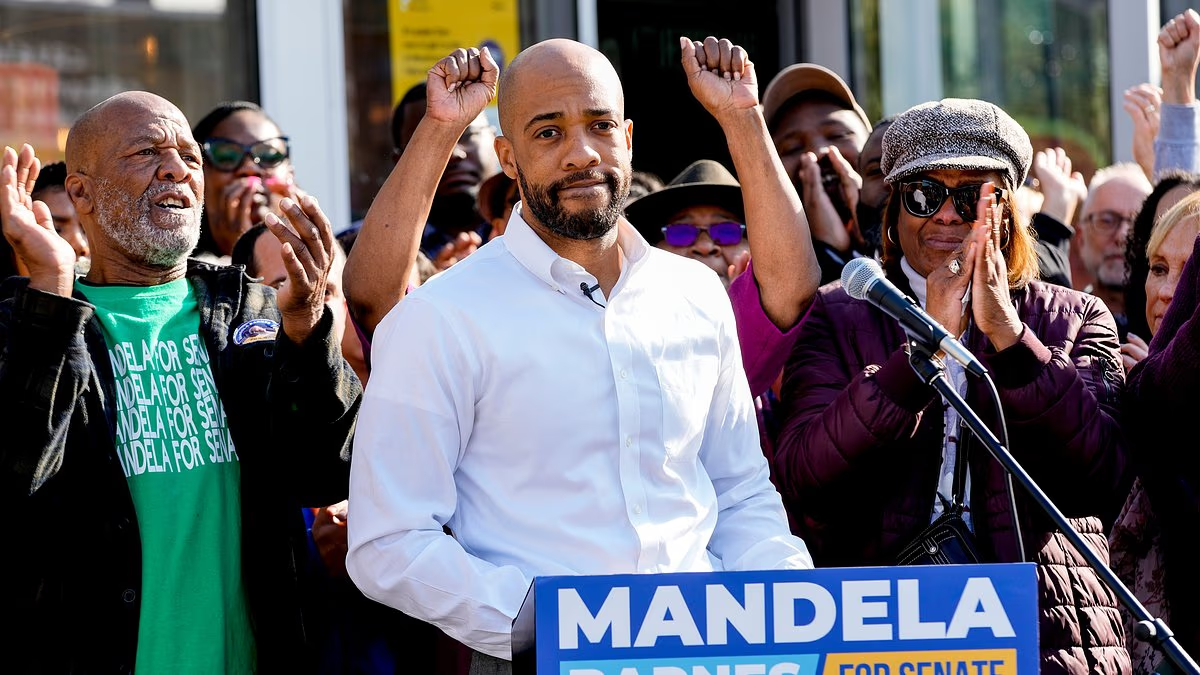

Mandela Barnes, a former Wisconsin lieutenant governor and candidate for governor, has sued one of the state’s largest newspapers, alleging that a reporter who previously had a sexual relationship with him later helped provide information for a defamatory story about his personal life.
Barnes filed the lawsuit Tuesday in Milwaukee Circuit Court against the Milwaukee Journal Sentinel over a July 30 article headlined, “Sources detail concerns about Mandela Barnes’ behavior toward women.”
According to the complaint, a female political reporter at the newspaper had previously been involved in a sexual relationship with Barnes and later played a role in the reporting process surrounding what he describes as consensual relationships, Urban Milwaukee reports.
Barnes also alleges that his gubernatorial campaign alerted newspaper executives to the potential conflict of interest. He claims the Journal Sentinel neither disclosed the relationship to readers nor allowed enough time for an independent review before publishing the article.
The complaint does not identify the reporter. It does state that she was not one of the two women named in the published article.
“The Conflicted Reporter had previously maintained an intermittent sexual relationship with Barnes beginning in approximately 2018 and lasting several years,” the complaint states, according to Urban Milwaukee.
The filing further alleges that Barnes’ gubernatorial campaign “promptly disclosed” the relationship to newspaper executives on July 30.
Barnes says the executives “acknowledged that the relationship presented a conflict, removed the Conflicted Reporter from the matter and represented that other reporters would re-report portions of the story.”
Despite that, the lawsuit states, “The Journal Sentinel published the challenged allegations later that same day.”

Mandela Barnes, a former Wisconsin lieutenant governor and candidate for governor, has sued the Milwaukee Journal Sentinel for alleged defamation

Barnes claims the July 30 article (pictured) contained false and defamatory statements and that a journalist with whom he previously had a relationship was involved in the reporting
“The compressed interval between acknowledgment of the conflict and publication left little to no realistic time to conduct a genuinely independent reconstruction of the Conflicted Reporter’s work, including the origin and development of leads, source selection, interview history, framing and omitted contrary information,” the lawsuit says.
The complaint also alleges that the published story “did not disclose the conflict, the Conflicted Reporter’s participation, her removal or the last-minute reporting process.”
The allegations surfaced roughly two weeks after Barnes and his attorney, Michael J. Cerjak, formally demanded that the newspaper retract portions of the article. The story alleged that Barnes used his position within the state Democratic Party to pursue sexual relationships with several women.
It cited three anonymous sources who alleged that Barnes “has repeatedly taken advantage of his status within the party to seek sexual encounters with young adult women.”
The article also reported that the Democratic Party of Wisconsin hired an outside law firm in 2025 to examine similar allegations and that the firm “found nothing actionable.”
In a 10-page letter sent to the newspaper on October 28, Barnes’ attorneys argued that the article lacked sufficient evidence and demanded multiple retractions.
Barnes repeated those objections in his lawsuit, maintaining that the article’s claims were false. He also argues that referring to the allegations in a separate story about his decision to leave the governor’s race created the misleading impression that the accusations prompted his withdrawal.
RELATED: Why Pete Hegseth Faced 8 Impeachment Articles Over Iran, Maduro

Executive editor Greg Borowski defended the newspaper’s reporting in a statement. Picture source; X/@GregJBorowski
The lawsuit says Barnes informed Journal Sentinel executives before publication that he was suspending his campaign for what his October 28 letter described as “independent political and financial reasons.”
“Mr Barnes did not withdraw because a party investigation had uncovered misconduct. No such investigation or finding existed,” the letter stated, according to the Wisconsin State Journal.
“He did not withdraw because he had committed or been credibly accused of wrongdoing,” the letter continued.
Regarding the first article, published on the day Barnes announced he was suspending his candidacy, his attorneys said: “The Journal Sentinel knew before publication that the withdrawal decision had been made and communicated independently of its subsequent decision to publish the allegations article.”
The newspaper’s attorneys reportedly informed Barnes’ lawyers on November 4 that no changes or retractions would be made, WTMJ reports.

Barnes acknowledged that he is considered a “public figure” under the law and must prove that the newspaper and its employees acted with “actual malice”
Barnes is seeking compensatory and punitive damages, with the case to be decided by a jury.
“I understand that seeking public office brings scrutiny and I respect the essential role of a free press,” Barnes said in a statement announcing the lawsuit.
“But accuracy and fairness matter deeply when reporting affects a person’s reputation, family and future.”
“I dispute the reporting identified in this complaint and believe it created a materially false picture of me and my conduct. I asked the Journal Sentinel to correct it and the newspaper declined.”
“I am bringing this case so the disputed facts can be examined through the legal process,” he added.
Barnes also acknowledged that he is a “public figure” under the law. As a result, he must prove that the newspaper and its employees acted with “actual malice.”
In defamation cases involving public figures, actual malice means that a damaging statement was published either with knowledge that it was false or with reckless disregard for whether it was true.
That demanding legal standard has historically made it difficult for public figures to prevail in defamation or libel claims.
Greg Borowski, the newspaper’s executive editor, said the Journal Sentinel stood behind its reporting.
“The story went through our standard editing and legal review, and Mr Barnes was given the opportunity to respond before publication,” he was quoted as saying in a Journal Sentinel article about the lawsuit.
The newspaper also said that the reporter who previously had a relationship with Barnes “was not involved in reporting or writing the published story.”


