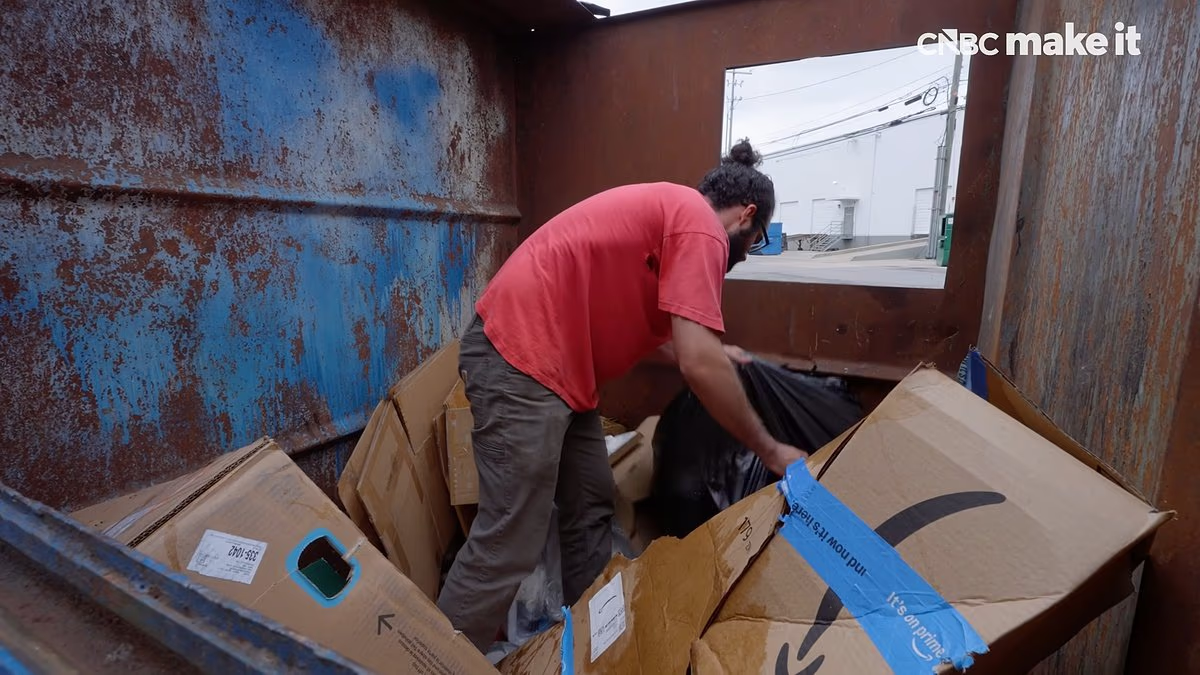
Carter Stevens was once $12,000 in debt and sleeping in his car. Today, searching through other people’s discarded belongings has become a six-figure resale business.
The 31-year-old Nashville entrepreneur generated roughly $140,000 in sales over 12 months by recovering unwanted furniture, electronics and other valuable items from dumpsters across Tennessee.
Stevens focuses on bins near upscale apartment complexes and office parks, where he looks for goods that can be cleaned, restored and sold online.
Among his most unusual discoveries have been handcrafted Persian rugs, iPads, West Elm furniture, power tools and samurai swords.
He lists the finds on eBay and Facebook Marketplace. To reduce expenses, he also collects usable shipping materials—including boxes and packing tape—from dumpsters, estimating that about 90 percent of his supplies cost him nothing.
‘The amount of waste in this country that you’ll find is unbelievable. We throw so much stuff out,’ he told CNBC Make It.
Stevens officially started his dumpster-diving resale operation in March 2024, following a period when his finances and personal life had reached a low point.
Years of overspending and drug addiction had left him with about $12,000 in debt, while even maintaining a place to live had become difficult.

At 31, Carter Stevens generated about $140,000 in sales in one year by reselling furniture, electronics and other items recovered from dumpsters

His unusual haul has included Persian rugs, iPads, West Elm furniture, power tools and samurai swords
By June 2023, Stevens could no longer cover his rent. He moved into a rented storage unit, but was later evicted and spent three weeks living out of his Nissan Sentra.
A turning point came in October 2023, when a cousin loaned him money for an apartment. With a stable home, Stevens began working to repair his finances.
He already had experience buying and reselling vintage clothing, but a discarded pair of Nike Air Force Ones revealed a new opportunity: other people’s trash could become inventory.
After finding the sneakers beside a gas station pump, he cleaned and sanitized them before selling them online for $35.
‘That was the first time I had ever found something that was trash and sold it and made a little bit of money,’ he said.
That small sale encouraged him to search dumpsters more often. He soon learned that businesses and residents of affluent apartment buildings frequently threw away items with significant resale value.
CONTINUE READING: Oklahoma Highway Mystery Deepens After Eerie New Incident Near Site Where Noah Presgrove Was Found Dead
His most profitable discovery came at an office park, where he spotted 190 Steelcase chairs beside an overflowing dumpster.
New, some of the chairs can sell for more than $1,000 each. Stevens transported the haul using his pickup truck and a homemade trailer.

Stevens sells recovered goods through eBay and Facebook Marketplace while sourcing boxes and packing materials from dumpsters to keep costs down

He began dumpster diving professionally in March 2024 after financial struggles, addiction and a period of homelessness

The Nashville-based reseller searches for unwanted furniture, electronics and other valuables across Tennessee
He sold the bulk of the chairs on Facebook Marketplace for $17,000, then earned an additional $10,600 by listing the remaining pieces individually.
He later came across another major haul: 120 standing desks abandoned outside a building.
These days, Stevens concentrates on what he describes as ‘dry dumpsters’ near corporate offices. Such sites are less likely to contain rotting food or other household waste mixed in with the merchandise.
To control fuel costs, he generally searches within a few miles of his home. He also pays $400 each month for a storage unit where he holds items until they sell.
Even with his strong sales, Stevens acknowledges that dumpster diving is not a dependable source of income.
Most of his revenue was generated during only five especially successful months, when several unusually valuable hauls came together.
‘I got really lucky earlier this year and I made a ton of money. I’m not acting like this is something I could do every year,’ he said.
He is putting away as much of the money as he can while learning about real estate wholesaling—a business model based on securing contracts for distressed properties and assigning them to investors—as a more consistent potential career path.
Even so, Stevens does not intend to abandon his unconventional treasure hunts.
‘I don’t see myself ever turning down a good looking dumpster,’ he said.
‘I have found so much cool stuff that I feel like I’ll always be curious about what’s in that dumpster.’


