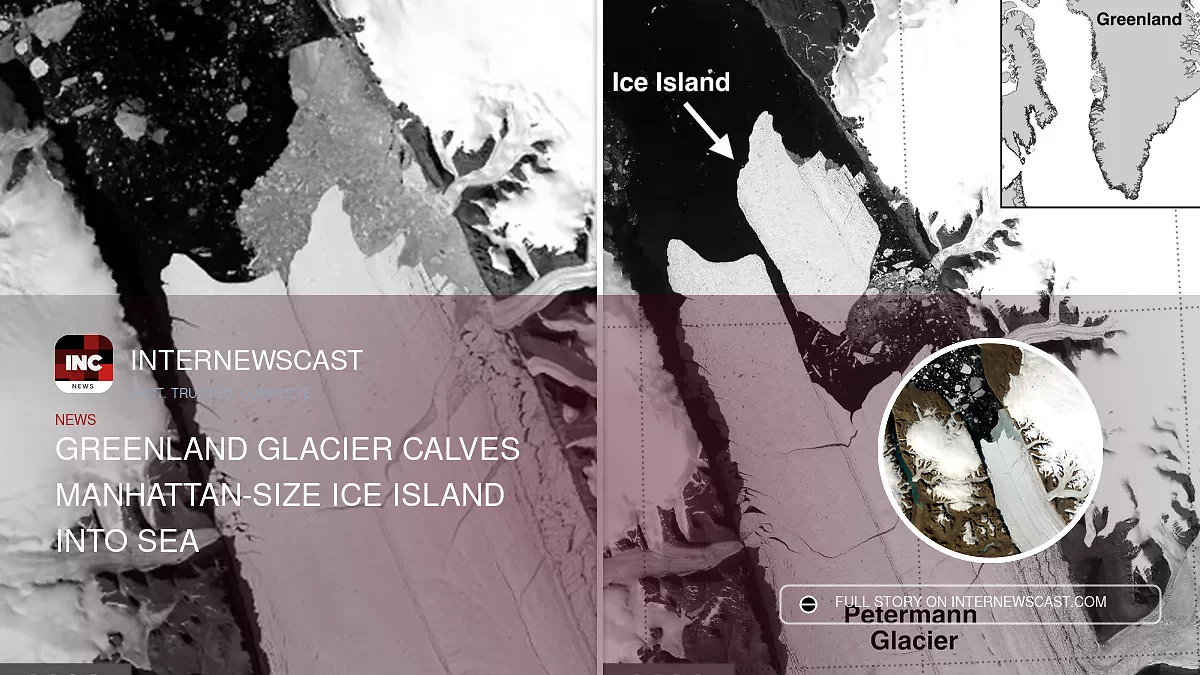

A striking new Arctic event has drawn attention from scientists after an international research team identified a massive ice island created by the breakup of a glacier — a frozen slab roughly comparable in size to Manhattan.
Researchers from the University of Ottawa said the ice island formed when a more than 45-mile-long section of Greenland’s Petermann Glacier fractured, sending an enormous piece of floating ice into the polar waters.
The break represents the most significant loss of floating ice from the glacier since 2012. The newly formed Arctic ice island is estimated to be nearly 500 feet thick, underscoring the scale of the calving event.
Scientists have been closely tracking changes along the Petermann Glacier since 2019, and the split did not come as a surprise. Experts had anticipated the breakup for several years and warn that more ice loss is likely ahead.
According to the University of Ottawa’s Department of Geography, studying the glacier’s cracks and partial breakups gives researchers valuable insight into glacier retreat, changing ocean conditions and potential ice-related hazards across polar regions.
Researchers expect two additional sections of ice to separate from the glacier in the near future, a development that could shrink its overall size by roughly 22%.

NASA has reported that ice loss in the region averages about 150 to 180 gigatons per year, with one gigaton equal to one billion metric tons.
Once detached, giant ice chunks can drift for years, creating potential risks for ships while also affecting fragile marine ecosystems in Arctic waters.
Experts will continue to monitor the development of the Peterman Glacier and the chunks of ice that break away by using satellite imagery.


